The Six Disciplines blog has moved!

You will be automatically redirected to our new home. If that does not occur, please visit:

Wednesday, September 02, 2009

Revolutionizing How Organizations Execute Their Strategies


Six Disciplines for Excellence
The One Book That Is Revolutionizing How Organizations Execute Their Strategies


Read about the breakthrough strategy execution program that’s designed specifically to be implemented and embraced by everyone in your company, in an ongoing, systematic way.


Unlike the academic and theoretical books, this top-rated book is the definitive "how-to" guide for leaders who want to take their organizations beyond temporary success to pursue enduring business excellence.


A finalist in USA Book News' 2007 National "Best Book" Awards, Six Disciplines for Excellence is consistently rated in the Top 10 of Amazon's "Organizational Learning" category.


The author of Six Disciplines for Excellence, Gary Harpst, is the CEO and founder of Six Disciplines. Harpst has been the founder of three successful companies and his most recent venture integrates proven best practices from over 25 years of field experience, resulting in the Six Disciplines strategy execution coaching program.

Tuesday, September 01, 2009

Top 5 Fundamental Traits of Organizational Effectiveness

"The Secrets to Successful Strategy Execution" was published in the June 2008 issue of Harvard Business Review, based on a survey of 26,000 people in 31 companies.

In the article, the authors defined execution as "...the result of thousands of decisions made every day by employees acting according to the information they have and their own self-interest."

They also identified the top 17 fundamental traits of organizational effectiveness. Here's a quick look at the top five:


  1. Everyone has a good idea of the decision and actions for which he or she is responsible.
  2. Important information about the competitive environment gets to headquarters quickly.
  3. Once made, decisions are rarely second-guessed.
  4. Information flows freely across organizational boundaries.
  5. Field and line employees usually have the information they need to understand the bottom-line impact of their day-to-day choices.

BOTTOMLINE: The decision-making processes and information flow in every organization are critical. Raise the importance of these factors through recognition and reward are easy ways to improve organizational effectiveness, leading to better strategy execution.

Monday, August 31, 2009

Consultants Adopting A Strategy Execution Practice Have The Competitive Advantage

The newest research from Kennedy Consulting Research & Advisory indicates that execution and implementation are now such integral parts of clients' consulting requirements that service providers have little choice but to develop Operations Management consulting capabilities and credibility.

According to Kennedy: "In an effort to effectively capitalize on today's financial constraints, more consulting practices than ever before are arranging their services around such 'execution' and 'implementation' imperatives."

And, management consultants are better positioned than any other professional service to seize the ever-growing strategy execution market.

To remain competitive, how will you incorporate strategy execution into your consulting practice?

Adding a strategy execution program can generate additional revenue streams, providing you with new service that can attract new clients, which can substantially increase the market value of your existing professional service business.

Want proof? The first management consulting firm that adopted our strategy execution coaching program (Six Disciplines) closed six clients in three months and increased their billable time for more specialized projects, which were discovered as a result of following our strategy execution methodology.

Now’s the time to step up and find out more – register to attend one of the next webcasts, presented by veteran CEO and strategy execution expert, Gary Harpst.

Register here:

September 8 http://sdsept8webcast.eventbrite.com/
September 22 http://sdsept22webcast.eventbrite.com/

Thursday, August 27, 2009

Types of Organizational Misalignment

The cumulative effects of misalignment are a significant constraint on the ability of an organization to execute its strategy.

In fact, research has shown that up to 50% of the resources of a typical organization are not being effectively applied to the mission and vision of the company.

There are two types of organizational alignment: creeping and strategic.

Creeping misalignment occurs gradually every day, often in very small ways as the organization changes. In every day processes, as the organization changes, the "current" approach to doing things becomes less aligned with the goals of the company. As a result, it becomes an increasing drag on the success of the company until corrected.

Strategic misalignment occurs suddenly, when the leadership sets a strategic VFO (vital few objective) -- but the systems and resources of the organization are not deployed to support it. This type of misalignment surfaces suddenly as a barrier to implementing new strategies.

BOTTOMLINE: If your leadership does not learn how to align resources with goals, the free market will.

Tuesday, August 25, 2009

Knowing What NOT To Do


In this Fast Company blog entry, on "Leading Ideas: Know What NOT To Do:

"A client of mine uses a powerful tool to help his executive team decide what not to do with their time. He has each member keep a pie chart of where his/her energy is focused. When new projects come along, they discuss how sections and percentages should shift. "You've got to know where your energy should and shouldn't go each day," he explains. "Sometimes it's obvious and sometimes it's not. We've found explicitly talking about it every few months helps. Team members tend to feel more empowered in what they're doing and are more successful as a result."

BOTTOMLINE: From an organizational perspective, Discipline I-F, Agree What To Stop (Six Disciplines for Excellence, pages 76-79) helps each Team Member to understand what projects/initiatives to stop applying energy / resources to.

More importantly however, is Discipline IV-D, Prioritize Daily (pages 161-163). If you wait to do it "every few months" as suggested above, performance goes unchecked and alignment deteriorates rapidly.

Six Steps to Ensure Organizational Alignment

Marshall Goldsmith is a world authority in helping successful leaders achieve positive, lasting change in behavior.

In a Harvard Business Online article "Six Steps to Ensure Alignment" Goldsmith suggests having a quarterly one-on-one meetings with each of your direct reports. In each of these meetings, address the following six key questions. Ideally, each question will result in a two-way dialogue that helps clarify priorities, ensures alignment, and promotes mutual understanding:

  1. Where are we going?
  2. Where are you going?
  3. What are you doing well?
  4. What changes can lead to improvement?
  5. How can I help?
  6. What suggestions do you have for me?

BOTTOMLINE: "In between each quarterly six questions dialogue, establish your mutual responsibility for continued alignment. Let your team members be responsible for immediately contacting you if they are ever uncertain about priorities or need feedback. You areresponsible for contacting and updating your team members, if the business situation changes and you need to re-set priorities."

Monday, August 24, 2009

Strategy Execution - The Un-Idea

In 2005, Rosabeth Moss Kanter wrote a short - but profound piece - about execution for strategy & business magazine entitled Execution: The Un-Idea. Below are excerpts from the article:


  • "Twenty-five years ago, management meant control. Managers put in controls, handed workers specifications, and established formal structures that ensured that people did what they were told. Companies operated alone, rather than being part of partner networks or plugging their people into informal relationships. It was an ineffective way to operate, especially after the information technology revolution took place, and to break out of it, companies needed management ideas.

  • Innovation and intrapreneurship, Total Quality Management, Six Sigma, reengineering, networked organizations — these were all conceptual handles that allowed executives to justify and develop new breakthrough practices.

  • Today, companies don’t need new ideas in the same way they did 25 years ago (although they still need new business strategies). They’ve been through the paradigm shift. They have sustained tremendous improvement in productivity, effectiveness, and attentiveness to opportunities. That doesn’t mean they’ve been successful; indeed, as they’ve explored new ways of working, we have all learned how hard it is to put these ideas into practice.

  • That’s why execution, or ‘making it happen,’ is so important. Execution is the un-idea; it means having the mental and organizational flexibility to put new business models into practice, even if they counter what you’re currently doing. That ability is central to running a company right now.
  • So rather than chasing another new management fad, or expecting still another ‘magic bullet’ to come along, companies should focus on execution to effectively use the organizational tools we already have.”

Thursday, August 20, 2009

Seven Rules To Close The Strategy To Execution Gap

According to the consultants at Marakon, companies typically realize only about 60% of their strategies’ potential value because of defects and breakdowns in planning and execution. Yet, by following seven simple rules, you can get a lot more than that.

Marakon found that the processes companies use to develop plans and monitor performance make it difficult to discern whether the strategy-to-performance gap stems from poor planning, poor execution, both, or neither.

Here's what they found:

  • Companies rarely track performance against long-term plans.
  • Multi-year results rarely meet projections.
  • A lot of value is lost in translation.
  • Performance bottlenecks are frequently invisible to top management.
  • The strategy-to-performance gap fosters a culture of underperformance.

To help close the strategy-to-execution gap, Marakon recommends the following seven steps:

  1. Keep it simple, make it concrete.
  2. Debate assumptions, not forecasts.
  3. Use a rigorous framework, speak a common language.
  4. Discuss resource deployments early.
  5. Clearly identify priorities.
  6. Continuously monitor performance.
  7. Reward and develop execution capabilities.

Wednesday, August 19, 2009

Consultants Flock Toward Strategy Execution Practices

New research from Kennedy Consulting Research & Advisory (a division of Kennedy Information) indicates that execution and implementation are now such integral parts of clients' consulting requirements that service providers have little choice but to develop Operations Management consulting capabilities and credibility.

According to Kennedy: "In an effort to effectively capitalize on today's financial constraints, more consulting practices than ever before are arranging their services around such "execution" and "implementation" imperatives."

###

To remain competitive, how will you incorporate strategy execution into your consulting practice?

Register and attend an exclusive webcast: "Establishing a Strategy Execution Practice" presented by veteran CEO and strategy execution expert, Gary Harpst.

To Register:

August 25 http://sdaugust25webcast.eventbrite.com/
September 8 http://sdsept8webcast.eventbrite.com/
September 22 http://sdsept22webcast.eventbrite.com/

Tuesday, August 18, 2009

What Are The Six Disciplines for Excellence?

We're often asked - what are these Six Disciplines for Excellence?

We simplify to six core areas of business discipline:

  • Discipline I. Decide What's Important (STRATEGY)
  • Discipline II. Set Goals That Lead (PLANNING)
  • Discipline III. Align Systems (ORGANIZATION)
  • Discipline IV. Work The Plan (EXECUTION)
  • Discipline V. Innovate Purposefully (INNOVATION)
  • Disciplines VI. Step Back (LEARNING)

BOTTOMLINE: OK, so you've read business improvement books that told you "what" other organizations did to become excellent, or "why" they became top-performing companies. But most books don't tell you HOW you can make these changes happen in your own organization!

Time to read the award-winning business handbook Six Disciplines for Excellence, by veteran CEO and strategy execution expert, Gary Harpst.

Monday, August 17, 2009

Barriers to Strategy Execution

Strategy execution is the single hardest challenge in business.

What makes it so tough?

Here's a list of the primary execution challenges, based on surveys of organizational leaders:

  • Inability to manage change effectively or overcome internal resistance to change.
  • Strategy conflicts with the existing organizational structure.
  • Poor or inadequate information sharing among individuals or business units responsible for strategy execution.
  • Unclear communication of responsibility and/or accountability for execution decisions or actions.
  • Employees' lack of feeling of ownership of a strategy or execution plan.
  • Lack of guidelines or a model to guide strategy execution.
  • Lack of understanding of the role of organizational structure and design in the execution process.
  • Inability to generate buy-in or agreement on critical execution steps or actions.
  • Lack of incentives or inappropriate incentives to support execution objectives

BOTTOMLINE: "Poor or vague strategy" is also listed, but it's relatively low on the list.

Looking for a breakthrough vision for how to overcome these challenges? Read the best-seller: Six Disciplines® Execution Revolution: Solving The One Business Problem That Makes Solving All Other Problems Easier by Gary Harpst.

Establishing a Strategy Execution Practice Webcast

If you missed our most recent “Establishing a Strategy Execution Practice” webcast – you’re missing out on a significant opportunity to grow your consulting practice.

Consulting firms are now are extending their growth, competitive differentiation, and market presence by building a complimentary consulting practice focused on strategy execution.

Adding a strategy execution practice not only generates an additional revenue stream from current clients, it provides you with a complimentary consulting service that will attract new clients, and one that will substantially increase the market value of your professional consulting firm.

What’s the best way to get started? Attend a free webcast – presented by the leader in strategy execution coaching - Six Disciplines.

The momentum of consulting firms adding Six Disciplines continues at a very rapid pace. In fact, during the past two weeks, two more management consulting firms have signed on to become licensed affiliates for Six Disciplines. One is a management consulting firm in Kansas City; the other is a for-profit business development arm of one of the largest Chambers of Commerce in the U.S. (they’ll be training six coaches on Six Disciplines!)

Now’s the time to find out more – register to attend one of the next webcasts, presented by veteran CEO, strategy execution expert, and best-selling author Gary Harpst.

To Register:

August 25 http://sdaugust25webcast.eventbrite.com/
September 8 http://sdsept8webcast.eventbrite.com/
September 22 http://sdsept22webcast.eventbrite.com/

Thursday, August 13, 2009

Balancing Strategy and Execution: Five Domains To Consider

Remember when we could simply distinguish between strategy creation as "thinking" (analysis, planning, setting goals, etc.) and strategy execution as "doin"g (follow-through, top-to-bottom, operational, goal achieving, etc.)?

Today's challenge is how to balance both strategy and execution - or how to build execution into strategy.

How do you build execution into strategy? It starts with a recognition that all parts of the organization - and people at all levels - need to be involved in the process of setting goals, since it's "all people" that are responsible for executing the strategy.

New research shows that the "many are smarter than the few" philosophy of management is catching on.

Organizations can unleash the power of collective judgment by consulting broad groups of employees in the planning process; this approach has the added benefit of creating support for change, which is required for successful execution.

As the discipline of strategy execution evolves and organizations seek to improve the link between strategy and execution, five major domains stand out as critical for any organization

  1. Focus. The focus is about ensuring organizational commitment and alignment to the strategy.
  2. Resources. The resources domain involves allocating financial and other resources required to fund strategy and operations, and monitoring those resources continuously to ensure goal achievement.
  3. Operations. The operations domain entails analyzing the drivers of business performance and linking operational processes to the execution of strategy.
  4. People. The people domain is about ensuring employee readiness and personal goal alignment, and aligning HR processes and systems to support the strategy.
  5. Information. The information domain involves developing a technology platform to enable core processes and support the analytic needs of the enterprise.

(Excerpts from a column published in DM Review MagazineFebruary 2007 Issue by Barnaby S. Donlon)

Wednesday, August 12, 2009

Barriers To Enduring Business Excellence

The barriers that keep us from achieving the kind of business excellence that lasts are deeply rooted and won't be removed by "quick fixes."

At Six Disciplines, our research shows that there are six fundamental barriers to enduring business excellence:

1. Poorly Understood Strategy. While most organizations have a strategy, most people do not understand it. One research report revelad that 85% of leadership teams spend less than 1 hour a month discussing strategy. The barrier isn't usually the strategy itself -- 90% of strategies fail due to execution. Write the strategy down (3-4 pages max), share it with all team members and give them an opportunity to react and engage.

2. Weak Strategy Execution. One of the major barriers to lasting excellence is how little formal effort organizations put into learning how to execute strategy. The most vital core competence of all is the ability to execute strategy. Understand that there is a big difference between working in the business, and working on the business.

3. Unchecked Organizational Entropy. Small businesses are "systems," and once a small business makes plans, the chaos of everything changing around it gradually erodes those plans. Be aware of change, apply forces to counteract it, make time for planning, set expectations and hold team members accountable.

4. Lack of a Systematic Approach. Thinking holistically about your business - how to make all of the components, people, processes, policies, key measures, assets and strategies work together to meet the promises made to your customers and other stakeholders -- in a repeatable and predicatable fashion -- is key to achieving lasting excellence.

5. Impractical Implementation Methods. Choose wisely when deciding to implement improvement methods and systems, and focus on "goodness of fit" - rather than form, or bells and whistles. Whatever choices you make, they must be practical and take a long-term view -not cumbersome, complex, and a "quick fix" that solves everything at once.

6. People Are Not Engaged. Your employees need to be personally committed to your company's goals - not just compliant. To engage them, connect their work to the purpose of the company. Set appropriate expectations, communicate your strategies, share short and long term thinking, and hire people who are aligned with your mission and values.

Management Consultants Are Adopting a Strategy Execution Practice

If you missed today’s “Establishing a Strategy Execution Practice” webcast – you missed out on a significant opportunity to grow your consulting practice!

If you’re interested in building a complimentary consulting practice focused on strategy execution, one that can generate an additional revenue stream, a service that can attract new clients, and one that can substantially increase the market value of your existing professional service business, then you need to take a look at Six Disciplines.

….and the momentum continues to build!

In fact, during the past two weeks, two more management consulting firms have signed on to become licensed affiliates for Six Disciplines.

One is a management consulting firm in Kansas City; the other is a for-profit business development arm of one of the largest Chambers of Commerce in the U.S. (they’ll be training six coaches on Six Disciplines!) We’ll be announcing details about these new Six Disciplines affiliates over the next several weeks.

Now’s the time to step up and find out more – register to attend one of the next webcasts, presented by veteran CEO and best-selling author Gary Harpst.

August 25 http://sdaugust25webcast.eventbrite.com/
September 8 http://sdsept8webcast.eventbrite.com/
September 22 http://sdsept22webcast.eventbrite.com/

Tuesday, August 11, 2009

Strategy and Execution - Two Of The Top Three Lessons Learned

In a recent Harvard Business Publishing article "Lessons Learned from 30 Years of Leadership", Dick Harrington, former CEO of Thomson Reuters discussed the three most significant lessons learned over his very successful 25+ year career as a Fortune 250 executive.

Harrington's top three:

  1. First, you have to have an "approximately correct" strategy -- you have to know where you are going, but directionally correct is the key.
  2. Second, you have to be highly focused and intensely execute that strategy by motivating and aligning the troops you have.
  3. Third it always comes back to the customers and the fact that you have to manically know your customers and drive everything from that.

What is an "approximately correct" strategy? "You want to be approximately correct instead of precisely incorrect. There is a point at which additional information or research will not change the basics of your strategy. When you get your strategy there, you have to "Nike it" - you just do it. If you continue to refine and refine, you'll never get into action, and the incremental value of research just won't be worth the time and money. Schedule time frames and be religious about them to launch, get feedback, and see if the strategy is acceptable to the customer or if you need to adjust."

What about the execution focus? "What's the best way to rally people and spread that intensity? "First, you have to communicate what you are trying to accomplish. And you need to know the team members who are going to make it happen and those who are going to keep it from happening. It's important to have time with them so they have an opportunity to discuss and debate what's critical. At the same time, you have to draw the line at some point and say "Okay, we have everyone's input. These are the five most important things we need to accomplish and they are the only things we are going to work on." You want everyone - probably 4-5 key people, maybe 10-15 at larger organizations -- in the same boat so you can accomplish those things on a timely basis."


Annual Performance Reviews? Why Wait? Try Once A Week

Integrated Project Management, a Burr Ridge, Ill., project-management firm with 80 employees takes a unique approach to employee reviews.

Instead of just banging out written reviews once a year, managers sit down with each direct report individually every week to discuss performance and how the employee can improve.

In this Wall Street Journal interview, Integrated Project Management's Chief Executive Richard Panico talks about what makes the company’s review process special.

Actually, the practice is more common than it might appear.

In the award-winning book Six Disciplines for Excellence, (by veteran CEO Gary Harpst) a step in Discipline IV. Work The Plan is called "Review Individual Plans (IPs) Weekly."

This step in the Six Disciplines methodology is designed to encourage every team member AND team leader to review progress toward quarterly goals on a regular basis, preferably weekly.

This process (a standard templated report that takes less than 15 minutes to complete, and can be reviewed in 5 minutes) makes it clear whether the team member is focusing their daily activities on the agreed-upon goals.

This process leads to much better communication and understanding, and perhaps most importantly, identifies problems/errors early, allows for course-correction early, reduces risk and increases alignment.

Monday, August 10, 2009

Best Practices For A Strategic Planning Retreat

Based on years of experience, here's what we see the typical small or mid-sized business go through when they're planning a strategic planning off-site retreat:

Scenario: The CEO wants to get his/her team working together to build a plan for the coming year or two. The senior leadership team is buzzing about the excitement. Everyone is looking forward to having some input on the plan.

The planning retreat is held off-site during a two day session, which everyone finds rewarding and exhausting. They come out of the session with a clear set of goals and an action plan. Everyone has talked about what they are going to do differently to make sure it does. The team feels energized and looks forward to getting back to work.

Then what happens?

The senior leadership team goes back to work and they face the chaos that attacks their everyday lives and business once again.

  • An important customer calls with special requests.
  • A key employee decides to leave.
  • An unexpected product problem emerges.
  • The auditor tells you that you need better controls.
  • Your kid brings home a poor report card and needs more help with their homework.
  • That charity you got involved with needs help fundraising.
  • That industry committee you agreed to chair needs more attention.

The strategies, goals and action plan you put in place seem to fade into the background.

You keep an eye on the financial statements occasionally, and hope it works out. At some point, the financial statements take a turn for the worse, and you jump back in, trying to figure out what’s going on and what you need to change.

Unfortunately, if you don’t know how to execute, strategic planning off-sites don’t work.

Before you commit to conducting one more strategic planning retreat, ask yourself:

  • Does your senior leadership team know how to make a real commitment, not just a “yes I’m on board” commitment, but a “yes I will get this done and I will stake my bonus on it” commitment?
  • Does your organization have the skills it needs to execute?
  • Can you focus?
  • Can you communicate the mission, vision, values and strategic direction of the company?
  • Can you drive active accountability - with everyone in the organization?
  • Are you willing to dedicate time - not only to the strategic planning process, but communicating it so your team members are able to execute your strategy?

BOTTOMLINE: Execution is hard work. It requires a relentless focus, commitment and discipline. Before you invest a lot in developing strategy, invest in the skills and resources required to execute strategy. If you’re not ready or capable of executing, a strategic planning retreat offsite is most likely -- another waste of time.

Thursday, August 06, 2009

Creating A Sense of Urgency

Change management guru, John Kotter, has released his latest book, A Sense of Urgency, published by Harvard Business School Press.

Kotter has written about urgency before. Raising urgency is the first of his eight-steps for successful organizational change, a topic we talk about a lot here at Six Disciplines.

For a quick review, here's Kotters "Eight Steps To Transform Your Organization":

  1. Establish a Sense of Urgency
  2. Form a Powerful Guiding Coalition
  3. Create a Vision
  4. Communicate the Vision
  5. Empower Others to Act on the Vision
  6. Plan for and Create Short-Term Wins
  7. Consolidate Improvements and Produce Still More Change
  8. Create a New Culture.

In his latest book, Kotter reminds us that "70 percent of large scale initiatives in companies failed or were not fully launched. Only 10 percent of the cases achieved what they set out to do--and in some cases overshot their expectations."

"In those ten, a similar formula was used in virtually all instances, and they all began by creating a sufficiently high sense of urgency among enough people to set the stage for making a challenging leap into some new direction."

BOTTOMLINE: How do you create a heightened sense of urgency and then sustain it? Do it by appealing to individuals heads - and hearts. Within that heart-head strategy there seem to be four sets of tactics that work best:

  1. Use a variety of methods to help people better see the hazards and opportunities that are all around them--and incredibly, people don't often see them.
  2. Become an urgency-beacon in the way you behave each and every day. The vast majority of people do not.
  3. Always look to see if there is an opportunity in a crisis to help increase urgency.
  4. Confront those people who hate change and are remarkably skilled at fostering both complacency and false urgency.

(Hat tip to Todd at 800-CEO-Read)

Wednesday, August 05, 2009

Ten Golden Rules of Continuous Improvement

  1. Problems create opportunities
  2. The impossible is a paradigm - Change your mind to change your performance
  3. Ask why five times to get to the real answer
  4. Eliminate excuses - do it right the first time
  5. Correct errors immediately
  6. Involve everyone - we are smarter as a group than a single individual
  7. Reconsider rigid thoughts, situations change
  8. Think simple, not perfect solutions
  9. Use your mind more than your money
  10. The goal: continuous improvement over delayed perfection
(Hat tip to @JohnPotterMPE)

Tuesday, August 04, 2009

The Consultant's Next Frontier - Strategy Execution Consulting

If your consulting firm offers management consulting services such as strategic planning, operations management, human resources consulting, or business advisory services, now is the time to investigate the competitive advantages of offering the most transformational next generation service for your clients: strategy execution consulting.

Find out why consulting firms throughout the country are becoming licensed affiliates for a revolutionary consulting and coaching service based on proven best practices -- called Six Disciplines.

Management consulting firms are becoming Six Disciplines licensed affiliates at a quickly increasing rate -- so NOW is the time for you to get involved.

Register to attend the next exclusive webcast "Establishing a Strategy Execution Practice" on Tuesday August 11, from 12:00-1:00 PM EST.

This live webcast will be conducted by veteran CEO, strategy execution expert, and best-selling business author, Gary Harpst.

Don't miss out - register for the webcast here.

Monday, August 03, 2009

CEO Profiling – the Four Kinds of CEOs

(The following article was written by Eric Kurjan, President of Six Disciplines Northwest Ohio. Six Disciplines brings “big company” process improvement to organizations looking to break beyond the status quo. For more information visit http://www.SixDisciplines.com/Toledo, or call 419-348-1897.)
###

In my line of work I see all kinds of CEO’s. Young and old, male and female, decision makers and decision avoiders, leaders and shrinking violets. The bottom line is that the personalities, skills, abilities and success factors vary by CEO just like they vary in their shapes and sizes.

My experience has shown me that you can group CEOs into four basic categories. Call it “profiling” if you like, but as I look at the businesses that are truly successful and those that need help (and more importantly, those who will accept it) the differences in CEOs becomes clear.

CEO #1 The True Leader – this CEO gets it. He or she has a clear vision for where they want the company to grow. They have communicated it effectively. They set the expectations, they measure the results, and they hold their people accountable. They demonstrate compassion for their people and have built a culture of earned trust. This CEO is open, honest and transparent. They know they will gain more by sharing information than by withholding it. Their employees, or in these cases, “Associates” or “Team Members”, work diligently toward the goals of the company. There is an uncompromising, mutual respect being exhibited. Their goals and plans are pursued with passion, and the results are strong and consistent. Unfortunately, this is a rare breed. I have only met a handful of these CEOs.

CEO#2 The Know-It-All – this CEO thinks he/she gets it. This group is too smart for its own good. These are the CEOs who pride themselves on having never asked anyone for help, guidance or assistance. They tend to be ego-driven, arrogant, controlling and intimidating. They “rule” with the iron fist and make “employees” or subordinates nervous. They may or may not be quick to solve problems with staff. Some will fire with the swiftness of a hit squad in the dark of night with or without justification, while others can’t confront issues and only demonstrate chest-beating and bluster, leaving the problem “employee” in place to continue to contaminate the work environment. There are some who really are more fear-driven and put on the “tough guy/gal” mask. They fear making a bad choice and in most cases are lacking the leadership skills needed to truly run or change the business. They surround themselves with weak, low-horsepower leadership teams in an effort to make themselves appear “smarter”. Unfortunately, this is a common breed. There are tons of these CEOs out there. Many actually run, reasonably successful (based on revenue and/or profit measures) organizations in spite of their behavior, style and methods. But think how successful they could really be with goals, a plan and a defined process for getting things done.

CEO#3 The Heart Attack – this CEO has had one. Hopefully just in the figurative sense. They have been running the business and they are seeing things get worse and worse. They don’t work to change the behaviors, actions or direction -- they just fret as the business begins to tailspin. Then, some sort of major catastrophe hits, loss of a major client or two, the bank calls in the note or the line of credit is gone and they determine the need to make a change. This is much like the individual who ignored all the warning signs of an impending heart attack: high blood pressure, overweight, high cholesterol. They’re sure the bathroom scale is wrong. The heart attack is a big “surprise” but now they are going to straighten out their lives. Under a doctor’s supervision they begin to manage their diet, start working out and change the behaviors that led to the heart attack. There are lots of lessons learned (by the CEO and the company) if they survive the heart attack. They realize that the ways they have “led” the business were ineffective and that they need to get help from the outside to get them back on course for survival and fitness. By the way, no surprise here: CEO#3 almost always started out as a CEO#2 Know-It-All.

CEO#4 The Humble Leader – another fairly rare breed. He or she is actually a good leader. They’ve built a successful business and possess many of the same traits and behaviors as the “true leader”. They have not honed their skills to the degree of CEO#1, but they aspire for more. They are not satisfied with the status quo and are looking for every advantage to build a better team, to grow their business, to deliver higher, bigger and better. They look to outside resources and advisors to aid them in their journey toward their vision. They work to develop better and more effective processes and better alignment across the company. They are looking for help to manage the challenges of growth and all the thrills and challenges that come with it. They are hungry and open to learning. They are on the journey to become a CEO#1 True Leader.

So, which CEO type are you? If you can’t see it yourself, look for the "CEO Effectiveness Exam" in next month’s article. The numbers rarely lie.

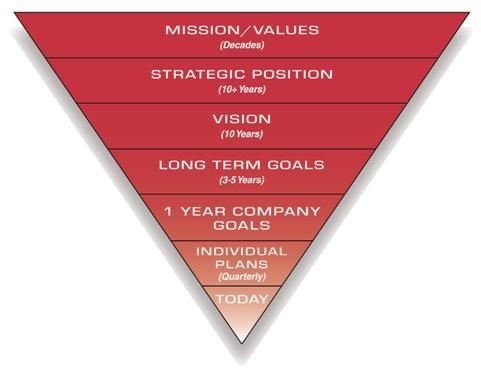
Friday, July 31, 2009

The Seven Critical Elements of Strategy Execution

"The greatest strategy in the world is useless - if you cannot execute it."

Here are the seven critical elements of strategy execution:

  1. People. Strategy formulation often gathers the "smartest people in the room." However, it's not the senior leadership team that executes strategy - it's everyone in your workforce. Get the right people in the right positions.
  2. Communication. Strategy can only be executed if your employees know about it and really understands it. Most importantly, each person needs to understand how their daily activities fit with and support the strategy.
  3. Direction. When your new business strategy is communicated, do your employees know what to do differently? Do they have the right tools and individual plans to execute the strategy?
  4. Measurement. "You can't manage it, if you can't measure it." Do you have the right measures for monitoring the new strategy?
  5. Alignment. Your organization needs to be aligned between what you say you are going to do (strategy) and what vital few objectives, initiatives and daily activities (execution) you are undertaking to effectively support the strategy.
  6. Reward and Recognition. The introduction of a new strategy often introduces change in behavior. To ensure success, new behaviors need to be reinforced (rewarded for positive behaviors) so they are repeated.
  7. Continual Review. The execution of strategy must be continually reviewed in order to make mid-course corrections and to understand measurement success. Finding errors early in the process and making corrections improves your ability to execute strategy successfully.

Thursday, July 30, 2009

What Are CEOs and Managers Talking About Now?

A Harvard Business article recently showcased a the results of a CEO-peer group survey, indicating that the nature of CEO top concerns is changing as we move toward economic recovery.

While many of the CEOs had previously focused on topics of layoffs, profitability, and cash management, new concerns are beginning to emerge:

  • Strategy to invest in web 2.0/social marketing to capture consumer market share
  • Sales channel strategy to ramp sales of new products while driving down long-term costs
  • New service positioning pitch to capture an emerging market in the telecom space
  • Opportunity analysis--which projects to accelerate, which to cut?
  • New "Software as a Service" product roadmap
  • Investments in Marketing--where to experiment, how to allocate funds?
  • Taking advantage of a "fire sale" acquisition and plan to leverage it
  • Financing strategy--which term sheet, if any, to take?

BOTTOMLINE: HBR's summary: "Even the words contained in that list--strategy, ramp, opportunity, roadmap, experiment--are promising. The challenge isn't in believing that a bad economy is a time of opportunity, but rather in executing on the opportunities while staying prudent with day-to-day operations."

Wednesday, July 29, 2009

Using Performance Management to Create a Culture of Excellence

CEO Holly G. Green (and author of "More Than A Minute") offers up a post "Using Performance Management to Create a Culture of Excellence."

Holly's prescription for a good performance management process involves five key steps:

  1. Establish Goals. Start by linking what needs to get done to the strategic planning framework. Align the competencies, skills and knowledge of the employee to create specific action items that will guide the employee’s behavior going forward.
  2. Plan Development. Discuss short- and long-term development needs, including agreement on how and when development will occur, as well as prioritization of development to support more immediate business needs. Create a plan to accomplish the required and the desired learning and growth.
  3. Take Action. Provide ongoing and frequent direction and support while the employee applies energy and focus toward accomplishing the goals.
  4. Assess Performance. Evaluate the progress being made toward the goals and provide ongoing feedback to the employee on a formal and informal basis.
  5. Provide Reward. Acknowledge and reward employees through organizational programs, local recognition, and other approaches tailored to individual employees. This may also involve consequences and disciplinary action for poor performance.

BOTTOMLINE: "Who has time to do all this on a regular basis?

Consider the consequences of not doing it: Lack of trust between employees and management; declining productivity and lost business due to missed deadlines and broken commitments; lower employee morale and higher turnover. These are just some of the more obvious consequences of a poorly implemented performance management system."

Tuesday, July 28, 2009

Management Consulting Firms Becoming Licensed Affiliates for Six Disciplines

Professional service firms that offer management consulting services (strategic planning, operations management, human resources consulting, business advisory services) are quickly discovering the competitive advantages of offering a complete strategy execution coaching program to their clients.

In fact, four management consulting firms -- in just the past four months

...have become licensed licensed affiliates for the Six Disciplines strategy execution program to complement their management consulting service offerings.

Find out why management consulting firms are getting involved with Six Disciplines, by registering to attend the next webcast "Establishing a Strategy Execution Practice" on Tuesday August 11, from 12:00-1:00 PM EST.

This live webcast will be conducted by veteran CEO, strategy execution expert, and best-selling business author, Gary Harpst.

Register for the webcast here.

Monday, July 27, 2009

The Total Management Group, LLC Joins the Six Disciplines Strategy Execution Coaching Network

Washington D.C.-Based Consulting Firm Sees Growth through Strategy Execution Coaching Program

FINDLAY, OHIO – July 27, 2009 — Six Disciplines announced today that it has added the Washington D.C.-based consulting firm, The Total Management Group, LLC, to its nationwide network of business coaching practices that offer the Six Disciplines® strategy execution program to its clients. Six Disciplines is unique in the growing industry of business coaching because of its completeness, which includes the synergy of a repeatable business-building methodology, accountability coaching, an execution software system, and a shared community to accelerate organizational learning.

“Having served as the CEO of a strong engineering and software development company for 18 years, I can readily see the value that Six Disciplines brings to our clients,” said James Garrett, CEO of The Total Management Group. “The Six Disciplines methodology will help them achieve their goals, not just through planning, but through focused execution.”

“Six Disciplines is the perfect compliment to our consulting practice,” added Dr. David Christovich, The Total Management Group’s Vice President. “By using the Six Disciplines methodology and tools, our clients will be able to connect their vision to their strategies, and align their plans and activities for more consistent and predictable execution.”

“Forward-looking CEOs are starting to understand their biggest challenge is not what they think it is,” said Gary Harpst, founder and CEO of Six Disciplines. “They’re finally figuring out that it’s all about the balance of strategy and execution. The Total Management Group understands the tremendous opportunity ahead of them with Six Disciplines, and because of their expertise and proven success, we’re excited to welcome The Total Management Group to our business coaching network.”

About The Total Management Group

The Total Management Group provides strategic planning and execution services to business and government. Total Management CEO Jim Garrett co-founded SENTEL Corporation, an award-winning engineering and technology firm, which he led for eighteen years as its president and CEO. Under his leadership, the company -- which specialized in software and hardware engineering solutions for the military and U.S. government -- grew to 375 employees and $45 million in annual revenues. Visit The Total Management Group at http://www.thetotalmanagementgroup.com/ , email jGarrett@SixDisciplines.com, 571-346-7690 (office) or 301-661-2922 (cell).

Thursday, July 23, 2009

Webcast: Why Management Consultants Are Establishing a Strategy Execution Practice

Professional service firms that offer management consulting services (strategic planning, operations management, human resources consulting, business advisory services) are quickly discovering the competitive advantages of offering a complete strategy execution coaching program to their clients.

In fact, four management consulting firms -- in just the past four months --have signed on to offer the Six Disciplines strategy execution program to compliment their professional service offerings.

Find out why management consulting firms are getting involved with Six Disciplines, by registering to attend the next webcast "Establishing a Strategy Execution Practice" on Tuesday July 28, from 12:00-1:00 PM EST.

The webcast is conducted by veteran CEO, strategy execution expert, and best-selling business author, Gary Harpst.

Invest an hour of your time and investigate the competitive advantages of the Six Disciplines strategy execution coaching program.

Register for the webcast here.

Management Consultants Are Evolving Into Strategy Execution Coaches

Professional service firms that offer management consulting services (strategic planning, operations management, human resources consulting, business advisory services) are quickly discovering the competitive advantages of offering a complete strategy execution coaching program to their clients.

In fact, four management consulting firms -- in just the past four months --have signed on to offer the Six Disciplines strategy execution program to compliment their professional service offerings.

Find out why management consulting firms are getting involved with Six Disciplines, by registering to attend the next webcast "Establishing a Strategy Execution Practice" on Tuesday July 28, from 12:00-1:00 PM EST.

The webcast is conducted by veteran CEO, strategy execution expert, and best-selling business author, Gary Harpst.

Invest an hour of your time and investigate the competitive advantages of the Six Disciplines strategy execution coaching program.

Register for the webcast here.

Knowledge Transfer - A Generational Challenge

As large numbers of baby boomers retire, knowledge transfer becomes critical to an organization's sustainability and competitive edge. In a knowledge economy, firm-specific knowledge is critical to the sustainability, performance and innovation of organizations facing the imminent retirement of large numbers of baby boomers.

According to a new report from The Conference Board, the global research and business membership organization, most companies do not have a plan to manage and transfer knowledge and even fewer factor cross-generational challenges into business strategy.

The key challenge?

  • As the Baby Boom generation of corporate leaders and experts approaches retirement, businesses face the loss of experience and knowledge on an unprecedented scale.
  • Younger workers can't be counted on to fill the void, as they lack the experience that builds deep expertise.

The result?

  • A significant drain of business wisdom that decreases innovation, lowers growth capacity, and reduces efficiency in the organization

The solution?

  • Knowledge transfer methods include formal education and training, interviews, mentoring, apprenticeships, simulations and games, instant messaging, peer assists, communities of practice, job transfer, knowledge elicitation interviews, storytelling, Wikis, Blogs, research papers, and conferences.

BOTTOMLINE: To enable knowledge transfer, your strategy execution system must have a built-in method for recording and storing processes and procedures, document management, innovation exercises, historical activity archiving, and measure management. Without a repeatable process, knowledge transfer is unpredictable at best, and non-existent at worst.

Wednesday, July 22, 2009

James Crisafulli Joins the Six Disciplines Business Coaching Network

Rhode Island-Based Consulting Firm Sees Growth through Strategy Execution Coaching Program

FINDLAY, OHIO – July 23, 2009 — Six Disciplines announced today that it has added Rhode Island-based consultant, James J. Crisafulli, to its nationwide network of business coaching practices that offer the Six Disciplines® strategy execution program to its clients. Six Disciplines is unique in the burgeoning industry of business coaching because of its completeness, which involves the synergy of a repeatable business-building methodology, accountability coaching, an execution software system, and a shared community to accelerate organizational learning.

“Six Disciplines is the only program that offers a complete strategy execution framework extending from the corner office to front line personnel. It includes the technology to easily monitor and measure the progress from a management and coaching perspective. Our efforts are focused on achieving a sustainable growth path by reviewing the execution progress and its impact on business performance. At the end of the day, it is about results; the Six Disciplines framework of strategy formulation, goal setting, initiative planning, leadership training, and 360 review process keeps strategy, policies and professionals aligned and focused on the target,” said Crisafulli.

“Forward-looking CEOs are starting to understand their biggest challenge is not what they think it is,” said Gary Harpst, founder and CEO of Six Disciplines. “They’re finally figuring out that it’s all about the balance of strategy and execution. James understands the tremendous opportunity ahead of him and his team with Six Disciplines, and because of their expertise and proven success, we’re excited to welcome James to our business coaching network.”

“Six Disciplines is the perfect complement to our consulting practice,” added Crisafulli. “By using the Six Disciplines methodology and tools, our clients will be able to connect their vision to their strategies, and align their plans and activities for more consistent and predictable execution.”


About James J. Crisafulli
James J. Crisafulli has been providing strategic planning and business coaching services to New England businesses since 1996. As a consultant to more than 200 businesses, he has developed a reputation for helping owners to improve their organizations and, in turn, their lives. James has a proven track record for identifying challenges that may be holding businesses back, helping the owners to resolve those issues, developing action plans that will help them meet their stated goals, and holding them accountable during the implementation phase. Contact James via email at JCrisafulli@SixDisciplines.com or (401) 762-2430.

Thursday, July 16, 2009

What Are The Six Disciplines - Video

Watch this short video as Six Disciplines CEO and founder Gary Harpst explains "What Are The Six Disciplines?"

During the interview, Harpst talks about each of the six disciplines described in detail in his award-winning book "Six Disciplines for Excellence."

Tuesday, July 14, 2009

The Ten Myths of Strategic Planning

CEOs of small businesses often appear to believe in myths surrounding the subject of strategic planning and execution - myths that can prove dangerous to the health of their organization.


  1. Myth #1: “We don’t need a strategic plan!” The truth is that every organization needs some form of plan to guide its actions or it will simply “drift off course” in the chaos businesses often face in their daily operations.
  2. Myth #2: Strategic planning can only be done at a resort. Strategic planning is serious and shouldn’t be equated with a vacation. Getting away from the distractions of the company environment is important, but all that is needed for a productive planning process is a meeting room at a local hotel, conference center
  3. Myth #3: “It interferes with our real jobs.” Strategic planning is arguably the most important part of any management team’s real job because it can determine the effectiveness of all the rest of its efforts. Working hard to advance along the wrong path does not constitute progress.
  4. Myth #4: “We can do it without any help.” It is extremely difficult to both participate in and facilitate the same meeting. For most executives, there is an almost irresistible urge to problem solve on detailed issues and therefore lose track of the big picture. An outside facilitator can manage the flow of the meeting to avoid uneven participation, shifting to problem solving, bogging down on one subject, accepting conventional wisdom as fact, etc.
  5. Myth #5: Planning will predict the future. Planning can reduce risk, but not eliminate it. It is easy to forget that any plan is a set of actions based on an assumption of how the future will unfold. Using the planning process to explore alternative futures, and the actions needed under those conditions, improves a firm’s ability to respond to whatever happens.
  6. Myth #6: Planning is done when the retreat is over. Planning is a process, not an event. If it is not a continued, integral component of the management of the firm, it is indeed a waste of time. It is best to check progress against the plan, and take corrective action for any deficiencies or changes --at least quarterly.
  7. Myth #7: The plan is a binder on a shelf. Documentation is necessary but the real benefit of a good plan is the mental framework for problem solving that it provides to employees. A strategic plan is really a way of thinking about the business, and it should change to some degree the way everyone goes about their job.
  8. Myth #8: The plan will automatically produce results. Without frequent, systematic oversight and review by the CEO and the management team, there will be little execution -- and the plan reduced to merely a set of words.
  9. Myth #9: If the CEO says it, it will happen. Actual execution of any plan only takes place when employees change their behavior to comply with the requirements of that plan. To implement the plan, employees must understand it and be willing to make the necessary changes to how they go about their individual responsibilities.
  10. Myth #10: “The plan is too confidential to be shared with regular employees.” See Myth #9. Even the best strategic plan will not produce the desired results if the people who have to execute it don’t know what it is. Your company will gain more competitive advantage from actually executing its plan, even if information about the plan falls into the hands of competitors, than it will from keeping the plan a perfect secret, and, as a result, not doing anything.

Monday, July 13, 2009

Webcast: The Evolution of Management Consulting

As a leader of your management consulting practice, you’re faced with the following challenges:

  1. How can I build a new, complimentary business practice – while increasing the value of my existing consulting services?
  2. Is there an effective way I can generate an additional $20-$40+k per client per year?
  3. How can I offer a new service to my existing clients – without a huge investment?
  4. What can I do to offer a new service - that will attract new clients too?
  5. How can I substantially increase the market value of my consulting practice?

Invest an hour of your time, and you’ll get answers to these questions by discovering a complimentary strategy execution coaching practice called Six Disciplines.

Join us on July 16 for an exclusive free webcast presentation “Establishing a Strategy Execution Practice” by veteran CEO and best-selling author, Gary Harpst.

WHEN: Thursday, July 16, 2009, from 12:00 pm – 1:00 pm Eastern

TO REGISTER: http://50cityjuly16webcast.eventbrite.com/

Knowledge Transfer Is Key To Sustaining Business Excellence

As baby boomers retire, companies are failing - in a big way - to transfer knowledge to the next generation of workers.

According to a recent study conducted by the Institute for Corporate Productivity (i4cp), only 29% of responding organizations report that they incorporate retirement forecasts into their knowledge transfer practices, and only a third add "skills gap analysis" into those forecasts.

The crux of the problem?

"For all the public gnashing of teeth about the impending retirement of all those knowledgeable, hard-working Baby Boomers, relatively few organizations are doing much about it," says Jay Jamrog, SVP of research at i4cp. "They're going to wind up in a mad bar-the-doors scramble in the near future if they don't start trying to tap the knowledge of their most knowledgeable Boomers."

The solution?

Training remains the most conventional way to transfer knowledge in organizations, with 82% reporting that training is an ongoing knowledge transfer practice. This is especially true in larger companies (those with 5,000 or more employees), where more than 90% employ ongoing training. Another top practice cited was coaching, utilized by 55% of all reporting companies, and mentoring programs are used on an ongoing basis by 44% of organizations.

BOTTOMLINE: For small and midsized businesses to remain competitive, a formalized process of knowledge transfer (of trends, policies, procedures, information gathering, competitive intelligence, and so on...) must be deployed. This process must be open, transparent, collaborative and immediately available (think Twitter, Skype, SharePoint, Slideshare, Posterous, etc.) to share, capture, retain, and disseminate the knowledge.

Thursday, July 09, 2009

Top 10 Reasons To Hire a Business Coach

There are all types of coaches: a tennis coach, golf coach, swim coach, music coach, executive coach, and so on.

What do all these coaches have in common?

More importantly, why should you consider working with a business coach?

A coach won't do the work for you, but here's how a coach can help launch you (and your business) to the next level:

  1. A coach can be a confidant. You can tell your coach things you wouldn't tell others, because a coach is trained to understand and be non-judgmental.
  2. A coach can help you see your blind spots. Everyone, even the coach, has personal areas that are out of view or awareness until someone points them out. A coach is perfectly poised to perform this critical function.
  3. A coach can provide objective feedback. Other people may have agendas. Your coach has your best interests in mind in providing feedback and counsel to you.
  4. A coach provides another set of eyes. Even the top performers in the world have coaches to help them see what they themselves can't see.
  5. A coach can keep you accountable. Your coach can help you take on more responsibility by having you report weekly on your accomplishments and initiatives.
  6. A coach can be a sounding board. Your coach can be another set of ears as you talk about the things that are bothering you. As you hear yourself have a conversation new personal realizations emerge.
  7. A coach can be another source of creative ideas. You can brainstorm and try out new ideas, behaviors and mental processes as your coach provides a safe place to experiment.
  8. A coach can help you create your vision. Your coach can assist you in developing your plans for success based on your values, personal strengths, background and assets.
  9. A coach can help celebrate your successes and be a source of strength when you fail. Your coach can be a supportive and nurturing source of energy.
  10. A coach can help you process life. Life is a process and a good coach can assist you in reviewing and reframing what happens in your business, your sports and your life!
BOTTOMLINE: A business coach is not a therapist, not a consultant or even a mentor. Yet, a certified business coach, one that is trained in a repeatable business-building methodology, can make all the difference.

(Copyright © Bill Cole MentalGameCoach.com)

Wednesday, July 08, 2009

The Difference Between Coaching and Consulting

If you've seen professional coaches portrayed on TV or spotlighted in magazines, you may not always come away with an accurate perception of coaching.

Like any young profession that has experienced rapid growth, misconceptions have surfaced about the nature and purpose of professional coaching. As part of its work to advance the art, science, and practice of professional coaching, the International Coach Federation (ICF) works to educate the public on what to expect from a coaching partnership.

In a recent press release by the ICF, they made the attempt "to correct these inaccuracies by educating the public about our distinct profession and stressing the importance of working with a coach who has undergone formal coach-specifictraining and is credentialed."

One of the common misconceptions about coaching is that "Coaching and consulting are the same."

According to the ICF, coaches are experts in the coaching process and are trained to listen, observe and customize their approach to individual client needs. Whereas, consultants typically give clients answers or solutions based on expertise or knowledge in a certain area, coaches seek to elicit solutions and strategies from the client; they believe the client is naturally creative and resourceful."

At Six Disciplines, we offer a complete strategy execution coaching program through a network of Six Disciplines coaching practices, which are staffed by professional coaches who are certified on the Six Disciplines methodology. These accountability coaches are not "consultants" in the traditional sense. They offer companies training and assistance on how to adopt the Six Disciplines methodology throughout the organization -- not just at the senior leadership team level, but through an approach of "total organizational engagement".

What makes Six Disciplines coaches different from consultants is they "show" as opposed to "tell", and, unlike consultants, they don't leave. They are available to the client organizations throughout the adoption and implementation of the Six Disciplines program - which is an ongoing process.

Visit more information - visit Six Disciplines.

Monday, July 06, 2009

Effective Planning Retreat Best Practices

For business leaders who go on an annual planning retreat or "off-site", here's an article from the Harvard Business Review about "Off-Sites that Work"

Some key considerations:

  • Of all the meetings top executives go to in a year, none is more important than the strategy off-site, where the most essential conversations for the future of the business occur. Yet it is the rare management team that can say its strategy off-site truly changed the way the business is run.
  • At best, participants do some vague direction setting and work on team-building skills; at worst, they write off the retreat as a waste of time and resources. It needn’t be like that.

Here's a a set of best practices that businesses can use to make the most of this planning retreat process:

  • Essentially, the problem with most strategy off-sites is that they’re insufficiently structured. People think that if you schedule a meeting, invite top leaders (and perhaps an outside expert), and block off units of time to discuss big subjects, the rest will take care of itself. In reality, formlessness leads to aimlessness.

  • Oddly enough, only rigorously designed meetings give rise to truly candid strategy discussions. That rigor starts before the meeting, when the scope of the matters discussed must be limited, the participant list drawn up accordingly, the relevant materials (and only those) sent out and absorbed, and a detailed agenda established.

  • During the meeting, the pace and quality of the conversation can be managed through attention to politics and by using carefully tailored frameworks, decision points, and group exercises.

  • After the meeting, an action plan ensures clear accountability and follow-through."

BOTTOMLINE: "If you and your executive team spend four days a year rafting down rivers together, you’ll eventually get good at rafting down rivers.

Spend four days a year having well-designed strategy conversations together, and you will transform your annual off-site from a meaningless junket into a genuine turning point for your business."

Thursday, July 02, 2009

Strategic Planning Retreat? Don't Skip This Year's!

This Year's Management Off Site: Necessary or Negligent?

That's the title of a new article from Harvard Business Publishing, which offers up the pros and cons of scheduling the "annual planning retreat" during times of economic uncertainty.

The pros?

• Hunkering down is not a strategy.
• Management alignment is critical and at risk.
• Creativity is more important than ever.
• Pure ROI

The cons?

• Managers are talking more than ever now.
• It wouldn't be prudent to spend money on a hotel, food and facilitator.
• It sends a bad message to those still on-site.

BOTTOMLINE: The authors suggest the following:

"I would not advocate postponing or skipping your strategic planning session. Strategy is as important if not more important than ever. They are meaningful events. Successful off sites build employee loyalty and camaraderie. When I think back on my positive business experiences, they cluster around positive team interactions happening during off site sessions. Also, much greater work happens when employees are unencumbered by both in-the-business and personal obligations."

Wednesday, July 01, 2009

Execution of Strategy Requires Change

The successful execution of strategy ultimately requires a change in the behavior of employees.

New research conducted over the last two decades has produced a more accurate view of human behavior change resulting from an integration of psychology (the study of the human mind and human behavior) and neuroscience (the study of the anatomy and physiology of the brain).

An article titled “The Neuroscience of Leadership“, from Strategy+Business provides an interesting discussion on organisational change, some of the interesting points raised in the article are:

Some key points from the research:

  • Change Is Pain: Organizational change is unexpectedly difficult because it provokes sensations of physiological discomfort. Trying to change any hardwired habit requires a lot of effort, in the form of attention. This often leads to a feeling that many people find uncomfortable. So they do what they can to avoid change.
  • Behaviorism doesn’t work: Change efforts based on incentive and threat (the carrot and the stick) rarely succeed in the long run. Present the right incentives, and the desired change will naturally occur…… Yet there is plenty of evidence from both clinical research and workplace observation that change efforts based on typical incentives and threats (the carrot and the stick) rarely succeed in the long run.
  • Humanism is overrated: In practice, the conventional empathic approach of connection and persuasion doesn’t sufficiently engage people. This phenomenon provides a scientific basis for some of the practices of leadership coaching. Rather than lecturing and providing solutions, effective coaches ask pertinent questions and support their clients in working out solutions on their own…. People can detect the difference between authentic inquiry and an effort to persuade them.
  • Focus is power: The act of paying attention creates chemical and physical changes in the brain.
  • Expectation shapes reality: People’s preconceptions have a significant impact on what they perceive. How, then, would you go about facilitating change? The impact of mental maps suggests that one way to start is by cultivating moments of insight. Large-scale behavior change requires a large-scale change in mental maps.
  • Attention density shapes identity: Repeated, purposeful, and focused attention can lead to long-lasting personal evolution. For insights to be useful, they need to be generated from within, not given to individuals as conclusions.
  • Mindful Change in Practice. Start by leaving problem behaviors in the past; focus on identifying and creating new behaviors. Over time, these may shape the dominant pathways in the brain. This is achieved through a solution-focused questioning approach that facilitates self-insight, rather than through advice-giving.

BOTTOMLINE: "Perhaps you are thinking, “This all sounds too easy. Is the answer to all the challenges of change just to focus people on solutions instead of problems, let them come to their own answers, and keep them focused on their insights?” Apparently, that’s what the brain wants."

(Tip of the hat to George Amber at The Practice of Leadership)

Tuesday, June 30, 2009

2009 Is Half Over - How To Improve Your Strategic Planning Process

Hard to believe - but 2009 is now half over, which means it's time to assess how your organization faired so far.

The most important thing to do is step back and improve your strategic planning process.

Even top performing companies undertake a time-consuming strategic planning process that unfortunately leaves many executives frustrated with the results.

This sense of disappointment was captured in a recent McKinsey quarterly survey of nearly 800 top executives:

  • Only 45 percent of the respondents said they were satisfied with the strategic-planning process
  • Moreover, only 23 percent indicated that major strategic decisions were made during the process.

The operative question for organizational leadership is: "how can you make your strategic planning process more effective?"

Here are five ideas you can use to make make your strategic planning processes run better.

  1. Start with the issues - conduct internal and external reviews and a SWOT analysis
  2. Bring together the right people - involve the most relevant people in the organization, and consider involving external resources for new insights
  3. Adapt planning cycles to the needs of the business - separate the strategic formulation process from the business planning process
  4. Implement a strategic-performance-management system - that assigns accountability for results of initiatives and projects established to meet company goals.
  5. Integrate human-resources systems into the strategic plan - include performance appraisal, 360 feedback surveys and incentive pay based on performance results

Linking Strategy And Execution - A Parallel Universe?

In their book "The Execution Premium: Linking Strategy to Operations for Competitive Advantage" (Harvard Business School Press), Harvard professors Dr. Robert S. Kaplan and Dr. David P. Norton (creators of the balanced scorecard) offer their lastest insights concerning the "rules" of successful strategy execution.

  • The failure to balance the tensions between strategy and operations is pervasive.
  • Breakdowns in a company’s management system, not managers’ lack of ability or effort, are what cause a company’s underperformance.
  • By management system, they're referring to the integrated set of processes and tools that a company uses to develop its strategy, translate it into operational actions, and monitor and improve the effectiveness of both.
  • By creating a closed-loop management system, companies can avoid such shortfalls.

Interestingly, Kaplan and Norton's description of such a closed-loop management system closely parallels the detailed steps of the Six Disciplines Methodology, (which are revealed in the award-winning business improvement book "Six Disciplines for Excellence," as indicated below:

  • The loop comprises five stages, beginning with strategy development, which involves applying tools, processes, and concepts such as mission, vision, and value statements; SWOT analysis; shareholder value management; competitive positioning; and core competencies to formulate a strategy statement. (Discipline I)
  • That statement is then translated into specific objectives and initiatives, using other tools and processes, including strategy maps and balanced scorecards. (Disciplines II and III)
  • Strategy implementation, in turn, links strategy to operations with a third set of tools and processes, including quality and process management, reengineering, process dashboards, rolling forecasts, activity-based costing, resource capacity planning, and dynamic budgeting. (Discipline IV)
  • As implementation progresses, managers continually review internal operational data and external data on competitors and the business environment. Finally, managers periodically assess the strategy, updating it when they learn that the assumptions underlying it are obsolete or faulty. (Discipline VI)

BOTTOMLINE: While Kaplan and Norton's observations and recommendations specifically target much larger enterprises, Six Disciplines is the first complete strategy execution coaching program that is optimized for small and midsized businesses.

The Power of External Accountability Coaching

Let’s consider what accountability is, and how we can build an organizational culture that encourages it.

Be definition, accountability is being answerable or responsible for something. Accountability opens the door to ownership – not necessarily financial ownership -- but certainly emotional ownership, where someone acknowledges they’re responsible for some aspect of the organization.

Accountability is not something you “make” people do. It has to be chosen, accepted or agreed upon by people within your organization. People must “buy into” being accountable and responsible. For many, this is a new, unfamiliar, and sometimes, uncomfortable way to work. Most importantly: individual purpose and meaning comes from accepting responsibility and learning to be accountable.

To learn to be accountable means coming to grips with an element of discipline. Accountability is the opposite of permissiveness. Holding people accountable is really about the distribution of power and choice. When people have more choice, they are more responsible. When they become more responsible, they can have more freedom. When they are more accountable, they understand their purpose and role within the organization and are committed to making things happen.

BOTTOMLINE: How can your organization become more accountable for its actions? Consider an external accountability coach, such as those who are certified to coach the Six Disciplines strategy execution program. Building organizational accountability requires not only a systematic method based on proven best-practices; it also requires technologies that make the framework practical to use and implement on a daily, weekly, monthly quarterly and annual basis. In addition, it takes an external accountability coach to hold you and your organization accountable and to help these cultural changes to “stick” – and to make the changes last. Find out more about how the Six Disciplines program works here.

Monday, June 29, 2009

Simplicity of Strategy Leads To Action

Authors Dan and Chip Heath (Made To Stick) offer a FastCompany article titled "Analysis of Paralysis," in which they assert:

"If your strategy doesn't help employees act, it's not a strategy. You don't need to embrace simplicity just so your people can comprehend your message. The point of simplicity is more fundamental: Simplicity allows people to act."

Their observation?

Decision paralysis is the culprit. Every business must choose among attractive options: growing revenue versus maximizing profitability, quality versus speed to market. Too many choices leads to confusion, overload, paralysis. Too many choices debilitates an organization.

The solution?

BOTTOMLINE: Simplicity. A simple strategy can resolve decision paralysis. Or at least, it needs to be expressed and communicated simply. The simpler, the better, so that all employees can understand and embrace the strategy. Start with your organization's mission and vision. Then move on to your shared values and strategic position. Without simplicity, your employees will not understand the strategy well enough to align their daily activities toward executing it.

Friday, June 26, 2009

The Impact of Business Coaching

The International Coach Federation recently surveyed 210 coaching clients for demographic data and feedback /opinions about the value and use of business coaching. The survey was conducted by Amy Watson, Principal, PROfusion Public Relations, with survey design assistance by Jackie Rieves Watson, Ph.D., professor of Management and Statistics, Amber University.

Some of the more interesting survey findings:

Main role of the business coach:

  • 84.8 % sounding board
  • 78.1% motivator
  • 56.7% friend
  • 50.5% mentor
  • 46.7% business consultant
  • 41% teacher

Typical issues encountered during coaching:

  • 84.5 % time management
  • 74.3% career guidance
  • 73.8% business advice
  • 58.6% relationship / family issues
  • 51.9% physical / wellness issues
  • 45.2% personal issues
  • 39.5% goal-setting
  • 38.1% financial guidance
  • 11% creativity


Outcomes attributed to coaching:

  • 67.6% higher level of self-awareness
  • 62.4% smarter goal-setting
  • 60.5% more balanced life
  • 57.1% lower stress levels
  • 52.9% self-discovery
  • 52.4% more self-confidence
  • 43.3% improvement in quality of life
  • 39.5% enhanced communication skills
  • 35.7% project completion
  • 33.8% health or fitness improvement
  • 33.3% better relationship with staff
  • 33.3% better family relationships
  • 31.9% increased energy
  • 31.9% more fun
  • 25.7% more income
  • 25.7% stopped a bad habit
  • 24.3% change in career
  • 22.9% more free time

(Hat tip to Laseter Business Coaching)

Thursday, June 25, 2009

CEO Fatigue and What You Can Do About It

“Well, Doc how bad is it?” asked Bob Bizibee, ABC Company’s CEO. “I’ve seen this before with other CEOs like you,” said Dr. Foster. “It starts out as a small rash, but before you know it, you’re not sleeping at night, you’re kicking the dog, and you’re yelling at your neighbors for looking at your grass.” “Hey I‘ve been busy, and the grass isn’t more than two feet tall,” screams Bob. “Bob,” said Dr. Foster, “I’m afraid you have NPNR - No Plan, No Results.” “Yep, Doc, that’s it – you nailed it,” said Bob.

Do you have NPNR? Do these symptoms fit you?”

  • Crazy-busy – yet, you don’t exactly know where your time actually goes
  • Overwhelmed - by the day-to-day tasks of running your company – but, you’re not spending enough time on building your organization
  • Frustrated - by unfinished projects and the lack of consistent results
  • Drained - by the energy it takes to make all the decisions – and want to delegate more
  • Disappointed - that your team doesn’t have the same passion for your vision
  • Exhausted - because you’re working too much, and playing too little

If misery loves company, then you’re in “good” company. Many CEOs just like you are fatigued from the pressures of managing the business during these tough times.

How do you know you might be suffering from NPNR?

Take the following quiz (4=strongly agree, 3=agree, 2=disagree, 1=strongly disagree)

  1. I don’t have time to work on what’s really important.
  2. We have a strategy, but no clear plan for executing it.
  3. We can’t seem to follow a consistent plan from year to year.
  4. We have great planning meetings, but lose all momentum within days or weeks following them.
  5. We have employees who waste a lot of time on non-essential activities.
  6. We don’t have a good way to know if we’re improving, getting worse or staying the same.
  7. We seem to know what to do, but we just don’t seem to get it done.
  8. We seem to make the same mistakes over and over again.
  9. We don’t have an easy or consistent way to do meaningful employee reviews.
  10. We don’t have a clear plan for leadership succession.

(If you scored over 25, stop what you’re doing and seek out professional business coaching help.)

Let’s face it – being the CEO (or president, or owner, or whatever title/role you have) – is a lonely job. And yes, the challenges of being the CEO are enormous – but, there’s good news: there IS a systematic approach to handle these ongoing pressures.

What if I were to suggest that there was a way for you and your organization to:

  • Get better (by “get better” – you can use whatever definition makes sense to you –revenue, profit, productivity, utilization, customer satisfaction, employee satisfaction)
  • More importantly – stay better
  • And do all this - with less stress and more fun?

What does it take?

  1. The ability to accept and embrace change. Face reality. If you’re willing to get out of your comfort zone, as the old saying goes: “If nothing changes, nothing changes.”
  2. The ability to delegate. A big part of being a leader is to learn to trust your team. Be clear about your vision, provide direction and support, measure their progress - and let them do their job.
  3. The ability to spend time ON your business. Creating a culture of ownership and accountability within your business and making sure that systems and processes are in place so you can spend more time working “ON” the business – not just “IN” the business. Set a realistic plan in place and live up to the plan

BOTTOMLINE: Execution is a systematic process of rigorously discussing what, how, and why, questioning, tenaciously following through, and ensuring accountability. In its most fundamental sense, execution is a systematic way of exposing reality and acting on it. Most companies and their leaders don’t face reality very well. That is the basic reason they can't execute. However, set a plan, communicate the plan, follow the plan and the business improves. (By the way, that rash will go away too....)

(Eric Kurjan is the President of Six Disciplines Northwest Ohio. Six Disciplines brings “big company” process improvement to organizations looking break beyond the status quo. For more information visit www.SixDisciplines.com/Toledo, or call 419-348-1897.)

Tuesday, June 23, 2009

Problems With Your Organization's Strategic Plan?

Need a sanity check on your strategic planning process?

Consider the following:
  1. Does your process produce a plan that's "real?"
  2. Is your plan "strategic?"
  3. Do you have adequate external focus?
  4. Do upi make sufficient use of outsiders?
  5. Does your plan really work for the organization?
  6. Is your plan actionable?
  7. Is anybody doing anything?
  8. Are you getting lost in executing tactics, but missing the big picture?
BOTTOMLINE: If your strategic planning process isn't producing the results you expect, it's time to contact Six Disciplines.

The senior leadership team of every one of our clients goes through an intensive strategic planning retreat - based on Discipline VI -Step Back, Discipline I - Decide What's Important, and Discipline II - Set Goals That Lead. We're so confident in our proven best-practices methodology, the 3-day strategic planning retreat comes with a 100% money-back guarantee (Watch Part III: How Can You Evaluate Six Disciplines?)

The result? Ninety-eight percent of our clients remark that this planning retreat is the most intense and valuable strategic planning process in which they've ever participated. Oh, that same 98%? They become fully engaged Six Disciplines clients.

Monday, June 22, 2009

The Payoff of Company-Wide Performance Management

In an exclusive report from BusinessWeek Research Services entitled "The Payoff of Pervasive Performance Management,"researchers found:

  • Two-thirds of senior executives whose companies use performance management say it has a positive effect on shareholder value.
  • Organizations exercising world-class enterprise performance management, including widespread dispersal of the tools, enjoy 2.4 times the three-year equity market returns of typical companies in their industry.
  • The broader the distribution of business intelligence and performance management tools, the higher the potential return on the investment.
  • A successful performance management program realizes that not all employees need to view data in the same way—or to view the same data.
  • The biggest return on investment can come from extending performance management to front-line workers, like telemarketers and collections staff.

BOTTOMLINE: While these findings are for much larger businesses, the same rules apply for small and midsized businesses. When deploying any kind of performance management methodology or tool, it must be used by all team members, not just some.

It's what we at Six Disciplines refer to as total organizational engagement. Since strategy execution is the biggest challenge in business as it involves every person, every day, it only makes sense that everyone must be involved - not just those who create strategy.

Find out more by reading Six Disciplines Execution Revolution.


Thursday, June 18, 2009

Business Coaching Webcast - June 25

If your professional service firm is involved in management consulting activities, you'll want to register for the June 25 webcast "Six Disciplines Business Coaching Opportunity" - conducted by CEO, strategy execution expert and best-selling author Gary Harpst.

During the webcast, Harpst will provide answers to the following questions:

  1. How can you can add a new, complimentary business practice - while increasing the value of your existing consulting services?
  2. How your can offer additional services to your existing clients - without a huge investment?
  3. What can you do to offer a new service - that will attract new clients?
  4. How can you substantially increase the market value of your consulting practice?

Invest an hour of your time, and you'll get answers to these questions, by discovering a unique business coaching practice called Six Disciplines.

Tuesday, June 16, 2009

Five Steps To Building Organizational Accountability

Here's a five-step process for creating organizational and individual accountability, which will help to achieve extraordinary results in any organization:

  1. Establish the organization's top three objectives. This means the significant few, not the important many. (This is what we at Six Disciplines refer to as Vital Few Objectives- VFOs). Once identified, these vital few objectives must be clear, concise, measurable, obtainable - and assigned to one individual to be responsible for achieving.
  2. Assign each of the objectives to a specific team member.
  3. Ask each team member what resources he or she needs to win. To help people win, team leaders must remove the barriers or roadblocks that stand in the way. Do this by having each team member identify three things they need to accomplish each objective. Have them put it in writing.
  4. Agree on what the team leader will do to help. Have the team leader meet individually with each team member to clarify the barriers and agree on what’s needed to achieve the objective and who will be responsible for making it happen. In all likelihood, the leader will assume some responsibility. Why? Because you’re responsible to people, not for them. Being responsible to people means helping them get what they need to win.
  5. Reward results. When objectives are achieved, ensure that recognition and rewards are disproportionate and highly visible. Those who achieve the most get recognized and rewarded the most—and everyone should know that.

Monday, June 15, 2009

Execution Revolution - Now Available in Brazil


Now translated in Portuguese and available in Brazil through Elsevier.com.br, the best-selling strategy-execution and business coaching book, Execution Revolution, by CEO and founder of Six Disciplines, Gary Harpst.


Execution Revolution - Free Download Available


Now available for downloading - The Introduction, and Chapters 1 and 2 of the best-selling business improvement book, Six Disciplines Execution Revolution, by CEO and strategy execution expert Gary Harpst.