Our good friend Skip, over at Random Thoughts of a CTO, posts a great entry on a topic very near and dear to my professional and personal heart: passion.
Skip's main observation?
"Intensity, cause, implusion, quality of mind, purpose, and having a fixed resolution -- yep, that sounds like me and those kind of people who I most like to work with. It also sounds like the scenario for the perfect company that I would like to be a part of."
BOTTOMLINE: "It starts with you. Where is your passion? Can you use your passion in your current role within your current organization. If not, look for other places where you can. If there still is a potential fit with the organization, start getting others involved and triggering their passion. Sometimes passion has always been there, but never triggered. Other times, passion was there but need to be re-ignited. Find it! Use It! Help others do the same!"
Here! Here!
Thursday, November 03, 2005
Wednesday, November 02, 2005
Integrated Learning - And Knowledge Management
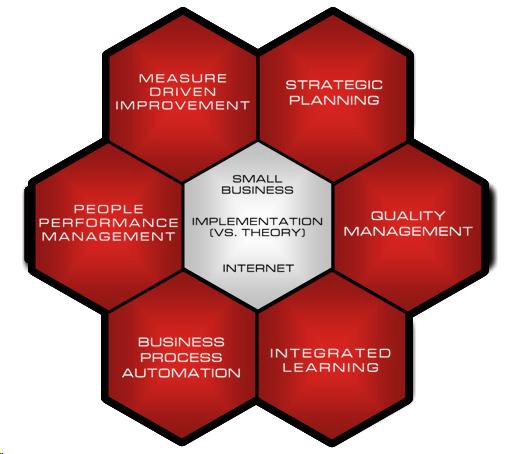
If you've been following "the overarching thread"...
... you've learned that the Six Disciplines Methodology of business-building is an integration of best practices of the following business tenets:
- Strategic Planning
- Quality Management
- Integrated Learning
- Business Process Automation
- People Performance Management
- Measure-Driven Improvement
Their assessment?
- It's all about learning - KM, information management, elearning, performance support, content management, etc.
- KM is not a thing to itself. It's a tool for organizational learning (and, as a by product, organizational effectiveness or capacity to achieve intended goals/strategies).
- Those who over-hyped KM (and made a valuable concept largely meaningless) fail to understand that KM was never about managing knowledge.
- It was, and still is, about achieving other goals. It's a means.
High-Performance Businesses: Timing is Everything
In an article entitled "The Right Place, The Right Time", the Accenture authors look into the key elements of high-performance business leaders and their timing.
High-performance businesses have remarkable clarity when it comes to setting strategic direction, especially regarding big decisions. They always seem to be in the right place at the right time.
High-performance businesses have remarkable clarity when it comes to setting strategic direction, especially regarding big decisions. They always seem to be in the right place at the right time.
- When one market matures, they’re ready with the next big thing;
- When buying trends send customers in a different direction, they’re waiting at the end of the path
- When they acquire new businesses, they do so wisely and tend to them well
High performers excel when it comes to their market focus and position—the “where and how to compete” aspects of business strategy and one of the three building blocks of high performance:
- How to manage for today and tomorrow
- How to best “parent” the businesses they operate
- How to compete through organization design
BOTTOMLINE: The ability of high-performance businesses to ride their decision making to better market focus and position does not mean they are infallible. High performers maintain their focus on consistently making good strategic component decisions. Above all, constancy (persistence) and diligence set high performers apart.
Read the entire Accenture article here.
Business Process Terms and Organizational Learning
For many organizations, the road to lasting business excellence means learning new things, new habits, new processes.
One aspect of that learning comes from within. It's often a matter of simply understanding new terms (definitions) of common business processes.
Perhaps you've heard of a term or business process, but weren't quite sure of its definition? The key to understanding is clarity.
Here's a great resources that you can use: The Dictionary of Small Business
BOTTOMLINE: Link to it, use it often, make sure all your Team Members know where it is - its all part of building a learning organization.
(Thanks to Steve over at Small Business CEO for the tip)
One aspect of that learning comes from within. It's often a matter of simply understanding new terms (definitions) of common business processes.
Perhaps you've heard of a term or business process, but weren't quite sure of its definition? The key to understanding is clarity.
Here's a great resources that you can use: The Dictionary of Small Business
BOTTOMLINE: Link to it, use it often, make sure all your Team Members know where it is - its all part of building a learning organization.
(Thanks to Steve over at Small Business CEO for the tip)
Process is Vital To Lasting Excellence
Our friend Gary, over at High Performance Business, offers his advice here in "You Need A System for Your Business" -talking about the virtues of having a "system" for your business.
In today's world of "strategic-initiative-of-the-day" and other equally insane knee-jerk reactions, having a system is the major difference between high-performing organizations, and ones that will never get there.
The key points of having a system are essentially a systematic way of thinking about and executing on your strategy. Gary's observation that "your system should be documented in an Operations Manual" -- is spot on.
Only by developing clear, concise business processes will you be able to document how your business works. Think of franchises: how is it that McDonald's is consistent, predictable, systematic - at every location? They've documented their processes. So that everyone in the organization know what, how and why they need to do their activities -- in order to be successful.
BOTTOMLINE: An operations manual has many benefits - execution, consistency, repeatability. The Six Disciplines Business System takes the use of creating and documenting your business processes in an "Operations Manual" to the next level. All of your business processes - from simple ones like ordering new phones or business cards for new Team Members -- to complex ones like setting up new project initiatives -- can be set up in the business system. All online (no paper here!) - exposed to everyone within the organization, searchable by any keyword in the process, with embedded links to actual business processes and on-line learning.
In today's world of "strategic-initiative-of-the-day" and other equally insane knee-jerk reactions, having a system is the major difference between high-performing organizations, and ones that will never get there.
The key points of having a system are essentially a systematic way of thinking about and executing on your strategy. Gary's observation that "your system should be documented in an Operations Manual" -- is spot on.
Only by developing clear, concise business processes will you be able to document how your business works. Think of franchises: how is it that McDonald's is consistent, predictable, systematic - at every location? They've documented their processes. So that everyone in the organization know what, how and why they need to do their activities -- in order to be successful.
BOTTOMLINE: An operations manual has many benefits - execution, consistency, repeatability. The Six Disciplines Business System takes the use of creating and documenting your business processes in an "Operations Manual" to the next level. All of your business processes - from simple ones like ordering new phones or business cards for new Team Members -- to complex ones like setting up new project initiatives -- can be set up in the business system. All online (no paper here!) - exposed to everyone within the organization, searchable by any keyword in the process, with embedded links to actual business processes and on-line learning.
Monday, October 31, 2005
What Does It Take To Achieve Lasting Excellence? Part Deux

Achieving lasting excellence is serious business.
Perhaps you felt you needed to be a "genius" or something to figure it out?
No longer!
BOTTOMLINE: I'm sharin' the fun. Go here, and make your own custom Einstein chalkboard.
(Thanks to Scobleizer for this one!)
On Attitudes and Enthusiasm
Jeffrey Phillips, over at Thinking Faster, offers his perspective on Contagious Attitude.
His premise:
"One person with a positive attitude and optimism about where our strategy can make a real difference. A positive attitude can be contagious and spread to others. Positive attitudes and outlooks correspond to greater productivity, efficiency and innovation. This one's a no brainer."
"One solid reason for being skeptical of inspirational posters on the wall and management slogans is that they often espouse something and management actions often contradict those messages. For true positive attitudes, the management team must walk the talk. Be excited about the company and it's future, help others to see the same vision and constantly reinforce the values and goals. Real excitement and commitment will filter down."
BOTTOMLINE: Nothing wrong with Successories - don't just talk about it - live it. (Or you could just chuck it all, and have a little fun over here at Despair.com. )
OK...back to work!!
His premise:
"One person with a positive attitude and optimism about where our strategy can make a real difference. A positive attitude can be contagious and spread to others. Positive attitudes and outlooks correspond to greater productivity, efficiency and innovation. This one's a no brainer."
"One solid reason for being skeptical of inspirational posters on the wall and management slogans is that they often espouse something and management actions often contradict those messages. For true positive attitudes, the management team must walk the talk. Be excited about the company and it's future, help others to see the same vision and constantly reinforce the values and goals. Real excitement and commitment will filter down."
BOTTOMLINE: Nothing wrong with Successories - don't just talk about it - live it. (Or you could just chuck it all, and have a little fun over here at Despair.com. )
OK...back to work!!
On Small Business Trends Radio - November 1
Join Small Business Trends Radio host Anita Campbell this Tuesday November 1 at 1:00PM Eastern Time at VoiceAmerica Business Network, as she interviews Torsten Jacobi of Creative Weblogging.
Find out more about the Small Business Trends Radio program on VoiceAmerica, by going to www.SixDisciplines.com/va
(Small Business Trends Radio, published over the VoiceAmerica Business Network, is sponsored by Six Disciplines Corporation)
Find out more about the Small Business Trends Radio program on VoiceAmerica, by going to www.SixDisciplines.com/va
(Small Business Trends Radio, published over the VoiceAmerica Business Network, is sponsored by Six Disciplines Corporation)
Small Business Indicators Remain Strong
MyBusiness Magazine reports Small-Business Labor Markets Are Strong
Current leading indicators:
Current leading indicators:
- The U.S. economy continues to roll along, just as small-business owners predicted.
- Analysts are now marking up their forecasts to match the predictions of small businesses.
- Hiring plans strengthened and inventories were reported relatively low, while plans to add to inventories as we go into the fourth quarter strengthened.
- Capital spending plans have remained steady as have actual capital outlays, reported each month by about two-thirds of the owners.
- Inflation, the top worry of the Fed, has lost some steam in the small-business sector.
Read the entire update here.
BOTTOMLINE: Owning an leading a small business is a noble cause. The idea of a small business owner being a "hero" hits home even more, when you think of the impact made on a smaller scale. Business owners give individuals -- real people with names and faces -- an opportunity to provide for their families, and an environment where people can learn and grown and express their God-given creativity and talents.
Make It Great! Reviews Be Excellent™
Phil Gerbyshak, good friend over at Make It Great!, offers this review of the Be Excellent™ blog.
Phil - we're humbled....
Keep up the excellent work -- you're an inspiration to others to... Make It Great!
Phil - we're humbled....
Keep up the excellent work -- you're an inspiration to others to... Make It Great!
Sunday, October 30, 2005
Time for A Career Change?
Many executives reach a point in their careers where they've accomplished all they set out to achieve.
With decades of experience building their companies, managing staff and allocating resources, they have learned countless lessons on:
If this sounds like you, perhaps now's the time to share that knowledge, to spread it around like fertile soil so others can grow their own enterprises.
BOTTOMLINE: Consider the possibilities of becoming involved with Six Disciplines Leadership Centers. You can use your experience, and help top performing business leaders and entrepreneurs to benefit from your experience, expertise and passion for success. To find out more, take a look at the Careers section of the Six Disciplines Web site.
With decades of experience building their companies, managing staff and allocating resources, they have learned countless lessons on:
- How to run a thriving business
- How to grow a business
- How to help a business perform better over time
If this sounds like you, perhaps now's the time to share that knowledge, to spread it around like fertile soil so others can grow their own enterprises.
BOTTOMLINE: Consider the possibilities of becoming involved with Six Disciplines Leadership Centers. You can use your experience, and help top performing business leaders and entrepreneurs to benefit from your experience, expertise and passion for success. To find out more, take a look at the Careers section of the Six Disciplines Web site.
Perfection? Or Business Excellence
Skip, our good friend over at Random Thoughts from a CTO, has some interesting and intriguing perspectives on the challenge of seeking business perfection.
He starts out with:
"What does it mean to be perfect or to obtain perfection? Some may say that to be perfect is to not have any flaws. Others may say not to make any mistakes. Still others may say that there is no such thing in the world as perfection.
Can one truly reach perfection? It depends on the definition. In an organization, people expect perfection - customers, vendors, managers, and those good-ol-fashion perfectionists out there. It's demanded from us. But can we deliver on those demands?"
Read the entire entry here.
BOTTOMLINE: Skip's definition of business perfection? "Perfection to me is to provide the very best value that is possible given the abilities and constraints that are put upon the team."
Sounds like a good definition of business excellence, to me!
He starts out with:
"What does it mean to be perfect or to obtain perfection? Some may say that to be perfect is to not have any flaws. Others may say not to make any mistakes. Still others may say that there is no such thing in the world as perfection.
Can one truly reach perfection? It depends on the definition. In an organization, people expect perfection - customers, vendors, managers, and those good-ol-fashion perfectionists out there. It's demanded from us. But can we deliver on those demands?"
Read the entire entry here.
BOTTOMLINE: Skip's definition of business perfection? "Perfection to me is to provide the very best value that is possible given the abilities and constraints that are put upon the team."
Sounds like a good definition of business excellence, to me!
Saturday, October 29, 2005
The Role Of Optimism in Entrepreneurship
Worthwhile Magazine offers up this letter from an MBA student from Northwestern's Kellog School of Business.
The optimistic - very inspiring letter -- can be read here.
BOTTOMLINE: "The point is having a career focus on doing good in the world. The point is not not how to make millions of dollars -- but how to change the lives of millions of people."
The optimistic - very inspiring letter -- can be read here.
BOTTOMLINE: "The point is having a career focus on doing good in the world. The point is not not how to make millions of dollars -- but how to change the lives of millions of people."
Thursday, October 27, 2005
Small Business Trends Radio Program
Steve, over at Small Business CEO, posts this listing on SMB Trend Wire of what the upcoming Small Business Trends Radio program, on the VoiceAmerica Network, will be featuring:
Coming soon - 13 straight weeks of new, highly relevant small business content. Here is a sneak preview of our upcoming conversations:
Coming soon - 13 straight weeks of new, highly relevant small business content. Here is a sneak preview of our upcoming conversations:
- Torsten Jacobi will be speaking on the unprecedented changes in online media.
- Frank Griffith will be speaking on the how savvy entrepreneurs are developing recurring revenue streams.
- Gary Harpst of Six Disciplines will speak on how to not become a statistic of business failure.
- Gayle Watson of NAWBO will tell us why we can’t afford to ignore 6 million business owners.
- Jeff and Rich Sloan of Startup Nation will talk about the top trends in business startups.
- Mike Siefert will discuss the top trends in web-based business applications.
- Hector Barreto of the SBA will speak on todays trends in small business.
- Charles Jolley will talk about web 2.0 and why you should care.
- Barbara Payne will talk about cutting through the hype of business blogging.
Stay tuned for more coming soon!
Bill Gates - And MTV ?
Perhaps you've seen Bill Gates in a variety of venues - new product launches, financial analyst questioning, and yes, legal proceedings.
Want to see Billg in a new, refreshing environment? How about among sharp, super-smart high school and college students?
Check out this new series of videos from - yes, MTV Video. Very enlightening...
(Healthy broadband necessary to watch the videos..)
Want to see Billg in a new, refreshing environment? How about among sharp, super-smart high school and college students?
Check out this new series of videos from - yes, MTV Video. Very enlightening...
(Healthy broadband necessary to watch the videos..)
Six Disciplines On VoiceAmerica Network
Six Disciplines is coming soon - to the VoiceAmerica Network.
Beginning on November 1, Six Disciplines will be sponsoring the "Small Business Trends Radio" program, hosted by our good friend Anita Campbell, (from Small Business Trends) on the VoiceAmerica Business Channel of the VoiceAmericaNetwork.
The Small Business Trends Radio program will be aired live on the VoiceAmerica Business Network on Tuesdays at 1:00pm EST. Anita and her guests encourage and welcome callers during the live broadcast.
Every show rebroadcasts exactly twelve hours later.
On November 15, Anita's special guest for the show will be Gary Harpst, founder and CEO of Six Disciplines Corporation, and author of the top-selling book "Six Disciplines for Excellence."
Looking forward to having you join us there!
Beginning on November 1, Six Disciplines will be sponsoring the "Small Business Trends Radio" program, hosted by our good friend Anita Campbell, (from Small Business Trends) on the VoiceAmerica Business Channel of the VoiceAmericaNetwork.
The Small Business Trends Radio program will be aired live on the VoiceAmerica Business Network on Tuesdays at 1:00pm EST. Anita and her guests encourage and welcome callers during the live broadcast.
Every show rebroadcasts exactly twelve hours later.
On November 15, Anita's special guest for the show will be Gary Harpst, founder and CEO of Six Disciplines Corporation, and author of the top-selling book "Six Disciplines for Excellence."
Looking forward to having you join us there!
Feld Thoughts on Entrepreneurship
Brad Feld, over at Feld Thoughts, was recently interviewed by The Milestone Group.
Here's an except from the entire interview, where Brad offers his experience and perspective on entrepreneurship:
Milestone: "What two to three key pieces of advice would you give an entrepreneur starting a company today?"
Feld: "Every entrepreneur that I have ever worked with, including myself when I was starting companies as an entrepreneur, was doing something you are incredibly passionate about. If you are really excited about the domain and the thing that you are working on, your probability or chance of success is dramatically higher than “well I am just starting a company because it seemed interesting or important.” Look for something you are really passionate about because it is going to consume you and it should consume you.
Secondly, surround yourself with awesome people. It sounds trite but that is the biggest, driver of success, especially early in the life of a company. If you are an experienced entrepreneur you have been through that cycle, you have a collection of people. If you are not experienced, if this is the first time you are doing it, go find people that are experienced. Check them out carefully because you are going to have to live with them for a while. Make sure that you get the best possible people on your team early on."
Here's an except from the entire interview, where Brad offers his experience and perspective on entrepreneurship:
Milestone: "What two to three key pieces of advice would you give an entrepreneur starting a company today?"
Feld: "Every entrepreneur that I have ever worked with, including myself when I was starting companies as an entrepreneur, was doing something you are incredibly passionate about. If you are really excited about the domain and the thing that you are working on, your probability or chance of success is dramatically higher than “well I am just starting a company because it seemed interesting or important.” Look for something you are really passionate about because it is going to consume you and it should consume you.
Secondly, surround yourself with awesome people. It sounds trite but that is the biggest, driver of success, especially early in the life of a company. If you are an experienced entrepreneur you have been through that cycle, you have a collection of people. If you are not experienced, if this is the first time you are doing it, go find people that are experienced. Check them out carefully because you are going to have to live with them for a while. Make sure that you get the best possible people on your team early on."
Wednesday, October 26, 2005
Baby-Boomer Transitions
IBM recently announced new consulting services to help organizations prepare for the potential loss of highly valued skills and knowledge as the baby boom generation reaches traditional retirement age.
These new consulting services are being launched at a time when workforces around the world are aging. For example
- In the European Union, the number of older workers (50-64 years) will grow 25%, while younger workers (20-29 years) will decrease by 20% over the next two decades.
- In the United States, by 2010, the number of workers between ages 45-54 will grow by 21%, the number of 55-64 year-olds will expand by 52%, and the number of 35-44 year olds will decline by 10%.
BOTTOMLINE: As these workers become eligible for retirement, organizations risk losing major skill sets and their competitive advantage in the global economy. IBM's services will enable companies to better manage workforce skill sets, enhance mature-workers' productivity and job opportunities and fill the gap retirees will leave by developing new business processes based on open standards, changing the nature of work for many groups as a result.
Leadership Development for High Potential Team Members
This one from Chief Learning Officer:
High-potential employees (HIPOs) are characterized by a fast rate of movement through various roles in a company and a carefully monitored career path. As the future leaders of their organizations, HIPOs embody passion, receive special coaching and mentoring, move quickly into new positions, and are expected to deliver superior performance.
A recent Corporate Leadership Council survey found that approximately 75 percent of companies worldwide are not confident in their ability to effectively staff leadership positions over the next five years. Moreover, only 34 percent of companies are effective at identifying capable leaders early in their career.
Companies that identify and develop HIPOs are showing dramatic shareholder returns. According to a recent Hewitt Associates study surveying large U.S. companies, just over half consistently use a formal approach to identifying HIPOs, and those that do, perform in the 75th percentile or higher for total shareholder return (TSR). The heightened results and shareholder returns increase even further when these organizations go on to formally develop and track the performance of their HIPOs.
Who ever said being called a HIPO was a bad thing??
High-potential employees (HIPOs) are characterized by a fast rate of movement through various roles in a company and a carefully monitored career path. As the future leaders of their organizations, HIPOs embody passion, receive special coaching and mentoring, move quickly into new positions, and are expected to deliver superior performance.
A recent Corporate Leadership Council survey found that approximately 75 percent of companies worldwide are not confident in their ability to effectively staff leadership positions over the next five years. Moreover, only 34 percent of companies are effective at identifying capable leaders early in their career.
Companies that identify and develop HIPOs are showing dramatic shareholder returns. According to a recent Hewitt Associates study surveying large U.S. companies, just over half consistently use a formal approach to identifying HIPOs, and those that do, perform in the 75th percentile or higher for total shareholder return (TSR). The heightened results and shareholder returns increase even further when these organizations go on to formally develop and track the performance of their HIPOs.
Who ever said being called a HIPO was a bad thing??
Executive's Top Business Issues

Accenture conducts an annual survey of several hundred top executives around the world to identify their top business issues.
Shown in the chart are the Top 10 Issues of 2005
(Source: Accenture Executive Issues 2005 research report)
Subscribe to:
Posts (Atom)