The Six Disciplines blog has moved!

You will be automatically redirected to our new home. If that does not occur, please visit:

Monday, October 23, 2006

The Fundamentals of Becoming Excellent

Another article in Fortune's "Secrets of Greatness" series: "What it takes to be great"

The premise?

  • Your lack of a natural gift is irrelevant - talent has little or nothing to do with greatness.
  • You will achieve greatness only through an enormous amount of hard work over many years.
  • Understand that talent doesn't mean intelligence, motivation or personality traits. It's an innate ability to do some specific activity especially well.
How are certain people able to go on improving? The answers begin with consistent observations about great performers in many fields.

The conclusions:

  • The first major conclusion is that nobody is great without work. Yet that isn't enough, since many people work hard for decades without approaching greatness or even getting significantly better. What's missing?
  • It's what the researchers call "deliberate practice." It's activity that's explicitly intended to improve performance, that reaches for objectives just beyond one's level of competence, provides feedback on results and involves high levels of repetition. More deliberate practice equals better performance. Tons of it equals great performance.

How do we transfer this to business?

  • Many elements of business, in fact, are directly practicable. Presenting, negotiating, delivering evaluations, deciphering financial statements - you can practice them all.
  • Anything that anyone does at work, from the most basic task to the most exalted, is an improvable skill.

The missing elements? Attitude. Mental discipline. Feedback & Learning

  • Armed with that mindset, people go at a job in a new way. Research shows they process information more deeply and retain it longer (new attitudes, new habits.)
  • This difference in mental approach is vital.
  • Feedback is crucial.

BOTTOMLINE: "If great performance were easy, it wouldn't be rare. Which leads to possibly the deepest question about greatness. Maybe we can't expect most people to achieve greatness. It's just too demanding. But the striking, liberating news is that greatness isn't reserved for a preordained few. It is available to you and to everyone."

Best Ways To Measure Performance

Fortune Magazine recently published a "Secrets of Greatness" article: "Are today's CEOs batting a thousand?" in which it revealed the "best ways" to measure executive performance.

Some interesting observations:

  • Comparing corporate performance to baseball. One obvious problem is that with corporations only team statistics are readily available, not individual ones. But the most important difference: Baseball performance statistics, once they're recorded, don't change. Corporate performance statistics are nothing more than tentative indicators in a game in progress."
  • Creating lasting value for shareholders. In the process, the quest for shareholder value became focused on - and eventually distorted by - short-term measures.
  • A new approach is emerging. One that seeks to balance the pressures of the stock market - which still figures heavily in CEO compensation - with the recognition that long-term success is often built upon less tangible factors like employee motivation and customer satisfaction.
  • Then there's the "balanced scorecard." A template for supplementing financial measures with other metrics that was dreamed up in the early 1990s by Harvard Business School professor Robert Kaplan and management consultant David Norton and is now very much in vogue.
BOTTOMLINE: A convergence of best practices is underway that will combine the leading thoughts of strategy, planning, organization, execution, measurement and learning - and it will transform the way business gets done. It's called strategy-driven execution.

Persistence, Determination, and Perseverance.

Over the years, computers have changed the way we live today.

In order to get us there, many hardware and software companies have pushed the envelope to create what we use today. Although we currently live in an age of amazing hardware and software achievements, these products did not come at no cost.

Check out 10 Biggest Computer Flops of all time

What do all of these stories have in common?

Yes they were all mistakes (at the time), but almost all of them paved the way for some of the largest success's in computing history. Sometimes for the same company, sometimes for other companies.

BOTTOMLINE: The lesson here is persistence, determination, and perseverance.

The Power of Passion

Don Bobinski, over at Management-Issues, has an excellent post on The Power of Passion.

His premise?
  • As many as 87% of Americans don't like their job.
  • People continue to work in jobs for which they have little interest or passion.

If the research numbers are anywhere near accurate, chances are that you would rather spend your workday doing something different from what you do right now.

BOTTOMLINE: "Life is too short to spend eight hours a day doing something you don't care about. It really doesn't matter where you are in life. The only person holding you back from laying out your plans is you."

Leadership Excellence

Michelle Neujahr, over at Developing Excellence, posts Developing Excellent Leadership in which she observes:

"In order to develop excellence as a leader we must be willing to acknowledge that developing it is not an accomplishment - it's a never-ending process."

I highly recommend that you take a look at Michelle's 20 Things Excellent Leaders Do Consistently:

  1. Read.
  2. Attend workshops.
  3. Join associations.
  4. Take time off.
  5. Network.
  6. Believe.
  7. Look at the big picture.
  8. Goal-orientated.
  9. Mentor.
  10. Work with integrity.
  11. Develop others.
  12. Care about others.
  13. Discipline themselves.
  14. Have fun.
  15. Willing to sacrifice.
  16. Speak boldly.
  17. Willing to get their hands dirty.
  18. Act humbly.
  19. Think often.
  20. Are awesome!

Sustainable Excellence

Rob May, over at BusinessPundit, posted "How To Be Great - At Anything" - in which he refers to Fortune Magazine's article called Secrets of Greatness.

The major premise?

"The first major conclusion is that nobody is great without work. It's nice to believe that if you find the field where you're naturally gifted, you'll be great from day one, but it doesn't happen. There's no evidence of high-level performance without experience or practice."

The best people in any field are those who devote the most hours to what the researchers call "deliberate practice." It's activity that's explicitly intended to improve performance, that reaches for objectives just beyond one's level of competence, provides feedback on results and involves high levels of repetition.

Consider all the great ones - in sports, music, art, theatre, - experience, practice, repetition.

A natural question that arise from this is how it applies to business. Can you be great at work?

"It's all about how you do what you're already doing - you create the practice in your work, which requires a few critical changes. The first is going at any task with a new goal: Instead of merely trying to get it done, you aim to get better at it."

BOTTOMLINE: Becoming more effective (doing the right things) - not just efficient (doing things right). Replacing bad work habits with good work habits. All fundamental human factors that can be overcome - and it's all part of what the Six Disciplines program for sustainable excellence - is all about.

Friday, October 20, 2006

Making Change Stick

Change is hard to implement in organizations. People revolt against change. They want familiarity. They want the ‘old’ and don’t care what the ‘new’ is. This is the reality that organizations must face, but a reality which many ignore.

All is not lost though; you can get change to stick. Richard Reale lays out the principles that make it happen in his book, “Making Change Stick: Twelve Principles for Transforming Organizations”.

Richard has over 20 years of research which shows why programs fail and why changes refuse to stick. This book is the culmination of his studies. Richard provides an easy to read manual on getting change to stick.

He focuses on the ‘soft’ side of change – people, emotions, communication, and leading to name a few. Each chapter ends with a bulleted section titled Putting the Principles to Practice. This is where the nuggets of wisdom are found. A key section is titled ‘Involve and Be Involved,’ which says that you shouldn’t make changes and assume that everyone will follow. That is a sure way to failure.

Key Tips for Managing Change:

  • Be approachable. Be authentic. Think ‘we’.
  • Talk personally to individuals as well as groups
  • Be open to input from everyone. Ask opinions and solicit ideas. Listen intently.
  • Identify yourself with the change.

Thursday, October 19, 2006

Making Change Sustainable

Consider how many times people try diets, or go on a fitness program. Adopting any kind of business improvement process within an organization is no different.

We know intuitively it's the right thing to do - the problem is ....actually doing it. Even more important - doing it over a long period of time.

Getting from "knowing what to do" to to actually "doing it" requires real change.

It's amazing that we think long and hard about about "how to do it," but spend relatively little time just rolling up our sleeves and making it happen.

Here's a quick problem-solving framework for helping you to make it happen:


  1. Identify the problem. What is not working? What is preventing it from working the way you want/intend for it to work?
  2. Identify alternatives. Do the due diligence necessary to pick the best alternative to the problem identified above.
  3. Chose one - then implement it. Don't let yourself suffer from "analysis-paralysis." Identify how you will know that the alternative you have selected is actually working.
  4. Monitor, measure the results.
  5. Continue implementing, improving the process as you move forward. Unless you've determined that it's not working at all - don't change from one alternative to another. How will you know whether you're on the right track if you don't give it enough time?

Making Strategy Work

Formulating strategy is one thing. Executing it throughout the entire organization... well, that's the really hard part.

Without effective execution, no business strategy can succeed.

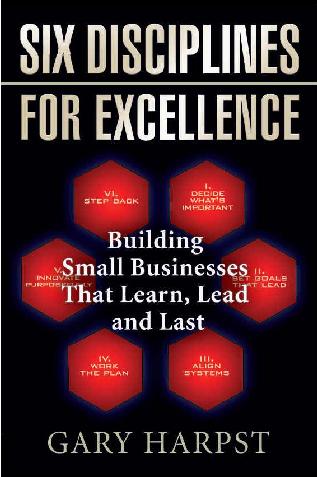
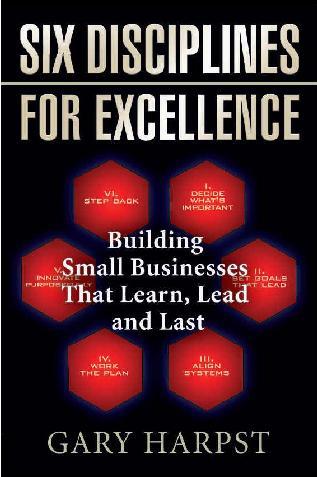
The entire premise behind the top-rated book "Six Disciplines for Excellence" is this disconnect between strategy and execution. The book describes the first sustainable program for strategy-driven execution.

To quote author, CEO and founder Gary Harpst: "Knowing what to do is not the problem - it's doing it - consistently over a long period of time."

In a related way, author Larry Hrebiniak from the University of Pennsylvania's Wharton School offers his roadmap for execution that encompasses what he sees are the key success factors from his book "Making Strategy Work: Leading Effective Execution and Change,"

  • Organizational structure
  • Coordination
  • Information sharing
  • Incentives
  • Controls
  • Change management
  • Culture
  • The role of power and influence in the execution process

Six Disciplines - What Makes It Work?


The reasons why most businesses fail is not strategy - it's execution.

"Knowing what to do isn't the problem - doing it is!"

Six Disciplines is the first sustainable program for strategy-driven execution.

How was Six Disciplines designed? (Taken from Six Disciplines for Excellence - page 55)


  1. Those in the business know it best. The Six Disciplines Methodology is optimized to draw priorities and decisions out of the team members in the business; it does not suggest what their priorities should be.
  2. A commitment to discipline exists within the organization. Leadership needs to be willing to take an orderly apprach to learning how to plan and execute better.
  3. People trust each other. Team members must be wulling to work through conflict and challenges with openness and honesty.
  4. People are born to innovate. Innovation is just another name for problem-solving, and every team member has the innate ability - and desire - to solve problems.
  5. Principles of excellence transcend type of business. Even though product and service businesses are very different, they're still made up of - people. Setting priorities, and helping people learn to innovate and meet those priorities - involves basic "business-building" disciplines that can be applied to all types of businesses.

Managing Change

Consultant and author Arnold Brown thinks a lot about well … thinking.

In his new book, FutureThink, he connects the idea of how our thought processes affect the way we deal with change in our organizations.

In this article from Optimize Magazine, he was asked "What's the hardest thing about managing change?"

"People always talk about the learning curve. The hardest thing is the forgetting curve. You have to discard what you think you know. And the higher you go in management, the more difficult it is. When things are changing rapidly, you have to abandon information that is no longer useful. That takes a certain amount of courage. It's jumping into the pool when you're not sure you can swim."

"When people have acquired a certain amount of knowledge, the same thing happens. Everything is filtered through their expertise. They don't see what's happening. They don't see the signs of change. It's called educated incapacity—the more you know, the harder it is to see anything new. You have to get people to become more objective.

It's hard to do—I've been doing this for 35 years, and I still have to force myself to be objective.

It takes constant practice, but if you require and reward it, you'll get people doing it."

BOTTOMLINE: Six Disciplines is a sustainable program for strategy-driven execution. It enables small businesses to establish core competency in six basic business disciplines related to strategy, planning, organization, execution, measurement and learning. It eliminates the barriers that prevent organizations from effectively executing their strategy, while creating a new culture of effective work habits and focused business processes. Unlike ineffective alternatives like seminars, consultants and quick fixes, Six Disciplines make these new habits ”stick” by providing practical, integrated technologies to align individual performance, and on-going local coaching to ensure organizational change and personal accountability.

Leadership Begins With Passion

Harvard alumni Jonathan Byrnes writes The Bottom Line, (gotta love that catchy title!...) a monthly column that details innovative methods for increasing profit from an existing business without costly new initiatives.

He also does a lot of research on leadership. Here's a definition of leadership that has stuck with him:

Leaders are "people who leave their footprints in their areas of passion."

In order to lead what Byrnes calls "paradigmatic change," leaders need eight essential characteristics:

  • Capacity for passion. First and foremost, you need a burning drive to make things better. Change management is a grueling process, and passion will see you through it.
  • Perspective. In order to convert passion into action, you must be able to "step back" and "view" what you're doing even while you're doing it.
  • Creativity. Once you have a perspective on your business process, it takes creativity to see fundamentally new and more effective ways to do things.
  • Organization skills. You have to translate a broad vision into a very well organized, practical, step-by-step program.
  • Teamwork. You have to have the organization's best interests at heart, and really be motivated to make things better for those you seek to lead.
  • Persistence. After passion gets you started, persistence is what carries you through
  • Open-mindedness. Large-scale change necessarily involves a good measure of learning by doing. A good leader needs a high level of tolerance for ambiguity.
  • Integrity. Integrity is more than honesty. It is a matter of being genuine, being motivated by your deeply held values to make your organization and your coworkers better off. This is where the passion, persistence, and teamwork come from.

Why Most Business Improvement Books Fail - Part II

You’ve read Good to Great, Built to Last, E-Myth, 7 Habits, Getting Things Done …and probably many others.

So….why hasn’t your organization’s performance changed?

What’s missing? Why doesn’t it last?

There’s no doubt – business leaders “love” top-selling business books. Take a look at the best-selling lists, and you’ll find the list full of very popular business performance improvement books.

The problem with most best-selling business books is -- while they all seem to have a least a few good ideas -- you only get a temporary “lift” from reading them.

The major frustration business book readers find is that a few weeks or months later – you find yourself doing “the same old things, the same old way.”

Why don’t these business improvement ideas stick? What’s missing?

The reason is: a book by itself - while it can be good - is not enough.

BOTTOMLINE: The top-rated book Six Disciplines for Excellence takes the best practices of dozens of great books like Good to Great, Built To Last, E-Myth and many others – and integrates these ideas into a sustainable program for strategy-driven execution that is cyclical, repeatable, and practical. Then, we make the Six Disciplines practical by offering integrated Internet-driven tools that everyone in your organization uses every day. And, we offer local coaching through Six Disciplines Leadership Centers to provide your organization with accountability. The result? An organization that continually learns how to do things right, how to do the right things, - and how to do the right things right, year after year.

Why Most Business Improvement Books Fail

The problem with most business improvement books is that they're filled with platitudes, feel good messages and lofty aspirations of what great companies and great leaders have done.

The fact that you’re reading this right now – is a clear indication that you’re interested, perhaps even to the point of being passionate – about continual business improvement.

Consider one of the best sellers in this category, by Jim Collins: Good to Great: Why Some Companies Make the Leap... and Others Don't. No doubt a popular book – but the frustrating part is evident in its title. It focuses on WHY – not HOW.

Another one by Jim Collins: Built to Last: Successful Habits of Visionary Companies (Harper Business Essentials). Again, popular book – yet it focuses on WHAT the habits are, not HOW to acquire them in your business.

Perhaps therein lies the problem?

Most business improvement books focus on WHAT successful organizations do, or WHY they do certain things.

Strategy, while important, is the WHY and WHAT.

Execution is the HOW.

BOTTOMLINE: Read Six Disciplines for Excellence. It reveals the first sustainable strategy-driven execution program for small businesses.

Coaching Makes The Difference

Great athletes, winning teams and top business executives wisely hire the most experienced coaches they can find.

Why?

They know the right things to do - but human nature gets in the way. They get temporary improvements by themselves, but they want it to last. They want the improvements to stick.

They want sustainable improvement.

You've tried it your way. Now try it the Six Disciplines way.

BOTTOMLINE: Organizations that adopt Six Disciplines benefit from three things they can't get by going it alone:

  1. Accountability.
  2. Sustainable Performance
  3. Lasting Excellence.


Leadership Lessons for the Small Business CEO


When GE's CEO Jeff Immelt teaches up-and-coming leaders at the company's famed management-development center, he runs through a checklist of what he calls "Things Leaders Do."

In this interview with Fast Company, Immelt reveals his own leadership Top 10 checklist.

1. Personal Responsibility. 'You lead today by building teams and placing others first. "It's not about you."

2. Simplify Constantly. "Every leader needs to clearly explain the top three things the organization is working on. If you can't, then you're not leading well."

3. Understand Breadth, Depth and Context: "The most important thing I've learned since becoming CEO is context. It's how your company fits in with the world and how you respond to it."

4. The Importance of Alignment and Time Management: "At the end of every week, you have to spend your time around the things that are really important: setting priorities, measuring outcomes and rewarding them."

5. Leaders Learn Constantly and Teach: "A leader's primary role is to teach. People who work with you don't have to agree with you, but they have to feel you're willing to share what you've learned."

6. Stay True to Your Own Style: "Leadership is an intense journey into yourself. You can use your own style to get anything done. It's about being self-aware. Every morning, I look in the mirror and say, 'I could have done three things better yesterday.'''

7. Manage by Setting Boundaries with Freedom in the Middle: "The boundaries are commitment, passion, trust, and teamwork. Within those guidelines, there's plenty of freedom. But no one can cross those four boundaries."

8. Stay Disciplined and Detailed: "Good leaders are never afraid to intervene personally on things that are important. Michael Dell can tell you how many computers were shipped from Singapore yesterday."

9. Leave a Few Things Unsaid: "I may know an answer, but I'll often let the team find its own way. Sometimes, being an active listener is much more effective than ending a meeting with me enumerating 17 actions."

10. Like People. Today, it's employment at will. Nobody's here who doesn't want to be here. So, it's critical to understand people, to always be fair, and to want the best in them. And when it doesn't work, they need to know it's not personal."

Excellence Quotes of The Day - 10/19/06

"Excellence is not a skill. It is an attitude. Excellence comes not from education, money, ability or connections alone. It comes from a commitment to do the very best with whatever you have available."

"Excellence is very valuable, and it is open to anyone who commits to follow it. Excellence is always in demand, in any field of endeavor, in any economic climate, in any set of circumstances."

"Excellence comes from thoroughness, from attending to the necessary details while staying clearly focused on the purpose. Excellence comes from a sincere desire to make a positive difference."

"No matter what the task, if it is followed through with excellence, people will take notice. The effort you put into creating excellence will be effort wisely invested. Everyone has the opportunity to produce excellence in their own way, and it is an opportunity that anyone would do well to capitalize on."

(Copyright ©2005 Ralph S. Marston, Jr. All rights reserved - Ralph S. Marston, Jr. )

Leading Successful, Sustainable Change

Many change efforts within organizations are declared failures and abandoned before they are given a chance to succeed.

Most major change initiatives fall far short of the goals and expectations set for them. Here are seven steps that make the critical difference to make change succeed and last.

1. Create a sense of urgency. For an organization to change, it needs to have something like a heart attack-a wide-spread sense that if we don't change our ways, and soon, we may die. This pain and fear is behind almost every major change initiative. You don't go through the expense and hassle for the fun of it. You do it because you believe you have to.

2. Build a strong guiding coalition. Most change initiatives flounder or fail because of problems in the management team, even when there is no evidence of discord. Everyone sits around the conference table nodding their heads in agreement when the change initiative is proposed and discussed.

3. Develop a clear vision. What will success look like? What's the plan for getting there? How will this plan overcome the pain of not changing? Articulate the vision in a few forceful and memorable words.

4. Ask different questions. If you want a different response-a different set of behaviors-then you should ask different questions that are aligned with the new strategy. If you create a sense of urgency around your plan, anticipate and fix problems in the leadership team, develop a clear vision of the end state you want, and encourage behavior change by asking different questions, you will have a strong foundation for change.

5. Work the plan. Get the leadership group into strong alignment, develop and communicate the vision, and stress the need for urgent action first. When people know why the change, they can figure out what needs to change and how to change it.

6. Design in a short-term win. Major change initiatives take time. The disruption, the learning curve, the initial clumsiness-all of these take a human toll. Look for the things that are going right, publicize and celebrate them. Early wins are critical to creating a climate where people will keep motivated.

7. Embed the change in the culture. New behaviors take time to become habitual. Spaced repetition is the best way to embed new ways, and means, and attitudes. If you skip this simple follow-up, all the expensive, painful, disruptive process of changing is wasted. Over time, people revert back to the old, familiar ways, and one more change initiative fails and is forgotten. Spaced repetition is a highly effective way to make change last and to make the idea of change a permanent characteristic of the culture.

Organizational Learning and Sustainable Excellence

The ultimate goal of effective organizational learning, is to change the way people think, perform or act.

Generating new knowledge or information from learning activities is only one step in the organizational change process.

Other steps include:
  • Recognizing the change in behavior that is needed
  • Defining the current state
  • Learning new capabilities and habits
  • Practicing new behavior, learning new habits and adapting
  • Measuring success
  • Reinforcing and rewarding; and making it the norm.

BOTTOMLINE: One of the toughest parts of change is making it stick - making it last. Six Disciplines is the first sustainable strategy-driven execution program - designed specifically for smaller businesses. Six Disciplines enables small businesses to establish core competency in six basic business disciplines related to strategy, planning, organization, execution, measurement and learning. Six Disciplines eliminates the barriers that prevent organizations from effectively executing their strategy, while creating a new culture of effective work habits and focused business processes.

Unlike ineffective alternatives like seminars, consultants and quick fixes, Six Disciplines make these new habits ”stick” by providing practical, integrated technologies to align individual performance, and on-going local coaching to ensure organizational change and personal accountability.

Small businesses using the Six Disciplines program learn how to do things right, how to do the right things, and how to get them done right - year after year. It’s all about learning how to do the right things – right.

Strong Moral Principles And Business Success

In Moral Intelligence: Enhancing Business Performance & Leadership Success (Wharton School Publishing), Doug Lennick and Fred Kiel look at the connection between strong moral principles and business success.

Using original research, the authors show how the best performing companies have leaders who are able to promote moral intelligence throughout their organizations, despite the fact that the business world all too often seems to reward bad behavior, (e.g., win at all cost) at least in the short run.

This book focuses on four principles that are vital for sustained personal and organizational success:

  • Integrity
  • Responsibility
  • Compassion
  • Forgiveness

BOTTOMLINE: Integrity is the hallmark of the morally intelligent person. When we act with integrity, we align our behavior to conform to universal human principles. We do what we know is right; we act in line with our principles and beliefs. If we lack integrity, by definition, we lack moral intelligence. The more you develop your moral intelligence, the more positive changes you will notice, not only in your work but in your personal well-being. "It's not the mistakes you make, it's how you react to those mistakes."

Servant-Leadership Reviews Six Disciplines for Excellence

Trevor, the well-respected moderator of the Servant-Leadership Blog (and Assistant Director of the MA in Servant-Leadership program at Viterbo University in La Crosse, WI.) posts this review of the book Six Disciplines for Excellence.

A few excerpts:

"What makes this book unique, not to mention worthwhile? The book is filled with concrete examples, processes and checklists that will help a business owner in creating a successful business. Anyone who is in need of ways to move an organization forward will find a treasure chest of ideas in its pages."

"One aspect of the Six Disciplines approach to business-building that will be of interest to our readership: Six Disciplines Leadership Centers are being launched nationwide, using a business coaching component that employs many servant-leadership principles, helping small business team members to use the Six Disciplines Methodology – to keep on track, and work toward achieving excellence that lasts."

Read the entire review here.

Fast Company's Rules of Business

Todd, over at 800-CEO-Read, reports on a new book from the editors and writers of Fast Company magazine.

The book is called "The Rules of Business: 55 Essential Ideas to Help Smart People (and Organizations) Perform At Their Best" (available from 800-CEO-Read)

Chapter topics include:

  1. Change
  2. Communication
...of course our favorite, # 7. Execute!

Get the highlights of the book, the rest of the TOC, and a few great quotes from the book here.

Executive Coaching: Is It Coming Of Age?

Management-Issues offers the key points from a recent Harvard Business Review article, that states American companies are spending more than $1 billion annually on coaching.

The biggest problem? Coaching remains a largely unregulated industry and there has been little research into the effectiveness of the various approaches to coaching -- or even how to measure its success.

The study did point out that "coaching programs can make a significant difference in overall organizational effectiveness by improving teamwork and ability to execute strategy."

Another key finding: "Coaching is particularly effective when it is focused on driving behavioural change rather than cultural change and when the emphasis is upon positive performance outcomes rather than remedial issues."

And: "Most organizations are still in the early stages of learning to use coaching in a systematic way and may not be realising its full value."

BOTTOMLINE: Fortunately, the steps used to make coaching effective are easily achieved, according to this research study. Visible leadership from the top, defining behavioral objectives and measuring success and centralized management of coaches will result in desired results.

The ultimate benefit will be leaders who are better equipped to drive organizational performance, more skilled at working with team members who are better attuned to learning and adapting throughout their careers.

Wednesday, October 18, 2006

Alignment Is A Top Priority for CEOs

Alignment is a priority for the CEO, particularly aligning the individual objectives of the managers and experts with the organization's strategic priorities.

Alignment of individual team member accountability can even be a source of competitive advantage.

The key questions to ask include:

  • Are you sure that your frontline experts are working on the right priorities?
  • Are they able to define their own role in line with these priorities?
  • Are you sure that your frontline experts have the right competencies?
  • How do you motivate your people to take initiative for continuous improvement?
  • How do you increase and measure their accountability?
  • How do you reward accountability and engagement?
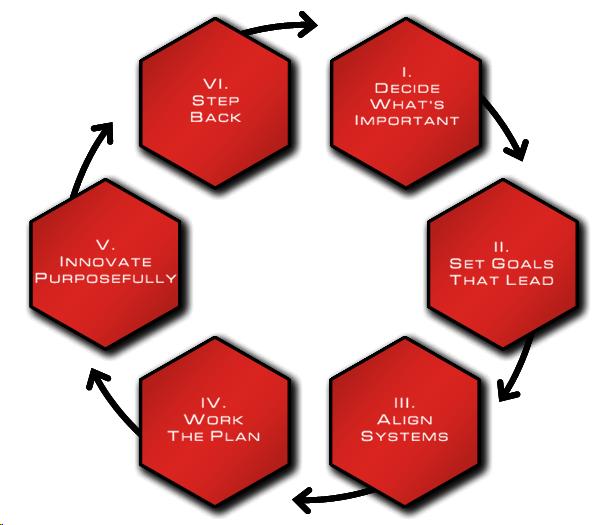
BOTTOMLINE: Discipline III. Align Systems, is all about aligning processes, policies, measures, technologies and people with the strategic intitiatives of the organization.

Tuesday, October 17, 2006

Discipline V: Innovate Purposefully

According to a recent study by Apex Performance, a leader development and peak performance training firm, top senior executives receive almost no training in how to think creatively.

Some key findings:

  • Creativity was cited by 92 percent as a key part of their job.
  • 75.5 percent of these people reported they receive little, if any, training to help them to be creative.
  • 89.1 percent are expected to be innovative, 70.1 percent get no related training.

Innovation is just another name for problem-solving, and everyone in the organization has the ability to solve problems.


Discipline V. Innovate Purposefully is unlike the other disciplines in that it provides tools and principles that are used throughout all the other Disciplines to help people set clear goals. These goals will align with company priorities, and then employees will use their innate creativity to meet or beat those goals.

4 Secrets of High Performing Organizations

Bud Bilanich, over at the Common Sense Guy, has a new book out that is highly recommended to readers of Be Excellent, called "4 Secrets of High Performing Organizations."

In 4 Secrets of High Performing Organizations, Bud suggests that all highly successful businesses have four things in common:
  1. Clarity of purpose and direction – they know why they are in business and where they’re going.
  2. The sincere commitment of everyone involved – all of their employees are engaged and committed to the success of the business.
  3. Skillful execution of the things that matter – they do the right things right. They are always looking for ways to do things better, quicker, cheaper.
  4. Mutually beneficial relationships with important outside constituencies – they understand that they are not in it alone. They build strong partnerships.

BOTTOMLINE: I recommend you to Bud's site - and pick up his book today!

Monday, October 16, 2006

What Keeps CEOs Up At Night?

Consulting firm Accenture has released its survey of 425 senior executives at the world's largest companies in all major industries and geographies. It’s clear from the results that the war for talent is in high gear.

Top Issues for Senior Executives

1. Attracting and retaining skilled staff - 35%
2. Changing organizational culture and employee attitudes - 33%
3. Acquiring new customers - 32%
4. Developing new processes and products to stay ahead of the competition - 29%
5. Increasing customer loyalty and retention - 29%
6. Managing risk - 29%
7. Improving workforce performance - 28%
8. Increasing shareholder value - 27%
9. Using IT to reduce costs and create value - 27%
10. Being flexible and adaptable to rapidly changing market conditions - 26%

BOTTOMLINE: Regardless of size of company, senior leaders are concentrating on top issues that include (#1 and #7) people performance management, (#2) organizational learning, (#4) business process improvement (#4 and #9) -- all of which are core aspects if the Six Disciplines strategy-driven execution program.

(Thanks to Management Consulting News for the news item...)

How to be More Productive: A Burning Desire

Michael Pollock at Small Business Branding hit a nerve when talking about productivity:

One reader offers:

"I think it boils down to one's goals and the desire to achieve them. I think that time management should be the tactics that support the strategy and ultimately the goal. I think that for most of us, the lack of a burning desire is what holds us back."

Pollock offers:

"My guess is you probably don't need a burning desire to be productive. But what is life without burning desire, passion, higher purpose and all that stuff? Maybe productivity should be just the means rather than the end. Perhaps it should be the means by which we live out our passions and fulfill our desires, whatever they may be."

And in quoting David Allen's Getting Things Done:

"When I habitually applied the tenets of this program it saved my life ... when I faithfully applied them, it changed my life.

BOTTOMLINE: What does it take to achieve lasting excellence - in ANY aspect of your life? A systematic methodology, practical technologies, local coaching to keep you on track, and the passion or burning desire to make it work. Anything less, and it falls apart, like a house of cards.

Attitude, Not Training, Makes the Difference

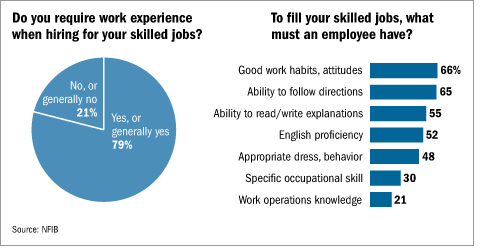
The Wall Street Journal reports that when hiring new workers, most small-business owners expect to see much less in specific job training and demand much more in attitude.

66% of the owners polled by the National Federal of Independent Business, say good work habits and attitudes top the list of what's required, followed by the ability to follow directions, at 63%.

Higher on the list of requirements were more general skills, such as the ability to read and write directions and explanations, a demand of 55% of the owners; English language proficiency, 52%; work experience, 51%; and appropriate dress for the workplace, 49%.

BOTTOMLINE: Good work habits (staying focused, aligned with strategy) and attitude are seen as being more important by small business leaders than other attributes.

Setting a Higher Standard of Excellence


In this article by Orvel Ray Wilson, he explains "...the foundation of an effective performance-based compensation plan is a set of clear and specific goals for your organization as a whole, for each functional department, and for each individual employee. These goals must be objective and quantifiable."

BOTTOMLINE: By using several integrated tools in the Six Disciplines Business System, you're able to accomplish the above steps easily:

  • Discipline II. Set Goals That Lead - define measures, define targets, define initiatives
  • Discipline IV. Work The Plan - define Individual Plans (IPs) quarterly, review IPs weekly, prioritize IPs daily
  • Discipline V. Innovate Purposefully - recognize contributions

The Pursuit of Excellence: Reviews Six Disciplines for Excellence

Glenn Gleason, author of the "Life, Work and the Pursuit of Excellence" blog, offers up this comprehensive review the best-selling book "Six Disciplines for Excellence."

Here's the review:

“A few weeks ago I came across one of the best business books on "Excellence" that I had read in years. Having been a management consultant to organizations both big and small, I have prided myself on being able to take all the complexity of latest business thought and practice and boil it down into its simplest components. Well - I have met someone who has mastered that skill. Meet Gary Harpst.

Gary wrote the book - The Six Disciplines for Excellence - back in 2004. Gary was the former CEO of Solomon Software and has put all of his insights from his success at Solomon into a very well done book. Whether you are a small business owner or a senior executive at a major corporation - this book has captured the essence of what defines a "World Class Enterprise".

More importantly - Gary has built a robust web site that not only outlines the method of the book, but includes many of the templates and exercises he profiles in each chapter.

One step further - Gary and his team now offer a complete software system and consulting service that follow the Six Disciplines. How many book writers do you know that back up their methods with a service and product like this?

Finally - Gary has a great blog that I have enjoyed following and has some very practical and useful insights.”


Employee Retention, Succession Planning and Performance Management

In today's highly competitive market for talent, most organizations have failed to develop even a rudimentary infrastructure to help bind their employees to the organization.

There is an enormous amount of research that has been conducted as to the reasons why employees leave organizations and of top 5 reasons, the three which always appears:

1. I was not appreciated
2. I was not developed
3. There was no career plan

These factors are discussed in this article from the good folks at BNET.

BOTTOMLINE: People performance management is one of the six core areas of business management that was researched, then integrated into the Six Disciplines program and supporting tools and technologies. The other areas include strategic planning, quality control, integrated (organizational learning), business process automation, and measure driven improvement.

Fast Innovation? Or Innovate Purposefully?

Can you really reduce time-to-market by up to 80 percent?

Not very likely...no matter what methods you use.

But the new book: Fast Innovation: Achieving Superior Differentiation, Speed to Market, and Increased Profitability provides "quantitative methods such that a CEO or manager can know that the innovation process will both meet its required delivery date and create a differential offering with a high probability of success.”

BOTTOMLINE: In "Six Disciplines for Excellence," Discipline V - Innovate Purposefully (pages 182-187) outlines five keys to innovation that unlocks the potential of all Team Members:

  1. Engage Everyone
  2. Focus on the Important
  3. Embrace Constraints
  4. Take Informed Risks
  5. Give Learning Time

11 Qualities of a Leader

In Learning To Lead (by Warren Bennis & Joan Goldsmith), the authors list these 11 qualities of a leader:

  1. Know themselves through reflection and self-observation (*pg. 20)
  2. Understand both their history and present environment (*pg. 32)
  3. Are clear about their values and goals (* pg. 68, 92)
  4. Are aware of and can apply their learning style to solving problems (* pg. 198)
  5. Are willing to be lifelong learners (*pg. 22)
  6. Can take risks and are open to change (* pg. 180)
  7. Are able to accept mistakes and failures as necessary precursors to creativity and problem solving (* pg. 186)
  8. Are skilled in creating a vision and seeing themselves and their lives as part of this vision (* pg. 77)
  9. Are able to communicate their vision with meaning so that others are inspired by it (* pg. 78)
  10. Are committed to maintaining trust through empathy, constancy, and integrity (* pg. 55, 250)
  11. Are skilled in translating intention into reality thorough committed action (execution) (* pg. 34)

BOTTOMLINE: Next to each are key page number references in "Six Disciplines for Excellence:Building Small Businesses That Learn, Lead and Last" that reinforce each of these 11 leadership qualities.

Friday, October 13, 2006

Creating A High Performance Organization

In this Chief Executive article "Realizing the High Performance Enterprise," they talk about "success that endures for decades rather than years is indicative of a deeply instilled and carefully refined mix of competencies and skills that allows an organization to unleash its full potential."

That there is no silver bullet to sustainable success won’t come as a news flash to CEOs - of large or small businesses.

After a three-year study of data from hundreds of companies, the consulting firm Accenture dubbed this predisposition “competitive essence,” a quality exhibited by the one company out of 10 that outperforms its competitors for a decade or more.

According to Accenture: "competitive essence has three components: market focus and positioning, distinctive capabilities, and performance anatomy. Each is important, but even more important is that they’re kept in balance, aligned with one another, and constantly renewed.”

Read more about competitive essence and creating a high performance organization here.

Engaging Your Workforce

Jack Welch recently identified three areas that offer the best picture of a company’s well-being: Employee engagement, customer satisfaction, and - of course - cash flow.

Employee engagement is perhaps the most telling indicator of competitive advantage. And, recent research has surfaced that quantifies the difference employee engagement can make to the bottom line.

ISR, a Chicago-based HR research and consulting firm published a study recently and found:

  • 52% difference in one-year performance improvement in operating income between companies with highly engaged employees as compared to those companies with low engagement scores.
  • High engagement companies improved 19.2% while low engagement companies declined 32.7% in operating income over the study period.
  • 91% of companies surveyed have measures that relate to human capital
  • 58% of companies surveyed include such measures as part of their key performance indicators or business performance scorecard, but only 46% actively assess the value of human capital and its impact on business performance.
BOTTOMLINE: Workforce environments reflect the priorities and values of the organization’s leaders. This represents an underutilized benchmark for evaluating CEO performance.


(Thanks to Rob May at BusinessPundit for the tip)

Thursday, October 12, 2006

Excellence Quotes for 10/12/06

"Great companies first build a culture of discipline…and create a business model that fits squarely in the intersection of three circles: what they can be best in the world at, a deep understanding of their economic engine, and the core values they hold with deep passion." (Jim Collins, author of Good To Great)

"We got it right when we said that we were in search of excellence. Not competitive advantage. Not economic growth. Not market dominance or strategic differentiation. Not maximized shareholder value. Excellence…Search of Excellence — even the title — is a reminder that business isn’t dry, dreary, boring, or by the numbers." (Tom Peters, author of In Search of Excellence)

“Excellence is an art won by training and habituation. We do not act rightly because we have virtue or excellence, but we rather have those because we have acted rightly. We are what we repeatedly do. Excellence, then, is not an act but a habit.” (Aristotle)

“If you are going to achieve excellence in big things, you develop the habit in little matters. Excellence is not an exception, it is a prevailing attitude.” (Colin Powell)

Wednesday, October 11, 2006

Warning Signs of Weak Strategy Execution

You sense something is not working right in your organization, but you can't quite put your finger on it.

Here are some "warning signs" of an organization that is not "strategy-driven"

  • Not sure you understand - fully - the meaning and implication of working ON your business - not just IN it
  • You have no clear, defined process or method for working ON your business
  • Your target customer is not clearly defined
  • Your brand (your promise to your customer) is not clearly defined
  • Team members within your organization don't "get" your strategy
  • Perhaps, you're not even sure YOU "get" your strategy?
  • Goals communication - and interdependencies -- are infrequent or inadequate
  • People, systems, processes, policies and resources - are not aligned with your strategy
  • Creative energy - and the ability to innovate purposefully - is low
  • Reward systems are mis-aligned with your organization's goals

BOTTOMLINE: If you could relate with more than several of these...all is not lost. Consider spending a few minutes reading Six Disciplines for Excellence.

Tuesday, October 10, 2006

Clarity of Mission and Vision Statements


Dan Bobinski, President and CEO of Leadership Development, Inc. has published a piece over at Management-Issues, titled "How a clear vision and mission leads to more profits."

In the article, he explains his view on differences between the definitions of mission and vision - which are more often than not misunderstood, or "are intermixed, further clouding their practicality."

Our definitions?

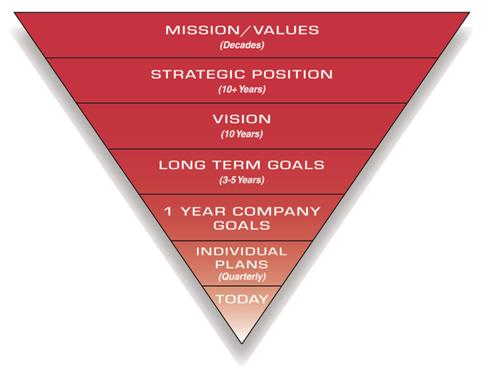
MISSION:
  • Explains why an organization exists and what its purpose is. Purpose should be enduring.
  • The focus is on WHY, not HOW.
  • Timeframe - should last for decades.

VISION:
  • Stimulates and guides strategy formulation over the years.
  • The focus is on what you want your organization to BE, to HAVE, and to DO ...in 10 years
  • Timeframe - should last 10+ years

BOTTOMLINE: "Vision and mission statements create clarity and form a basis for making both strategic and tactical decisions - all of which help a company thrive instead of survive."

Genuine Curiosity Reviews Six Disciplines for Excellence - And More


Dwayne Melancon, author of the well-respected Genuine Curiosity blog, just posted his review of Six Disciplines for Excellence.

In addition to the book review, Dwayne was also "curious" about what was actually behind Six Disciplines.

His questions, along with an in-depth discussion of the Six Disciplines Methodology, the Internet Technologies, the Six Disciplines Leadership Centers, and what it's like to be a Six Disciplines Client - are all laid out in this in-depth interview.

Hiring Right: Using Behavioral Assessments

Good research summary by Management-Issues on an often-overlooked aspect of hiring: how to find the engaged and motivated applicant during the interviewing process.

Some facts:

  • Engaged team members are proactive and have pride and ownership in their job, disengaged team members take less initiative and offer a significantly lower contribution than their engaged counterparts.
  • Disengaged team members' reduced commitment to the job and the organization will lead to faster turnover - which means increased hiring costs for the company and a reduction in productivity.

HR consultants Development Dimensions International (DDI) conducted research that revealed the interview process tends to place a high priority on exploring candidate's experience and skills -- while overlooking their motivation.

BOTTOMLINE: Six Disciplines Leadership Centers have their Clients use behavioral assessments during the interview and screening process. These assessments not only reveal experience and skills, but also help to identify areas of alignment to the position and their behavioral characteristics -- increasing the likelihood of finding and selecting the RIGHT team members.

CEO Refresher Reviews Six Disciplines for Excellence


Steven G. Lauck reviews "Six Disciplines for Excellence" for the well-respected CEO Refresher.

A few excerpts:


"There are few books that can be used as a "How To" manual; Six Disciplines for Excellence is one of them. "

"The overwhelming attraction to this book is the focus on small business. Many of the "hot" reengineering programs are directed at large companies. Small business has few tools to achieve excellence, and even fewer that lay out a concise plan."

"The book is an easy read but certainly not a quick read. It is definitely not a "read once and file away"; it should be on the desk in plain view and over time become worn with dog-eared pages from continuous review."

Read the entire review here.

Monday, October 09, 2006

2007 Planning – With a SMART Difference

It's almost year end. Time for 2007 planning and goal setting.

Effective performance management begins with developing clear expectations of what is to be accomplished and standards that can be translated into goals.

Well-articulated goals embody the SMART principle. They are:
  • Specific – goals should be targeted, nor broad and general. They should be unambiguous and explicit. They should be clearly understood by any number of different people.
  • Measurable – you should be able to tell quickly and easily if an individual has met the standard and expectation. You should develop a set of criteria that will be indicative of success or failure in meeting the goal.
  • Achievable – you’ll want to set goals that are challenging, but not incredibly difficult to achieve. A challenging objective is motivating, an impossible one is demotivating.
  • Results Oriented – don’t get caught in the activity trap. Your goals should focus on the results you expect people to achieve, not the activities they will undertake to get there. For example, “improved presentation skills” is a result; “participating in a presentation skills training program” is an activity. It’s possible to complete activities and not achieve the desired result.
  • Time Specified – people need to know the deadlines associated with goals. In a manufacturing environment, time frames may be very short (i.e. X number of pieces per shift). In a sales environment, time frames may be longer (i.e. $X sales per month or quarter). Well developed and stated goals come with time limits.

BOTTOMLINE: When setting goals for 2007, use your common sense and be SMART about it.

Small Biz Matters Reviews Six Disciplines for Excellence

Bob Schuneman, over at Small Biz Matters, offers up his review of Six Disciplines for Excellence.

Here's an excerpt:

"...this book is an absolutely essential primer for anyone currently in – or considering getting into – a small business."

"Read this book with a highlighter and/or a legal pad and pen nearby. You’ll need them.
Think of this more as a field guide or a handbook. You’ll want to keep this book nearby with your other critical business reference materials."


"This is the type of book that each time you read it, you’ll find new pearls of wisdom and – better yet – practical advice."

BOTTOMLINE: ....And Bob is "only halfway through this book...!"

See Bob's entire review here.

Seven Principles of Leadership

The good folks over at Management-Issues, offers this, from the Chartered Institute of Personnel and Development's Effective Leadership Development Guide:

  1. Firms need to have a strategy for leadership development in place, one that looks at what leadership skills are required and why.
  2. Organizations also need to select managers with the potential to become good leaders and fulfill the leadership skills required.
  3. They need to give them the right training to help managers to gain skills and become good leaders.
  4. There needs to be a clear career development policy in place, as leadership requirements will vary depending on the task and role.
  5. Line managers need to act as leadership mentors, with more experienced managers who have learnt through their mistakes helping by advising new managers
  6. There needs to be self-development, ensuring managers learn from their actions through reflection and use of mentors
  7. Organizations need to understand what is required from leaders and then put it into practice themselves.

BOTTOMLINE: Success depends on leadership shown at every level in an organization, therefore employers must pay careful attention when selecting and training their leaders. "The secret to becoming a successful leader is recognizing the greatness that lies in others."

Creating a Business That Lasts

David Daniels, over at Business & Technology Reinvention, posts about "the secret to creating a business that lasts."

To do so, David offers, an organization must base their organization upon value-creation principles. Here are the 10 simple guiding principles that his company evangelizes when helping clients looking to grow - and to last:

  1. Connect with your customer and make it easy for your customer to connect with you
  2. Structure a business model with a recurring revenue stream
  3. Make sure the technology under-pinning your product or service has a long lifecycle
  4. Launch products that have differentiated features and benefits
  5. Build for a market not just for one customer
  6. Manage each customer relationship from a P&L basis
  7. Make sure that your people manage at most 4 projects at the same time
  8. Connect with your employees for improvement & new product ideas
  9. Make sure your people are paid for performance and share in your profits
  10. Challenge your top performers and reinvent the bottom performers

BOTTOMLINE: Customers....people....products.....strategy.....execution. (Not necessarily in that order...)

Why Strategy Execution Fails

Consider the following shockers about strategy execution:
  • 85% percent of management teams spend less than one-hour a month on strategy issues
  • Only 5% of employees understand their corporate strategy
  • 92% of organizations do not report on lead performance indicators.
What are the root cause reasons for failed strategy execution?

  • Lack of knowledge of strategy and of the strategy process.
  • No commitment to the plan.
  • The plan was not communicated effectively.
  • People are not measured or rewarded for executing the plan.
  • The plan is too abstract; people can't relate it to their work.
  • People are not held accountable for execution.
  • Senior management does not pay attention to the plan.
  • Strategy is not clear, focused and consistent.
  • Conditions change making the plan, as conceived, obsolete.
  • The proper control systems are not in place to measure and track the execution
    of the strategy.
  • Reinforcers, such as, culture, structure, processes, IT systems, management
    systems and human resource systems, are not considered, and/or act as inhibitors.
  • People are driven by short-term results.

Tracking Team Member Performance

You know it's important to hold your employees accountable for real results. The trouble is, you don't know the right techniques for doing so—and don't have much time to find out.

In Keeping Employees Accountable for Results: Quick Tips for Busy Managers, Brian Cole Miller suggests the following:

  • Don't set targets too far down the road
  • Keep the measurement tool simple
  • Have your staff help create the measurement tools
  • Measure only what the employee controls
  • Give your employees access to the data

Friday, October 06, 2006

Aligning Systems for Optimum Strategy Execution

Once the strategic plan (mission, vision, values, strategic position) and the goals (vital few objectives, initiatives, measures, targets) have been established for an organization, the "hard part" begins.

Since we know that up to 90% of effectively formulated strategies fail due to execution, one of the most challenging barriers to effective execution is: an organization's own internal systems and processes!

The typical business is made up of combinations of components including:

  • Processes
  • Policies
  • Technologies
  • Measures
  • People
These components combine to make up internal "systems."

What is needed is an organized effort for continually aligning systems - meaning, getting all the components of the organization working in close cooperation to meet the goals of the company.

Two types of misalignment can occur:

  1. Creeping misalignment. This occurs every day, usually in very small ways, leading to significant misalignments to the organization's strategy.
  2. Strategic misalignment. This occurs when the systems and resources of an organization are not deployed to support strategic goals. This type of misalignment typically surfaces suddenly as a barrier to executing new strategies.

BOTTOMLINE: The cumulative effect of dozens of creeping and strategic misalignments is a signficant constraint on an organization's ability to execute its strategy. One estimate is that up to 50% of the resources of a typical organization are not applied (aligned) to the mission and vision of the company. It's an ongoing process, and working on aligning systems is a key to achieving lasting business excellence.

Barriers to Successful Execution

Why is it that less than 10% of companies are able to successfully execute their strategy?

The barriers to execution for small companies include:

  • Expertise. Areas of expertise in addressing the challenge of execution are rooted in performance management, business intelligence, knowledge management, process improvement and measurement.
  • Cost. Investments in the above areas of expertise, and the ability to optimize it -- and deliver it for small businesses - has not been made.
  • Human Factors. This includes lack of accountability, insufficient support from leadership internally.

The root problem is, most small businesses lack the expertise, resources or understanding for how to tie their strategic goals to the day-to-day activities of their people.

The solution?

What is needed is a complete, strategy-driven execution program for small businesses.

Six Disciplines removes the barriers that prevent organizations from effectively executing their strategy, while creating a new culture of effective work habits and focused business processes.

BOTTOMLINE: Unlike other business improvement attempts like seminars, consultants or quick fixes, Six Disciplines make these new habits “stick” by providing practical integrated tools to align individual performance, and on-going coaching to ensure organizational progress and accountability.

Strategy-Driven Execution and GTD

Research shows that most businesses fail, not because of poor strategy, but because of poor execution of strategy.

Execution means getting things done. But strategy-driven execution means getting the right things done.

Therein lies the big difference.

Among other things, a company's strategy describes how a company is going to survive and thrive over the long-run.

Strategy-driven execution is all about the careful alignment of limited resources to the organization's strategy -- and to nothing else.

What is NOT needed is a system focused just on "getting things done."

What IS needed is a complete program for strategy-driven execution.

A single program focused on execution, driven by an organization’s strategy and optimized for small business has not been available – until now.

BOTTOMLINE: Six Disciplines™ is the first complete strategy-driven execution program optimized for small businesses. It’s a systematic program for establishing six basic business disciplines related to strategy, planning, organization (of people, processes and technologies), execution (connecting every employee’s daily actions), along with measurement and continual organizational learning.

Six Disciplines removes the barriers that prevent organizations from effectively executing their strategy, while creating a new culture of effective work habits and focused business processes.

Unlike other business improvement attempts like seminars, consultants or quick fixes, Six Disciplines make these new habits “stick” by providing practical integrated tools to align individual performance, and on-going coaching to ensure organizational progress and accountability.

A Complete Strategy-Driven Execution Program

Consider the following:
  • According to Fortune Magazine, "less than 10% of strategies effectively formulated are effectively executed."
  • Organizations that successfully execute even mediocre strategies far outperform those that fail to execute well-formulated strategies.

So....the best course of action is to follow through on your plans and execute your organization's strategies.

Sounds so simple....yet that's where the problem comes in.

Why is it that "we know what to do...." - but we just don't do it?

Fortunately, there is a way for small businesses to execute their strategies.

But it requires a complete strategy-driven execution program.

To be complete, a business improvement program must address all key aspects of an organization (people, processes, policies, systems, technologies). It also needs to include a repeatable method, integrated tools and on-going coaching. It must also address the three key barriers (expertise, cost and human factors).

While larger businesses have spent millions of dollars on individual disciplines like strategy, performance management, etc., it has now become economically feasible for small businesses to benefit from the combination of these in a complete on-going business improvement “fitness” program. However, with any fitness program, the biggest hurdle -- is making it last.

To sustain these fundamental disciplines requires tight integration with day-to-day activities from every employee in the organization. To achieve maximum results, every employee must understand company strategy and how their daily work connects to it so they can self-manage to the strategy. In addition, it requires the accountability of an outside coach or advisor to keep organizations on track in learning and applying the disciplines. It also requires a community of like-minded organizations sharing best practices and accelerating learning.

The Internet and the convergence of efficiency and effectiveness are the enabling factors for the packaging of a next-generation program for breakthrough results in small business execution – strategy-driven execution.

BOTTOMLINE: While larger businesses have spent millions of dollars on individual disciplines like strategy, performance management, etc., it has now become economically feasible for small businesses to benefit from the combination of these in a complete on-going business improvement “fitness” program. However, with any fitness program, the biggest hurdle -- is making it last.

A single program focused on execution, driven by an organization’s strategy and optimized for small business has not been available – until now. Read "Six Disciplines for Excellence."

Creating A Learning Organization

A goal of every small business CEO should be to have their organization become a "learning organization" - one that can learn, lead and last. In effect, it is for the CEO to also take on the role of a CLO (Chief Learning Officer).

Here's a list of 20 things to keep in mind as you build your learning organization:

  1. Create a Vision and Mission for Training
  2. Align Your Endeavors With the Strategic Imperatives of the Organization
  3. Create a Strong Alliance of Internal Customers
  4. Don’t Expect the HR Director to Plan Your Career
  5. Learn More About the Operations Aspect of Your Organization
  6. Read, Read, Read
  7. Create a Learning Library for Your Organization or Business Unit
  8. Recognize and Benchmark Best Practices in Training
  9. Expand Your Knowledge Base
  10. Create a Learning Execution Strategy
  11. Keep a Notebook of Special Ideas and Projects
  12. Use Every Communication Tool Available to Reinforce Training’s Value and Contribution
  13. Establish and Differentiate the Function and Purpose of Training
  14. Join and Become Active in Professional Organizations
  15. Continually Improve Your Public Speaking Skills
  16. Create a 30-, 60-, 90-Day Plan
  17. Find a Mentor
  18. Look and Act the Part Now
  19. Pay Attention to Details
  20. Stay Focused

Wednesday, October 04, 2006

Transformation and Six Disciplines


We refer to what happens to organizations when they begin using the Six Disciplines program within their organization - as being "transformational."

By "transformational," we mean that one or more of the following occurs:

  • You begin to see your business - and your organization - in a fundamentally different way
  • You begin to swap inefficient, wasteful work habits -- for new, effective behaviors
  • You begin to make strategic decisions - from a whole new perspective
  • Your organization's way of working begins to convert to a new "accountable" way of thinking
  • You begin to change your attitude about discipline, and see it as being means to organizational freedom

BOTTOMLINE: For the organization that is "ready & able" to adopt and embrace a complete strategy-driven execution program like Six Disciplines, the outcomes are truly transformational.

The Importance of Strategic Alignment

Discipline III. Align Systems, is all about alignment. The term alignment means "close cooperation." So the discipline of "aligning systems" means getting all the components of the organization working in close cooperation to meet the goals of the company. (page 116, Six Disciplines for Excellence)

The following excerpt is from a newsletter, "Message from the President" Brian S. Lassiter, Minnesota Council for Quality:

"Alignment is one of those hard-to-define notions in organizational science -- one of those “I’ll know it when I see it” things. Webster defines alignment as “the proper positioning or state of adjustment of parts in relation to each other.” In an organizational context, the Baldrige Criteria says “alignment refers to consistency of plans, processes, information, resource decisions, actions, results, and analysis to support key organization-wide goals.”

Paraphrased, alignment is when various parts of an organization are congruent with each other -- they are consistent, in agreement, in balance. So you could define “strategic alignment” as the state of having your organizational systems aligned with your organizational strategy.

Why is strategic alignment important? Without it, organizational results are sub-optimized. If actions do not support goals…if decisions do not support strategy…if processes do not support strategic direction, then waste is created. Wasted time, wasted money, wasted materials, wasted energy.

Here are some other ways that managers can create strategic alignment within their organization:

* Align your organization’s work systems to strategy. Make sure that your organization’s structure, your communication mechanisms, and your culture all reflect the vision and direction of the company. For example, if one of your strategic objectives is innovation, then eliminate barriers to employee creativity and reward risk taking. Or if your objective is speed of service, then eliminate unnecessary levels of hierarchical approval.

* Align your organization’s training to strategy. Work to identify the skills and competencies your employees need to accomplish your strategy, both now and in the future. Again, if your objective is innovation, then perhaps training on problem solving or brainstorming techniques makes sense. If your goal is service speed, then perhaps training on Lean methods to eliminate waste will help you get there.

* Align your measures with your strategy. Senior leaders should review performance on metrics that help them monitor progress toward strategy, and probably not the tactical data that other employees are using to run the day-to-day operations. (Presumably, they should be linked, which creates alignment.)

A Business Improvement Book With a Lasting Difference


OK....

You’ve read Good to Great, Built to Last, E-Myth, 7 Habits, Getting Things Done …and probably many others.

So….why hasn’t your organization’s performance changed?

What’s missing?

Most importantly, why doesn't the change last?

There’s no doubt – business leaders “love” top-selling business books. Take a look at the best-selling lists, and you’ll find the list full of very popular business performance improvement books.

The problem with most best-selling business books is -- while they all seem to have a least a few good ideas -- you only get a temporary “lift” from reading them.

The major frustration business leaders find is that a few weeks or months later – you find yourself doing “the same old things, the same old way.”

So…why don’t these business improvement ideas "stick"?

BOTTOMLINE: Read Six Disciplines for Excellence. The book not only tells you WHAT it takes to achieve lasting excellence, it tells you HOW to get there. It’s focused on EXECUTION, not fads, ideas or more theory.

It summarizes and integrates the best practices of dozens of great business improvement books (including books like Good to Great, Built To Last -- and many others) – and integrates these ideas into a complete strategy-driven execution program that is cyclical, repeatable, and practical.

Strategic Alignment

Excerpted from an article on "Successful Organizational Leadership:Effective Execution through Strategic Alignment"

Strategic alignment can be described as the linkage between the goals of the business, which quantify the progress of the implementation of the strategy towards the vision, and the goals of each of the key contributors.

Strategic alignment, put simply, is "everyone rowing in the same direction." The tighter the linkage and the better the alignment, the likelihood of corporate execution becomes stronger.

How can strategic alignment be implemented effectively and what are the key success factors?

  1. The first component of a successful strategic alignment is the extensive communication necessary within the organization to understand the elements of the vision and of the key strategic directions needed.
  2. The second component of a successful strategic alignment is absolutely essential to link the results of each employee's job to the progress of the entire corporation strategy and to do it clearly and simply.

Organizational Excellence

A new study by strategy consulting firm McKinsey suggests that an organization is much more likely to improve its current performance and underlying health by using a combination of complementary practices rather than any one of them alone.

This research, resulting from the past four years, shows that strong organizational performance is really fueled not by isolated interventions, but by a combination of three or four carefully selected complementary ones—what they call management "practices."

Three main conclusions stand out from their research

  1. Executives should not look to simplistic organizational solutions. When applied in isolation, popular techniques such as management incentives and key performance indicators (KPIs) were strikingly ineffective.
  2. High-performing companies must have a basic competency in all of the available practices.
  3. Managers should concentrate most of their energy on a small number of practices that, introduced together, typically produces the best results.

Which combinations of practices are most effective at creating high levels of near-term organizational performance and longer-term organizational health—meaning the ability to create sustained performance year after year?

Careful selection is crucial because the complementarity among practices (the additional impact they have when applied together) is what creates organizational excellence.

What is this proven combination of practices?

  • Accountability, clear direction setting, and a strong culture as the main foundations of a high-performing company.

BOTTOMLINE: To achieve these outcomes, leaders must:

  • Provide for clear roles within a structure matched to the needs of the business (accountability), articulate a compelling vision of the future (direction), and develop an environment that encourages openness, trust, and challenge (culture).

What Gets Measured, Gets Improved

Perhaps you've heard it this way:

"If you don't measure it, you can't manage it...."

Along the same lines, in business:

"What gets measured, gets improved..."

Michael Cage, over at The Home of Small Business Marketing & Entrepreneurship offers his take on "What gets measured, gets improved" as he compares it to fitness, working out and dieting.

BOTTOMLINE: "When you started tracking progress, you'll "get it." Truth is like that sometimes, easy to see when you are willing to *really* look. When the things you want improved exist “out there” in the daily hustle and bustle, it’s easy to let a day slip without doing something about them. Track your progress!!

Why Good Strategies Fail: Execution, Execution...

More on the importance of execution, this time from The Wharton School - University of Pennsylvania.

The shortcomings of a bad strategy are usually painfully obvious -- at least in retrospect. But good strategies fail too, and when that happens, it's often harder to pinpoint the causes.

Yet despite the obvious importance of execution, relatively have focused on what kind of processes and leadership are best for turning a strategy into results. Experts who study strategy offer some tips for improving execution in this summarized article.

BOTTOMLINE: "One of the major barriers to achieving lasting excellence is how little formal effort organizations put into learning how to execute strategy. This capability is critical, because service offerings and product lines come and go, but the core competence to define and execute a strategy is forever." (page 34, Six Disciplines for Excellence.)

The Essence of Organizational Change

The good folks over at Management-Issues, posts this article about "Getting to the heart of organizational change."

The premise?

  • Successful organizational change should be as much about changing the way people think and behave -- as about overhauling how they work.
  • While training and development obviously is hugely important in effective organizational change, it should be just one element of a larger transformational package.
  • Successful change management needed to be as much about changing attitudes and behaviors as about changing skills or competencies.

BOTTOMLINE: "Focusing on changing processes, procedures and even your employer brand without addressing how you expect your people to change at the same time is too often a waste of money. What companies should be trying to do is creating a different capability rather than simply skills building. It needs to be about attitude of mind."

Tuesday, October 03, 2006

Strategy Management in Small Businesses

Many organizations suffer a disconnect between strategy formulation and its execution.

The answer? Harvard Business School professor Robert S. Kaplan (creator of the balanced scorecard) and colleague Andrew Pateman argue for the creation of a new corporate office - the "Office of Strategy Management."

Over the past fifteen years, they studied the root causes of this disconnect between strategy and performance:

  • Their research showed most organizations do not have a strategy execution process.
  • Many have strategic plans, but no coherent approach to manage the execution of those plans.
  • Organizations need to find a consistent, coherent way to translate their strategy into operational terms.
  • 60% of typical organizations do not link their strategic priorities to their budget.
  • 67% of HR and IT organizations develop strategic plans that are not linked to the organization's strategy.
  • 70% of middle managers and more than 90% of front-line employees have compensation that is not linked to the strategy
  • 95% of employees in most organizations do not understand their organization's strategy.

In short, there is often a chronic disconnect in organizations between strategy formulation and strategy execution. Organizations failing to make this link are destined to be among the failures.


BOTTOMLINE: So your organization is too small to start an "Office of Strategy Management?" Consider the first complete strategy-driven program designed specifically specifically for smaller organizations. Consider a program that eliminates the barriers that prevent organizations from effectively executing their strategy, while creating a new culture of effective work habits and focused business processes. Unlike partial attempts like seminars, consultants and quick fixes, consider a program that make these new habits ”stick” by providing practical tools to align individual performance, and on-going coaching to ensure organizational progress and accountability. Small businesses using such a program learn how to do things right, how to do the right things, and how to get them done right - year after year.

Consider Six Disciplines.

Instant Poll: What Is Your Biggest Challenge?

What is the biggest challenge for small businesses?
Select up to 6 of the following:
Strategy
Planning
Measurement
Execution
Learning
Leadership
powered by Vizu.com: See what the world thinks

Changing Organizational Behavior

Pick any business improvement method.

One thing they all attempt to do is change organizational behavior -- or at least -- change the individual behavior of executives and/or team members within the company.

Marshall Goldsmith offers his take on "Changing Company Behavior One Individual at a Time."

"The easy part is that successful people believe they can change their behavior - that is, that they can reach a goal. The hard part is that they have had so much positive reinforcement for their past behavior that it is difficult for them to let go of what they perceive has led to this success."

BOTTOMLINE: Organizational change comes as a result of individuals changing behaviors, replacing old (negative) habits with new (positive) habits. It's a long-term organizational learning process that happens over time. It's a human nature struggle than can be achieved with a complete program of consistent business improvement methods, practical integrated tools, and and outside advisor coach to keep you on track. Which is why Six Disciplines works for small businesses.