The Six Disciplines blog has moved!

You will be automatically redirected to our new home. If that does not occur, please visit:

Friday, May 05, 2006

Why Business Needs More Geeks

Rob over at BusinessPundit, offers his take on why business needs more geeks.

His premise?

"When I talk about geeks, I am not making blanket statements about tech workers. Plenty of tech workers are lousy at what they do. What I mean by geeks is people that are fascinated with their work, enjoy it, and are willing to do it for fun."

So what can we do? How can business return to the roots of capitalism? By embracing geeks. Here are the top five reasons I think business needs them:

  1. Geeks seek knowledge for it's own sake.
  2. Geeks like to experiment.
  3. Geeks openly debate the merits of technical ideas.
  4. Geeks are concerned with doing good work just because.
  5. Geeks are about results, not office politics.

BOTTOMLINE: Rob says: "Imagine working in a company where the business leaders embraced these geeky ideas. Imagine the impact a company could have if filled with people who always wanted to learn, debate, and do things the right way instead of the easy way. Imagine working with business geeks who love what they do because they believe business itself is ultimately cool and fun."

Thursday, May 04, 2006

Leadership: Be, Know, Do

Once again, our good friend Skip Angel over at Random Thoughts of a CTO offers his take on a leadership framework "to help others understand what leaders need to aspire to become."

It's simple, straightforward, and easy to remember:

BE...

  • A professional.
  • A professional who possesses good character traits.

KNOW...

  • Yourself.
  • Human nature.
  • Your job.
  • Your organization.

DO...

  • Provide direction.
  • Implement.
  • Motivate.

BOTTOMLINE: This framework, while it works well for personal leadership, also works well (slightly modified) when developing the Vision Statement for an organization. Ask yourself:

  • What do you want your organization to BE in 10 years?
  • What do you want your organization to HAVE in 10 years?
  • What do you want your organization to DO in 10 years?

This kind of tangible vision increases understanding and motivation. It's one more step in the process of moving people from "good intentions to concrete reality."

Wednesday, May 03, 2006

Sports Excellence - A Tribute to Earl Woods

This, from a tribute to Earl Woods, dedicated father of Tiger Woods, who passed on today at age 74:

"In an athletic world filled with athletes who jog to first base and give half-hearted efforts, Woods stands out for his consistent excellence each and every time he steps on the stage. The fact that he has carried himself with such impeccable manners and decorum off said stage is even more impressive, because we know in this regard, he’s the exception, not the rule.

“I wanted to raise a good person,” Earl Woods told Golf Digest in November of 2000, and therein lies the real glory to a man whose life deserves to be celebrated. Earl Woods never asked of himself anything more than what many of us ask of ourselves when we put our kids to bed at night: Let them be safe. Let them be respectful. Let them be strong. Let them know right from wrong.

BOTTOMLINE: They poured the foundation. They showed the way. That Tiger Woods followed in a manner that has helped make him one of the world’s most admired athlete is a tribute to the power of love. The dignity and humility that have accompanied this incomparable success of Tiger Woods? That is owed to a legacy left by Earl Woods. May he rest in peace.

On Creating Game-Changing Innovations

Scott Cook, the founder of Intuit (makers of great softwarea solutions like Quicken, Quickbooks, TurboTax, etc.) has some great insight on on creating game-changing innovations.

As Cook suggests:

"Innovation happens at the junction between business and customer needs, not from executive ideas or lonely geniuses within the company. Indeed, innovation bottlenecks are often at the top. Creating a culture of innovation is about nurturing customer observation, incubating new ideas, celebrating failure, and staying out of the way."

At Intuit, the goal is to change lives so profoundly that people can't imagine going back to the old way. With that in mind, Cook gave some examples of game-changing business ideas and showed how they were born by the understanding of an unmet customer need and really good innovative solutions.

Cook also highlights the five principles of corporate innovation and outlined the five basic models of innovation:
  1. The lone genius
  2. The boss is a genius
  3. Copy competitors' inventions
  4. Cloister the geniuses in a lab
  5. Make your people the geniuses
Not surprisingly, Scott Cook prefers model #5:

"This is what really works. None of the other models are sustainable or effective in creating a culture of innovation in the long term. Models 1-4 tend to create pockets of innovation that are limited and isolated from the rest of the company. The source of invention is unlikely to be the big executive: innovation comes from where the business connects to customers. It scales, because it allows the company to create many "contact" groups between the company and the customers."

The full text of Scott Cook's presentation at CHI 2006 has also been posted by Sébastien Paquet.

Enthusiasm and Passion

Scott Young has an great entry on Enthusiasm.

Enthusiasm is like any other skill. If it is continually practiced and exercised, it gets better. If it is not, then it will atrophy. Enthusiasm rarely comes naturally and it must be the result of conscious effort. Practicing the ability to use enthusiasm can keep you excited and driven even in horrible circumstances. Without this ability even great circumstances are viewed through the lens of sarcasm and cynicism.

Passion
Genuine enthusiasm can only be sustained about something you are truly passionate about. Anyone can get themselves hyped up over a boring situation for the moment, but sustained enthusiasm can only come when you deeply care about something. If you aren’t that interested in the outcome of something, you won’t be able to create enthusiasm.


Don’t spend your time pursuing things that you aren’t passionate about. If you aren’t passionate about something, try to minimize or remove the time it is taking from your life. Nobody is going to applaud you for working at a boring job, having boring hobbies or staying in a dead relationship when you are dead. We are ultimately responsible for the amount of passion we experience in our lives.

If you look at really successful people, all of them having something they are very passionate about. These people have a drive that compels them to give 110%. Nothing is more motivating than an obsessive passion. As a self-proclaimed obsessive about personal growth, I can attest to that.

BOTTOMLINE: Common sense? Perhaps. Insightful? You bet! Keep in mind - Scott Young - is still in high school. How about THAT for enthusiasm and passion??

Tuesday, May 02, 2006

What If...Part V

What If...

...there was a local Six Disciplines Leadership Center near you, staffed with passionate, service-driven professionals who were experts in empowering the best-performing small businesses to adopt this methodology and integrate the system into their business?

…this local business coaching organization was staffed with professionals who were experts at drawing priorities and decisions out of the people in your organization, as opposed to suggesting what your priorities should be?

…this local business coaching organization was also certified in helping you align your business priorities so everyone in your organization can learn to execute toward your established goals and objectives?

…this local business coaching organization was there to show you to learn how to use the Six Disciplines Methodology -- so it becomes a natural, rhythmic way of working on your business?

…this local business coaching organization sole purpose was to keep your organization on track, make you accountable, and to make these continual improvements sustainable, and last for the long-term?

…this local business coaching organization professional staff worked with you to document your most important business processes and workflows so they become known and accessible to everyone in your organization?

...these standard business processes were built right into the software system you used everyday?

…this local business coaching organization could show you how your company can become a “learning organization” – one that has a key competitive advantage as you align your people, systems and priorities?

...your company had a local Six Disciplines Leadership Centers by your side to assist you along the way?

BOTTOMLINE: Time to experience what a Six Disciplines Leadership Center can offer to your organization.

What If...Part IV

What If...

...this intuitive software that you used every day could help you to document your mission, vision, values, strategic position, making it all accessible to everyone in your organization?

...this software also helped you to track your organization's financial, operational and people goals?

...this same software also featured fully-integrated people-processes like individual performance development, 360 performance feedback, performance appraisals, incentive and recognition programs, and recruiting?

...this same software also featured fully-integrated financial-processes processes like cash, billing, receivables, payables and general ledger?

...this same software also featured fully-integrated key Sales, Marketing and Service processes like sales opportunities, marketing leads, service incidents, contracts, alerts and escalation?

...this same software also featured fully-integrated key Project processes like project scheduling, resource scheduling, project billing, timesheets and expense reports?

...this same software also featured fully-integrated included customized measurements, alerts, and reports – specific to your business - to keep you on track?

...this software system was accessible anywhere there was an Internet connection, was available 24 x 7, was easy-to-use and to learn, and worked seamlessly with other software you already know how to use?

...you had 24 x 7 web-based access to a resource library of hundreds of online learning materials, specific to your use of this system – and to your role within your organization?

BOTTOMLINE: The Six Disciplines Business System is all of this - and more.

What If...Part III

What If...

...an organization conducted several years of research, and chose only the essential elements of strategic planning, quality management, integrated learning, business process automation, people performance management and measure driven improvement – and optimized them -- just for small businesses?

…the result of that research was developed into a very practical, systematic, six-step "business-building" methodology?

…that practical approach to building your business was not “yet another management fad” – but rather, was based upon proven, time-tested, established business principles and best practices?

…that practical approach was designed into an easy-to-use, intuitive software system that you used every day – that kept you on track, and kept you accountable for your organization's execution - and ultimately, it's success?

…this same organization had invested over $12 million and 60 man-years to develop an innovative "system" around this proven, time-tested, six-step methodology – to help the best-performing small businesses achieve lasting excellence?

BOTTOMLINE: What if ....you wanted to find out more? Read Six Disciplines for Excellence.

Small Business Growth Strategies

Fortune Magazine has recently published "7 ways to join the billion-dollar club" -- or how small companies that grow to chalk up huge sales share seven key traits. Although much of this advice might seem like common sense, it's based on hard quantitative evidence.

Here's the seven traits:

  1. Create and sustain a breakthrough value proposition. Three ways: create an entirely new market for their products and services, redefine an existing market, or underpricing the competition.
  2. Exploit a high-growth market.
  3. Focus relentlessly on cash flow. Blueprint companies tend to be profitable from a very early stage. As a result they are able to finance their own growth at less cost than competitors.
  4. Leverage big-brother alliances. In their early days, most Blueprint companies found a major corporate partner whose high profile and reputation opened doors to new markets.
  5. Pack your board with industry experts. Stack you board with successful CEOs and market experts who offer deep experience and help bring in business.
  6. Use marquee customers to build credibility. The best customers become an extension of your sales force.
  7. Build an inside-outside leadership team. Dynamic duos are the stuff of corporate legend: In most such partnerships, one leader concentrates on internal operations while the other leader represents the company for clients and investors.

Hard Facts About Business Myths

Rob May, over at Business Pundit, reviews the new book "Hard Facts, Dangerous Half-Truths & Total Nonsense."

Of particular interest was his (and the author's take) on business books:

Rob says: "I have about 15-20 books that I think are excellent, and another 20 that are pretty good overall. The rest are like "One Minute Manager" or "Good to Great," they have a few things worth pulling out of them but people treat them as business gospel when at best they are mediocre half truths."

(BTW....Six Disciplines for Excellence is one of those excellent/pretty good books - read his review here).

A few of the author's conclusions about business books?

  • Treat Old Ideas As If They Are Old Ideas. After all, isn't bland old excellence a better fate than an exciting new failure? (!!!)
  • Be Suspicious of "Breakthrough" Ideas and Studies. Most claims of originality are testimony to ignorance and most claims of magic are testimony to hubris.
  • Celebrate and Develop Collective Brilliance, Not Lone Geniuses or Gurus. Knowledge and success typically build on what was previously done. Lone geniuses are rare in business.
  • Emphasis Virtues and Drawbacks. If someone tells you there are no drawbacks to a certain theory or idea, be very very skeptical.
  • Use Success (and Failure) Stories to Illustrate Sound Practices, Not as a Valid Research Model. This was Rob's problem with "Good to Great." Who cares what the winners did? Maybe the losers did the same thing. Did anyone check? Does anyone care as long as it sells books?
  • Take a Neutral, Dispassionate Approach to Ideologies and Theories.
BOTTOMLINE: Some great critical thinking about the hard facts about most business books. Now, go read "What The Experts Are Saying About Six Disciplines for Excellence."

Monday, May 01, 2006

Seven Traits of Great Leaders

Ken Shelton originally published his "Seven Traits of Good Leaders" in Executive Excellence Magazine. They're shared here at weLEAD.org.

All great leaders have some aspects of their personalities in common. Outstanding leaders share seven qualities:

  1. Great leaders identify, cultivate, and inspire enthusiastic followers
  2. Great leaders focus their efforts
  3. Great leaders face and overcome great difficulties
  4. Great leaders expect more from themselves than they do from others
  5. Great leaders are not afraid to make tough decisions
  6. Great leaders have a vision and utmost faith in themselves to fulfill that vision
  7. Great leaders are ambitious for themselves, their companies, and their people

Jumpstarting Your Business

If your business has "stalled" or is somehow losing its edge, Andy Birol, a business consultant in Ohio, offers these "jumpstarting" tips to get your business moving in the right direction.

It's a process he calls determining your "best and highest use" or BHU. Determining your BHU will connect you to the passions and purpose that led you to start your business in the first place.

How do you determine your BHU?

  1. Document your successes.
  2. Consider the importance of fun.
  3. Discover what clients, customers and staff like about you.
  4. Distill and simplify.
  5. Know your blind spots.
  6. Synthesize, apply and focus..

BOTTOMLINE: "Apply these steps and you will gain new insight into your business and its customers. Customers will notice. The relentless logic of the marketplace demands that you deliver solid value to customers in order to keep them loyal to your business, and as they respond positively your comfort zone will expand."

Long-Term Strategic Planning

In a recent McKinseyGlobal Survey, Executives report an accelerating pace of change in an increasingly competitive business environment, driven by knowledge and information trends and the forces of globalization.

They found that the long-term strategic-planning process can be a powerful tool for identifying growth opportunities and external risks.

When asked how their strategic planning was organized, executives revealed significant differences between small and big companies.

  • When executives are probed about what strategic planning achieves at their companies, an interesting divergence emerges.
  • C-level executives are more confident than their lower-ranking counterparts that the process results in concrete measures.
  • Top executives also emphasize the effectiveness of their company's strategic planning in identifying new opportunities for growth.

Wednesday, April 26, 2006

Blognoggle Recognizes Be Excellent™ as a Top 100 Business Blog


Jerry Bowles, over at the upstart news aggregator Blognoggle, has chosen Be Excellent™ as one of the Top 100 Business Blogs to be "shadowed" (tracked) ".....based in part on the popularity of your blog but also on my estimation of what's good from having spent 30 years or so of my life in corporate communications and print magazine advertising and marketing."

If you havent yet checked out Blognoggle, now's your chance! Good stuff there!

The Great Communicators

BusinessWeek offers these bits of advice from top business leaders on communication styles:

  • Jack Welch (GE): Best communication asset: Simplicity Tip: Eliminate jargon
  • Steve Jobs (Apple): Best communication asset: Charisma Tip: Create and articulate a bold vision
  • Meg Whitman (eBay): Best communication asset: Penchant for listening Tip: Seek feedback
  • John Chambers (Cisco): Best communication asset: Preparedness Tip: Review and rehearse your presentation
  • Michelle Peluso (Travelocity): Best communication asset: Responsiveness Tip: Be there for your employees
  • David Neeleman (JetBlue Airways): Best communication asset: Talent for storytelling Tip: Tell tales that inspire
  • Howard Schultz (Starbucks): Best communication asset: Passion Tip: Identify and share what you're passionate about
  • Suze Orman (Author, TV Host): Best communication asset: Clarity of expression Tip: Break down complex information into easy parts
  • Rudy Giuliani (Giuliani Partners): Best communication asset: Ability to make eye contact Tip: Spend 90% of the time looking at your audience
  • John Thompson (Symantec): Best communication asset: Optimistic language Tip: Employ powerful and positive words
  • Klaus Kleinfeld (Siemens): Best communication asset: Ability to reinvent Tip: Stay fresh, remain current
  • Larry Ellison (Oracle): Best communication asset: Looking like a leader Tip: Pay attention to what your wardrobe says about you
  • Richard Branson (Virgin Group): Best communication asset: Generosity with praise Tip: Lavish appropriate praise on employees, customers, and colleagues

Business Process Improvement

Business process improvement was revolutionized when Dr. Michael Hammer introduced the international best-seller Reengineering the Corporation. Dr. Hammer’s research and teachings focus on how to transform business operations; his work is relentlessly pragmatic and immediately applicable.

But what are business processes?

"Process simply means end-to-end work, as opposed to piecemeal, activity-level work. Focusing on processes, as opposed to tasks, is a fundamental change in how we regard work. Improving the productivity of individual tasks is of course a useful thing to do, but no longer represents a major opportunity for organizations seeking to improve performance. The real problems in contemporary operations are not found in individual tasks themselves but in how tasks are combined together to create whole processes."

BOTTOMLINE: Companies that concentrate on their processes by designing them, measuring them, managing them, and constantly improving them are able to achieve sustained high levels of operating performance.

Monday, April 24, 2006

Creating Conditions for Sustained Success

What brings success?

Is it better leaders? Better products? Better salespeople? What about better performance management systems?

Any of the above may bring some level of improvement, but research by the consulting company VitalSmarts reveals that sustained top performance can be tied to one thing: how well people communicate within a company.

How Successful People Remain Successful

When James C. Collins and Jerry I. Porras wrote their hugely popular 1994 book, Built to Last: Successful Habits of Visionary Companies, they began by stating clearly that they did not mean to write about visionary leaders, product concepts or market insights. Their goal was to find visionary companies.

But what about successful individuals?

Mark Thompson and Stewart Emery, co-authors with Porras of Success Built to Last, spoke recently with Knowledge@Wharton about their new book.

Can the characteristics of successful businesses also be applied to people? Are there common characteristics among those who are consistently successful?

The answer, it seems, is yes.

Read all about it here.

Friday, April 21, 2006

How Business Should Drive Technology

An excellent article here on "How Business Should Drive Technology " about a very large enterprise (UPS) - and why UPS "....is always asking if what it has is the best -- and whether it can do better."

Their premise?

At UPS, four conditions—what they call the 4Cs of innovation—must be in alignment to make transformation through innovation a sensible course of action:
  • Our customers must drive it.
  • The new direction must connect to the company's core competency.
  • The new business model must be clear.
  • Our culture must embrace it.

BOTTOMLINE: This model has driven UPS's transformation through innovation since their founding, in 1907. Go with what works......

Thursday, April 20, 2006

Gary Tomlinson's Review of Six Disciplines for Excellence

Gary Tomlinson, a business advisor, educator, author, and professional speaker recently published a review of Six Disciplines for Excellence, which was featured in the April 2006 issue of Business Leader Magazine.

According to Tomlinson:

"This is an incredible book. For the past six years, I’ve been a student of business books. I’ve read many of the best such as; Good to Great, E-Myth Manager, How to Win Customers and Keep Them for Life, The People Principle, etc. For the past 20 months, I have been writing a monthly book review for Business Leader Magazine. I’ve been in search of the best business education, especially on the “Why of It” as well as the “What of It.” After reading and studying Six Disciplines for Excellence, I now feel that I’ve got a good idea on the “How of It.”

Read Gary's review here.

Welcome to the Carnival of Entrepreneurship #12

Be Excellent™ is proud to be hosting "Carnival of Entrepreneurship #12" -- a weekly stop along the midway of the small business blogosphere.

If you're a regular reader of Be Excellent, you'll alread know we're very passionate about business improvement - and particularly small businesses. (If this is your first time here, browse around! You'll find something of interest - and of use for your business.)

This week, we bring you the following great entries:


  • Jack Yoest, a reputable management consultant whose tagline is "Business Sense -- Military Precision -- Timeless Truth" looks at Illegal Interview Questions. Good things to know before you begin your search for the best talent you can find.

  • David Terrar, over at Business Two Zero offers his insights into wikis in his Wikis - the insider’s guide, saying, "Wikis are excellent tools for collaboration and knowledge management. Although they are applicable to all sizes of business, they are great and easily affordable for small businesses and entrpreneurs to enable direct communication with customers, suppliers, partners or within your team."

  • Over at Ask Uncle Bill, you'll notice another tax-related entry, You, Inc. And The IRS . And this is supposed to make me feel better? On the other hand, do we really want to bet against the IRS computers, and endure an income tax audit? I think not...

  • David Lorenzo presents Creating Momentum posted at The Career Intensity Blog, which details a five step plan to help you work through your next big project and develop some personal momentum. Great ste-by-step process - well thought out here!

BOTTOMLINE: The next Carnival of Entrepreneurship will be at The Small Business Buzz on April 27. Until next week....Be Excellent™.


Wednesday, April 19, 2006

Perseverance Is The Key

Greg Balanko-Dickson over at Business Performance Coaching presents his take on the lessons business leaders can learn from the New York autistic teen/basketball manager/player who "Never Gave Up."

Greg's assertion:

"With an inner belief, persistence, and openness you will succeed. By remaining open and flexible circumstances begin to bend in your favor. Whereas, being rigid and stiff your strategy can be broken and lead to failure."

BOTTOMLINE: "All my years of experience have taught me that the greatest attribute for any business leader is perseverance. As long as you keep trying, you'll keep learning." (Gary Harpst, CEO and Founder of Six Disciplines Corporation)

Tuesday, April 18, 2006

How To Read A Business Book

How should you go about reading business books like those from Jim Collins, Michael Hammer, Tom Peters, Peter Drucker and the others?

1. Take a big grain of salt
2. Distill the central idea
3. Create your own toolbox

BOTTOMLINE: Or, you could read Six Disciplines for Excellence, which distills the core ideas of dozens of the top-rated business improvement books into a practical, systematic and repeatable method for continual business improvement.

Three Myths of Management

In a new book, Stanford professors Jeffrey Pfeffer and Robert I. Sutton assail popular yet shaky—maybe even harmful—management practices. The catalogue of poor decision practices is immense - here are three of the most common - and most harmful to companies.

Casual benchmarking. There is nothing wrong with learning from others' experience—vicarious learning, as contrasted with direct experience, is an important way for both people and organizations to learn how to navigate a path through the world. After all, it is a lot cheaper and easier to learn from the mistakes, setbacks, and successes of others than to treat every management challenge as something no organization has ever faced before. So benchmarking—using other companies' performance and experience to set standards for your own company—makes a lot of sense. In the end, good or bad performance is defined and measured largely in relation to what others are doing.

Three questions to ask:
  1. Is the success you observe by the benchmarking target because of the practice you seek to emulate?
  2. Why is a particular practice linked to performance improvement—what is the logic?
  3. What are the downsides and disadvantages to implementing the practice, even if it is a good idea?
Doing what (seems to have) worked in the past. Suppose you went to a doctor who said, "I'm going to do an appendectomy on you." When you asked why, the doctor answered, "because I did one on my last patient and it made him better." We suspect you would hightail it out of that office, because you know that the treatment ought to fit the disease, regardless of whether or not the treatment helped the previous patient. Strangely enough, that logical thought process happens less than we might care to admit in most companies.

Three questions to ask:
  1. Are you sure that the practice that you are about to repeat is associated with the past success?
  2. Is the new situation—the business, the technology, the customers, the business model, the competitive environment—so similar to past situations that what worked in the past will work in the new setting?
  3. Why do you think the past practice you intend to use again has been effective?

Following deeply held yet unexamined ideologies. The third flawed and widespread basis for decisions often does the most damage because it is the most difficult to change. It happens when people are overly influenced by deeply held ideologies or beliefs—causing their organization to adopt some management practice not because it is based on sound logic or hard facts but because managers "believe" it works, or it matches their (sometimes flawed) assumptions about what propels people and organizations to be successful.

Three questions to ask:

  1. Is my preference for a particular management practice solely or mostly because it fits with my intuitions about people and organizations?
  2. Am I requiring the same level of proof and the same amount of data regardless of whether or not the issue is one I believe in?
  3. And, most important, are my colleagues and I allowing our beliefs to cloud our willingness to gather and consider data that may be pertinent to our choices?

(Excerpted by permission of Harvard Business School Press from Hard Facts, Dangerous Half-Truths, and Total Nonsense: Profiting from Evidence-Based Management. Copyright 2006 Jeffrey Pfeffer and Robert I. Sutton. All rights reserved.)

Managing Multiple Generations

Interesting article here from Harvard Business School's Working Knowledge on "Can You Manage Different Generations?"

Their premise? Managing multigenerational workforces is an art in itself.

  • Young workers want to make a quick impact. Younger workers (under 35) feel much less loyalty to institutions than do older workers. They also want responsibility and expect to have input right away, whereas older workers expect people to earn their way up. Younger workers aren't afraid to make decisions, and if you can create a strong social fabric at work, you can leverage their network-centric attitudes.
  • The middle generation needs to believe in the mission. This middle (between 35 and 54) cohort tends to be antiauthoritarian and idealistic. They are ambitious, flexible, productive, self-sufficient, and people-oriented. On the other hand, they distrust leadership, are juggling busy lives, and demand merit-based systems and participative management. Make their work fulfilling to them, and they will move mountains; if they fail to believe in the mission, they will disengage—as 71% of this age group have done, and become unproductive
  • Older employees don't like ambivalence. Workers (who are 55 and over) bring an entirely different perspective, according to Concours research. They trust authority, respect rules, and are loyal to institutions. They expect people to "pay their dues" before being given authority. They place great value on financial security and may be uncomfortable with the ambiguity that is common in contemporary business. They also tend to have stronger social skills than their younger counterparts.

Your move.

Clarity in Decision-Making

To make good decisions, you must learn how to reach the “clarity state,” which is characterized by both mental and physical focus.

Drawing from neuroscience and sports psychology, this state can be reached. There are four key qualities of leadership that lead to clear decision-making:

  1. Authenticity. Authentic decisions are not based on consequences, but instead spring from three things managers can control: the quality of the process, the quality of the data and the level of internal alignment.
  2. Responsibility. Managers often hide behind the need for consensus, but good decisions can arise only from debate and the willingness to accept the responsibility for a decision.
  3. Vision. A manager must have vision — the product of intuition and imagination — in order to know what questions to ask and which deductions to trust.
  4. Courage. A leader must have the courage to consider all options regardless of the perceived risk and, once a decision is made, courage is required to carry out that decision.

(Source: The Right Decision Every Time: How to Reach Perfect Clarity on Tough Decisions - Prentice Hall, 2005.)

Is Strategy a Bad Word?

In this MITSloan Management review, the folks from RedefiningStrategy.com ask the question: "Is Strategy a Bad Word?"

Their premise?

"The frequent failure of strategy might lie in its very definition, which historically implies short-term victory over competitors rather than long-term vision and lasting success."

"By contrast, sustainable success is not, and cannot be by definition, an end unto itself or a goal to achieve. That is, goal orientation becomes arguably inappropriate when success has to be indefinitely sustained."

BOTTOMLINE: "To create sustainable, long-term success, an organization must first and fundamentally understand and relate to its customers. It is the ongoing cultivation of that understanding — based neither on specific competitors nor temporal objectives — which must be at the heart of any real strategy. "

Monday, April 17, 2006

Small Business Confidence: It Depends On Who You Ask

Two differing views on small business owner confidence:
  • Optimism among small-business owners took an unexpected tumble in March. The NFIB Small-Business Optimism Index lost 3.5 points, falling to 98.0 (1986=100), two points below the 30-year average. The good news is that profit trends improved, inventory investment was up, and reported sales trends remained strong (virtually unchanged from February).

  • Chief executives of small and mid-sized businesses nationwide have increased confidence in a strong economy throughout 2006, according to TEC International’s quarterly CEO survey, the TEC Confidence Index. While CEOs anticipate growth, they are still concerned with staffing, health care costs and implications of an avian flu pandemic. (TEC is now Vistage Corporation)

Be Excellent™ To Host Carnival of Entrepreneurship #12

This Thursday, Be Excellent™ will be the host of the Carnival of Entrepreneurship.

This is our first time hosting the Carnival. You may have seen these listed previously -- and it just keeps getting better.

Here's how Carnival of Entrepreneurship works: Each week, a different blogger hosts the traveling roadshow featuring some of the best tips and inspiration for starting and running your own business. (Hardest part if you're the host? Limiting the number of posts to only seven - there's so much good content out there - it's tough to choose.)

Scott Allen, over at About Entrepreneurs is the creator of this Carnival.

Make sure to come back on Thursday!

Thursday, April 13, 2006

Gary Slinger's Review of Six Disciplines for Excellence

Gary Slinger, a Solution Architect from Tampa who publishes a great blog called "Thoughts" recently published his review of Six Disciplines for Excellence. Gary's also big into ITIL and MindMapping, which you'll understand more as you read his review.

Thanks Gary, for your insights!!

A few comments from the review...

"...this is a circular, continuous improvement methodology, with outputs from one section readily feeding into another, and that there are linkages throughout the methodology..."

"Frankly, I wish I’d had this book a few years ago, when I was part of a project that DID create a global IS department, from several smaller departments, and set visions, mission statements, processes, and so forth in place, many of which are still in operation today. We got it done, but at times it seemed like we were winging it, as there was no central reference like this to go to..."

"In reading the book, I’m struck that the author spends time focusing on HOW to achieve maximum benefit from each of the six interdependent Disciplines, and not just providing a laundry list without explanation."


BOTTOMLINE: Read the entire review here.

Wednesday, April 12, 2006

How Does Your Job Compare?

MONEY Magazine and Salary.com researched hundreds of jobs, considering their growth, pay, stress-levels and other factors.

These careers ranked highest.

How does your career/title rank on this list?

Tuesday, April 11, 2006

Accountability and Integrity

Over at Hilbilly PhD, is a great article on "Do It Right The First Time."

The essence?

"Have you ever noticed that most of our problems in life tend to come about as a result of trying to evade being accountable. It is not always easy to be accountable. When we are accountable we have to be responsible or answerable for our actions. When we are managers or leaders we are often accountable for the actions of others in our organization or on our team. In order to be accountable we must embody integrity."

BOTTOMLINE: "It is not always easy to do the right things, but, we can save ourselves a whole lot of time and trouble if we invest a lttle more time to do things right the first time. It is much more difficult to clean up a mess than it is to avoid it. "....Personal strength is based on your character. character is a by product of your integrity and your sense of personal accountability."

How Did Six Disciplines Come About?


Want to find out how Six Disciplines came about? What were the events that led to its founding, and more importantly.....why are we doing what no other company has done before?

Watch and listen to John Crawford, General Manager of the Six Disciplines Leadership Center of Northwest Ohio, as he explains how Six Disciplines Corporation was founded.

Monday, April 10, 2006

National Small Business Week

This week is "National Small Business Week."

To celebrate, we'd like to point out some of the key advantages that small businesses have over larger enterprises.


More small business advantages to come....stay tuned!

Sunday, April 09, 2006

Pouring Your Heart Into It

George Ambler, over at The Practice of Leadership, offers his take on the book of passion and inspiration “Pour Your Heart into It : How Starbucks Built a Company One Cup at a Time” by the chairman and CEO of Starbucks Howard Schultz and Dori Jones Yang.

Key assertions:

  • Pursue a Bold Vision
  • Passion
  • Leadership
  • Pushing Boundaries
  • Business is About People

BOTTOMLINE: "The Starbucks success story is inspiring and very motivating. I would strongly recommend this book to leaders, managers and especially entrepreneurs. The book is written with the same passion and conviction that made the Starbuck’s brand great."

Powerful Thoughts

From Skip over at Random Thoughts, comes this gem:

Be careful of your thoughts,
for your thoughts become your words;
Be careful of your words,
for your words become your deeds;
Be careful of your deeds,
for your deeds become your habits;
Be careful of your habits,
for your habits become your character;
Be careful of your character,
for your character becomes your destiny.
- Author Unknown

More on SWOT

According to the folks at BPlans:

"SWOT is probably the best tool there is for taking a strategic look at a company. It's named for strengths, weaknesses, opportunities, and threats. It's a very good first step towards analyzing any company, or developing business strategy."

"Of course you have to manage a SWOT meeting well. Like any other meeting subject, SWOT can degenerate into useless discussion. A SWOT meeting should focus on the SWOT agenda and avoid unrelated side discussions. It should invite contributions without reprisals for negative comments. It's a variation on brainstorming, so contributions -- as in suggested bullet points, suggested items on the list -- are all positive as long as they are well intentioned."

BOTTOMLINE: How does Six Disciplines approach SWOT? First, it's an integral part of Discipline VI. Step Back, of the Six Disciplines Methodology. Second, it's built right into our software, the Six Disciplines Business System. Finally, it is further enhanced by the use of the unique 100 point exercise application, which enables each stakeholder to rank how important each item raised in the SWOT is to themselves. Gone are the flip charts, napkins and random pieces of paper to record SWOT - and replaced by intuitive software that records, tracks, trends and enables execution to occur.

Thursday, April 06, 2006

How Bill Gates Gets Work Done

Interesting article here from Fortune Magazine called "How I Work: Bill Gates."

The essence?

  • Go paperless
  • Use email as the first communication medium
  • Use email filtering to drop down the number of incoming emails to an acceptable level
  • Email as the central universe of workflow
  • No to-do list. Use email, folders and online calendar
  • Use email notification icon, but have the discipline of ignoring it
  • Use desktop search for files, other than navigating through folders.
  • Use whiteboard to brainstorm

Monday, April 03, 2006

Trust Makes a Leader Great

Steve Sherlock, over at the Blog Synergy, posts this review of leadership characteristics, in which he sums up the one key characteristic of great leaders as being trust.

BOTTOMLINE: Our research showed that one of the key differentiators of top-performing organizations vs. lower performing organizations was the level of TRUST within the senior leadership team and team members.

Friday, March 31, 2006

How To Deal With Daily Stress

Tom Asacker, over at A Clear Eye, poses these solutions to dealing with daily stress:

  • Be passionate - About how your work improves people's lives
  • Be clear - About precisely how you provide that value
  • Stay focused - On what customers truly care about
  • Communicate unceasingly - Your passion, vision and strategy
  • Stay tuned in - To the rapid and endless changes in today's marketplace
  • Be kind - If you want your people to be kind
  • Stop lying - To your people, shareholders, customers and, especially, yourself
  • Trust others - Which is not the same as telling them what to do (see #7 above)
  • Give back - To customers, employees, the needy, and the environment
  • Take risks - Brand is a verb, not a noun

Thursday, March 30, 2006

Entrepreneurial Growing Pains

Dr. Jeff Cornwell, over at the Entrepreneurial Mind, had the pleasure of having Eric Flamholtz (author of Growing Pains) as a guest speaker at Belmont University.

Some highlights from his lecture at Belmont are included below. (NOTE: I've inserted relevant references from Six Disciplines for Excellence...)

"What you can't measure, you can't manage." (Disciplines II, III and IV - Define Measures, Align Measures, and Monitor Measures)

"Set a specific quantitative goal for your business and develop a plan to get there." (Discipline II. Set Goals That Lead)

"A mission should have a qualitative and a quantitative component." (Discipline I. Decide What's Important - Renew Mission)

"Companies compete not just with products and within markets, but through their operating systems, management systems, and culture." (Discipline III. Align Systems)

Wednesday, March 29, 2006

Business Improvement Overload?

Want to be overwhelmed by business improvement ideas?

Here's more than you can shake a stick at!

Web seminars - conducted by many of the top "business improvement experts" -- all available to you for free, from our good friends at Microsoft.

BOTTOMLINE: Do we really need "more" business improvement ideas? Perhaps what we really need is just to pick a comprehensive set (a methodology), use some (technology) to make it practical, and have an external (coach) to keep us on track and keep us accountable. At Six Disciplines, that's EXACTLY what our research shows - will make business improvement and business EXCELLENCE - last.

Tuesday, March 28, 2006

The Courage To Lead

EmoryLeadership.org has a great piece on "The Courage To Lead."

Their premise?

  • The single biggest barrier to implementing strategy is courage.

Why?

  • Many people (and firms) lack the guts to stick with the plans and goals they have set for themselves.
  • They lack the courage of their own convictions

In short, executing a strategy takes courage. You must be willing to practice what you preach, when it is convenient and (most important) when it is not.

BOTTOMLINE: "If you’re going to pursue a strategy, you must be willing to make hard choices and act as if you truly believe in your own strategy."


Monday, March 27, 2006

Quotes for Today

"Vision is not enough; it must be combined with venture. It is not enough to stare up the steps; we must step up the stairs." - Vaclav Havel

"It does not take much strength to do things, but it requires a great deal of strength to decide what to do." - Elbert Hubbard

"Simple, clear purpose and principles give rise to complex and intelligent behavior. Complex rules and regulations give rise to simple and stupid behavior.“"- Dee Hock

"Talk does not cook rice." - Chinese proverb

Amazon.com, Execution and Six Disciplines

When you think of Amazon.com, one thing is for sure: execution is the key to their continuing success.

Don't believe it?

Here's a flip chart of what's on CEO Jeff Bezos' mind...

BOTTOMLINE: "The reasons most businesses fail is not strategy - it's execution. Know what to do is not the problem: doing it is! The Six Disciplines Methodology has been specifically designed and optimized for execution. " (page 55, Six Disciplines for Excellence)

Customer Relationships - Making Them Great

Raytheon CEO Bill Swanson, in his unpublished manuscript, Swanson's Unwritten Rules of Management, makes this observation about human nature:

"You remember 1/3 of what you read, 1/2 of what people tell you, but 100 percent of what you feel."

BOTTOMLINE: What customers are most likely to remember about you is their emotional reaction to working with you. One bad experience can make the difference. Fortunately, the opposite is also true. One great experience can make a relationship last -- for the long-term.

Friday, March 24, 2006

Leadership Development as Competitive Advantage

Great article here from Emory Leadership.Org on "Leadership Development as Competitive Advantage"

"One of the most critical CEO challenges is to create sustainable competitive advantage.

The keyword is “sustainable” as many companies find that whatever competitive advantage they are able to carve out for themselves is relatively short-lived. It is difficult to hide a strategic innovation from your competitors.

So how do great companies create sustainable competitive advantage?

One approach is to employ systems thinking – creating a differentiated complex system is more difficult for competitors to imitate than a strategic innovation.

  • Why do some companies consistently outperform others?
  • It is not due to the strategic innovations of some new, easily copied techniques. Rather, it is the result of employing a total systems approach that identifies, nurtures, trains, and coaches the leadership. The system drives sustainable achievement.

BOTTOMLINE: A leadership development system is complex and difficult to build. It begins with recruitment and incorporates job placement, performance management, human resource development, and succession planning. (One such "system" - called Six Disciplines, is designed specifically for top-performing small businesses, and incorporates these key best practices in its methodology.)

Thursday, March 23, 2006

Living The Good Life

In life, as in business, there comes a time to make serious choices.

From Adrian Savage, a wonderful piece of advice " How To Give Yourself The Best Chance In Life."

The essence?

  • Take time to work out what's most important to you
  • Keep focusing on your strengths
  • Keep trying new things
  • Broaden your horizons
  • Deliberately shift your perspective
  • Spend as much of your time as you can doing things that need to be done. (EXECUTE!)

BOTTOMLINE: If your work and your core values don't match fairly well, you'll never make much of a success.

Wednesday, March 22, 2006

Critical Leadership Challenges

The Center for Creative Leadership asked its readers to identify the critical leadership challenges facing them and their organizations.

The results of their survey:

"What are the critical leadership challenges that you face in your current job?" (multiple responses)
  • 68% said "managing change and complexity"
  • 59% said "developing others for leadership roles"
  • 54% said "working collaboratively by building and maintaining relationships"
  • 54% said "communicating effectively"
  • 53% said "building an effective team"

What are the critical leadership challenges that your organization faces? (multiple responses)

  • 70% said "developing leadership at all levels"
  • 66% said "developing a climate for innovation"
  • 61% said "developing high potential and emerging leaders"
  • 59% said "operating from an integrated understanding of the organization"

A Bit of Inspiration

Need a bit of inspiration today?


(Tip of the hat to good friend Anita Campbell at Small Business Trends for this one!)

Work Hard, Not Long

Rob May, our friend over at the Business Pundit, resurfaced this article from Fast Company on "Working Hard, Not Long."

The essence?

  • Working hard and working long, -- "long" and "hard" are now two different things.
  • We work long because we are trying to avoid working hard.
  • We praise multitasking when really we should praise focus - because focus is hard
  • We praise going through 100 emails to "stay in the loop" when really we should praise the ability to discern what is important and what isn't.

BOTTOMLINE: We all have the same amount of time available each day. It's how you use it that is important, not how much you use. Life is too short and too precious to drag it out by working long. Work hard instead.

Tuesday, March 21, 2006

Is Your Organization "Ready & Able" for Six Disciplines?

In this short video, listen to Gary Harpst, CEO and Founder of Six Disciplines Corporation, as he describes what a "Ready and Able Organization" is, and how you'll know if/when you're ready for adopting the Six Disciplines Methodology.

Change Management for Six Disciplines Clients

When introducing any new business process improvement approach (like the Six Disciplines™ Methodology), change management is a key to successful implementation.

Prosci's newest 2005 Best Practices in Change Management reveals these top report findings:
  • The #1 contributor to (business improvement) project success is active, strong and visible sponsorship throughout the project.
  • The top obstacles to successful change are employee resistance at all levels: front-line, middle managers, and senior managers and inadequate senior management sponsorship.
  • Employees want to hear messages about change from two people: the CEO and their immediate supervisor - the message they want to hear from each individual is very different.
  • When asked what they would do differently next time, most teams would dedicate resources to change management.
  • The top reason for employee resistance is a lack of awareness about the change.

Knowing these factors before going into any important business process improvement can help set expectations appropriately.

Friday, March 17, 2006

National Small Business Week in the U.S.

National Small Business Week is coming up in April in the United States.

The Small Business Administration is holding a two-day event, April 12 - 13, 2006 in Washington.

More information at the SBA website

BOTTOMLINE: The differences that small businesses have over larger enterprises include the ability to connect to people to purpose, more effective communication, timely decision-making, more in-depth customer intimacy, and the ability to attract talented team members.

(Thanks to Anita Campbell over at Selling to Small Business for the tip!)

Tuesday, March 14, 2006

Six Disciplines Leadership Center of North Carolina Names Managing Partners

Six Disciplines Corporation today announced Bruce Fawcett and Craig Landwehr will assume the Managing Partner roles with the newly-added franchise of Six Disciplines Leadership Center of North Carolina, located in Durham.

Bruce and Craig will be responsible for ensuring the long-term success of Six Disciplines clients in North Carolina. Both with offer business coaching and strategic advisory services to top-performing organizations that adopt the Six Disciplines™ Methodology, in pursuit of continual business process improvement.

The Six Disciplines Leadership Center of North Carolina is scheduled to be operational in March of 2006, with offices at 4819 Emperor Blvd, Durham, NC, 27703. For more information, contact Bruce Fawcett at 919.313.4587 or email BFawcett@SixDisciplines.com.

Six Disciplines Leadership Centers Expands Into North Carolina

Six Disciplines Corporation today announced that it has signed a franchise agreement to launch a Six Disciplines Leadership Center to service the North and East areas of North Carolina.

The Six Disciplines Leadership Center of North Carolina will service clients in the north and eastern portions of the state of North Carolina, extending from Winston-Salem to Wilmington, including the Triad and Triangle regions.

Partners in the Six Disciplines Leadership Center of North Carolina include Bruce Fawcett, Craig Landwehr and Mark Granville.

The Six Disciplines Leadership Center of North Carolina is scheduled to be operational in March of 2006. For more information, contact Bruce Fawcett at 919.313.4587 or email BFawcett@SixDisciplines.com.

Monday, March 13, 2006

da Vinci's 7 Principles

Sometimes, you have to start out, learning from those who came before us...

da Vinci's 7 Principles

  1. Curiositá - An insatiably curious approach to life and an unrelenting quest for continuous learning.
  2. Dimostrazione - A commitment to test knowledge through experience, persistance, and a willingness to learn from mistakes.
  3. Sensazione - The continual refinement of the senses, especially sight, as the means to enliven experience.
  4. Sfumato (Literally "Going up in smoke") - A willingness to embrace ambiguity, paradox, and uncertainty.
  5. Arte/Scienza - The development of the balance between science and art, logic and imagination. "Whole-Brain" thinking.
  6. Corporalita - The cultivation of grace, ambidexterity, fitness, and poise.
  7. Connessione - A recognition of and appreciation for the interconnectedness of all things and phenomena. Systems thinking.

(Tip of the hat to Phil over at Make It Great!)

Thursday, March 09, 2006

Nine Lives of Leadership

800-CEO-Read has made the ebook the Nine Lives of Leadership, by Lisa Haneberg, from Management Craft fame, available for free.

It’s a great leadership resource for all leaders and managers to read.

(Tip of the hat to George Ambler at The Practice of Leadership for this one)

The Myths About Strategic Leadership

From the Center for Creative Leadership comes "Strategic Leadership: Beyond Setting Direction"

Their assertions:

  • Much is made of the importance of strategy in today's organizations.
  • Even so, managers and executives often struggle to move strategy beyond setting direction or goals and toward an on-going process of transforming and sustaining the organization
  • The missing piece is what is called strategic leadership
  • The focus of strategic leadership is the enduring success of the organization, and the work of strategic leadership is to drive the organization so that it will thrive in the long term.

BOTTOMLINE: If you think strategic leadership isn't in your job description, think again. You may have been misled by one of these common myths about leadership and strategy:

"Strategic leadership is only the CEO's job."

"I need to be strategic; my people don't."

"Leading strategically is about making the right choice at the right time."

Entrepreneurial Proverbs

Sometimes, the most basic advice is the best.

Ready for some "basically little nuggets of wisdom for bite-sized nutrition" ?

Here are some "Entrepreneurial Proverbs"

(Tip of the hat to Rob May at the BusinessPundit for this one!)

Tuesday, March 07, 2006

Defining Leadership

Management Consulting News offers this interview with author Aubrey C. Daniels on "What Followers Reveal about Leaders." Daniels helps the world’s leading organizations apply the principles of behavioral science to the workplace. His consulting firm, Aubrey Daniels International, works with business leaders to develop management strategies that reinforce behaviors for long-term success

The essence of his research:

  • Although leadership has been dissected and written about for hundreds of years, the failure rate for American business leaders is 50 to 60 percent. Clearly, we still have a problem.
  • There’s no real agreement on the definition of leadership. Usually it’s defined so broadly that it’s up to the individual to decide what constitutes good leadership
  • Leadership is not a personality trait. But charismatic profiles tend to make people believe that’s all there is to it.
  • A definition of leadership: the role of the leader is to establish the conditions under which all performers will choose to execute the mission, vision, and values of the organization.
  • Leadership is about affecting behavior, so when we talk about leading people, we should really talk about leading people’s behavior.
  • What we’re writing about is measuring the effectiveness of leaders by examining the behavior of their followers. We define leadership, not only by a leader’s behavior, but also by the behavior of a leader’s followers.

BOTTOMLINE: The most successful leaders transcend personality to develop a follower’s loyalty to the organization’s goals. A leader must continually challenge followers to reach for attainable goals so they will stretch and grow

Leadership: Head, Heart and Guts

The results are in from the first annual Global Leadership Imperative, launched by Mercer Delta Executive Learning Center, a global provider of senior executive programs.

The study uncovered the top four business risks facing business leaders and their ability to achieve business results over the next 24 months.

  • 83% of senior executives said “increased competitive pressures” poses the greatest challenge to businesses and requires the broadest leadership skill set,
  • 67% said “responding to rapidly changing market conditions”
  • 60% said “failure to innovate”
  • 52% said “satisfying customer expectations”

Senior executives identified the profile of today’s successful business leader as multi-dimensional, possessing a combination of three core competencies in order to rise above the top four business challenges. Mercer Delta Executive Learning Center categorizes these competencies as:
  • Head: Cognitive skills; providing strategy, direction and purpose
  • Heart: Emotional intelligence; understanding, working with, and developing others
  • Guts: Values; doing the right thing based on clear values

BOTTOMLINE: Executives in this study identified the capacity to “think like a customer” as the most important leadership capability for their organizations.

Saturday, March 04, 2006

Four Keys For Living Authentically

Four keys to help you create your individual style for living:

  1. Choose happiness in your lifestyle
  2. Live authentically
  3. Live by the trinity of what is true, good and beautiful
  4. Aspire to achieve authentic excellence


(Tip of the hat to Phil at Make It Great! for this one, spotted over at Worthwhile - Alexandra Stoddard, from Time Alive)

Friday, March 03, 2006

Providing Value

David Rothacker, over at Rothacker Reviews, asks the question:

"Think about your life and business today. What can you provide to someone that is more than what they expected?"

David's thoughts on providing value are included here.

(We're humbled by the mention of Be Excellent in this article)

Leadership Succession and Recruitment

Leadership succession and recruitment need the sharp attention of your company's top executives and board.

But who should be held accountable—and how?

An excerpt from a Harvard Business Review article by Jeffrey Cohn, Rakesh Khurana, and Laura Reeves offers some insights:

  • Many executives believe that leadership development is a job for the HR department. This may be the single biggest misconception they can have.
  • At companies that are good at growing leaders, operating managers, not HR executives, are at the front line of planning and development.
  • Many senior executives now hold their line managers directly responsible for these activities.
  • They must mentor emerging leaders, from their own and other departments, passing on important knowledge and providing helpful evaluations and feedback.
  • If line managers are held responsible for executing the talent development initiatives, the board should assume high-level ownership of the overall system. (Traditionally, however, most boards have focused on CEO succession, giving short shrift to systematic leadership development.)
  • Detached from day-to-day operations and biases, board directors can objectively look at the company's leadership development systems and bench strength.

Sharpening Your Business Acumen

How do leaders anticipate external trends and craft their strategies accordingly? They follow a six-step thinking process.

Strategy+Business magazine offers a six-step guide for incorporating external trends into your internal strategies.
  1. What is happening in the world today?
  2. What does it mean for others?
  3. What does it mean for us?
  4. What would have to happen first (for the results we want to occur)?
  5. What do we have to do to play a role?
  6. What do we do next?

Thursday, March 02, 2006

CPA's Top Financial Management Priorities for 2006

Rick Telberg is president and chief executive of Bay Street Group LLC, advisors in marketing, management and strategy. He also authors a great business blog called CPA Trendlines.

Small company CPAs responded to a recent Bay Street Group survey, and here's the results:

Top 10 Financial Management Priorities for CPAs in 2006 (percentage of surveyed CPAs who agree. Includes multiple responses)

  1. 60% - Improving Department's Organization/Performance
  2. 53% - Recruiting, Training & Retention
  3. 37% - Treasury Operations
  4. 37% - Forecasting and Budgeting
  5. 31% - Cash/Liquidity Management
  6. 31% - Payments Systems 31
  7. 30% - Mergers/Acquisitions/Restructuring
  8. 30% - Business Performance Management
  9. 30% - Strategic Planning
  10. 28% - Financial Accounting & Reporting

(Source: Bay Street Group, LLC for AICPA, 2006)

BOTTOMLINE: Take a look at the boldfaced priorities! Then, take a look at the priority that you thought CPAs were high on in red.

Giuliani's Six Principles of Leadership

In his eight years as Mayor, Rudy Giuliani revitalized New York City by focusing on public safety and economic growth. After the devastating terrorist attacks of Sept. 11, 2001, he was heralded internationally for his leadership skills.

Giuliani, now the chairman and CEO of the consulting firm Giuliani Partners, captured his approach in his No. 1 best-seller Leadership. Speaking last month at CCL's Friends of the Center Leadership Conference, he explored six principles of leadership that are critically important for success:

  1. Develop strong beliefs.
  2. Be an optimist
  3. Have courage
  4. Relentless preparation
  5. Teamwork
  6. Communication

Read the excerpt of his presention on leadership here.

Tuesday, February 28, 2006

The Link Between Management and Productivity

It's official: a company's economic success rests on the quality of its managers.

In this new McKinsey report, they've confirmed the link between good management and superior performance. Companies that successfully apply a critical mass of proven management techniques—setting goals, tracking performance, energizing the shop floor, and nurturing talent—perform better, on average, than competitors that use such tools sporadically.

"Our research has shown that companies with a strong foundation of management best practices are also robust financial performers. The challenge for managers is to imitate or create good practices and then apply them diligently—and with sufficient breadth—across all functions. Concretely, that means using lean techniques, setting intelligent goals and targets for employees, and developing and retaining talent."

(Who researches this obvious stuff anyway??)

Six Disciplines Leadership Centers Expand into North Carolina

A new Six Disciplines Leadership Center franchise is being launched in the Raleigh-Durham area of North Carolina.

Principals in the new Leadership Center are Bruce Fawcett (bfawcett@SixDisciplines.com), Craig Landwehr (clandwehr@SixDisciplines.com) and Mark Granville (mgranville@SixDisciplines.com).

This new Six Disciplines Leadership Center will be operational in March 2006.

If you are in the area, and have an interest in Six Disciplines, contact Bruce, Craig or Mark!

Monday, February 27, 2006

How Companies Use Innovation to Build Value

Every company worth its balance sheet swears it believes in innovation.

The Wharton School recently asked a number of experts about their perspectives on innovation at the Ben Franklin Forum on Innovation held recently in Philadelphia.

Some great perspectives here:

  • "When we think about innovation, we should take a broad view. Innovation does not relate just to a new product that would come into the marketplace. Innovation can occur in processes and approaches to the marketplace, and in [decisions about] which markets the company chooses to serve."
  • "For Procter & Gamble, innovation is our life blood. Our senior management says it, repeats it, and our organization lives it. Our consumers vote a billion times a day whether or not to buy our products. You have to have things that meet their needs and that they are willing to buy. We see value in finding new ways of telling consumers what we are about, and it's all about innovation."
  • "Innovation is the primary source of value in companies. If you can drive innovation in a company, you can, at a relatively low cost, get a lot of growth and increase the profitability. If you don't innovate, you are actually destroying value because your competition will catch up to you in different ways."

BOTTOMLINE: Discipline V. Innovate Purposefully, (which is described in detail in the top-rated book Six Disciplines for Excellence) is the embodiment of innovation.

Thursday, February 23, 2006

Companies Look to Make CEOs Accountable

A growing number of companies are attaching conditions to chief executives' pay, requiring CEOs to meet specific performance targets.

Listen to NPR's "Companies Look to Make CEOs Accountable" (Wow! Imagine that!)

Wednesday, February 22, 2006

Exercise and Leadership

Recent research from the international think-tank Center for Creative Leadership (CCL) shows that regular exercise and effective leadership go hand-in-hand.

In fact, study author and former U.S. Olympic Committee researcher Sharon McDowell-Larsen, Ph.D, says: “executives who exercise are rated significantly higher on their leadership effectiveness than non-exercisers.”

The drawback?

  • In a recent CCL poll of 427 executive, upper and middle managers, 78 percent cited competing priorities and 59 percent not enough time as their greatest challenges to exercise.

BOTTOMLINE: Like anything that takes discipline (diets, personal fitness) - it's not knowing what to do, it's doing it that's the challenge.

The Fast Company Interview: Jeff Immelt

The Fast Company Interview: Jeff Immelt offers some interesting insights into GE's Jack Welch and Jeff Immelt.

Some gems include:

  • One of the things Jack said early on that I think is totally right is: It's a marathon. It's not a sprint. His advice was right. It's the sustained ability to change that really counts.
  • If you can get up every day, stay optimistic, and believe the future is better than the past, those few things get you through a lot of tough times.
  • I say my job isn't to manage 300,000 people. It's to manage you. If you have the values, the ambition, if you're able to create excellence, this is going to be a great company.
  • One of the things I learned from Jack is that when you're running GE, it's your job to pick ideas, pick people, and spread those ideas across the company. It's not as much a question of confidence as much as it is a combination of confidence and actually seeing the pathway you want to follow -- not just for a year or two but for a long period of time.
  • In some next life, I want to do something where I could give back. Teaching is one way. I would probably teach business, somewhere, someplace, somehow.

Friday, February 17, 2006

CEOs and Creativity

Management-Issues reveals results from a new study that reveals the work style behavior that most distinguishes today's presidents and CEOs is....(surprise....) CREATIVITY.

PsyMax Solutions, a human capital assessment firm based in Cleveland, suggests that high creativity - which includes innovativeness and risk-taking is the work style behavior that most distinguishes today's business leaders.

Other interesting findings:

  • CEOs also tend to score well above average in their ability to advocate and sell ideas and in tough-mindedness, their resilience in the face of criticism
  • CEOs are attracted to the job by the opportunity for complex problem-solving, the ability to have a personal impact on the business and satisfaction of seeing their ideas implemented

Meanwhile, in at least one respect, the PsyMax study found that CEOs lag considerably behind the norm. According to their findings, company heads are decidedly less organized than their subordinates. While CEOs may excel at addressing issues in an innovative, resourceful and imaginative way, they probably need a lot of support from others on their team to execute what needs to be done.

Best Management Ideas

Lisa Haneberg, over at Management Craft, shares the results of her "Best Management Ideas" contest, where she offered prizes for the best ideas from bloggers and readers outthere.

There are some real gems out there - showing once again, that people can still be innovative in their approaches to people performance management.

Spend some time, and take a look here.

Monday, February 13, 2006

Thought Leadership From MIT and Harvard

Jonathan Byrnes is a senior lecturer at MIT and President of Jonathan Byrnes & Co., a focused consulting company. He earned a doctorate from Harvard Business School in 1980.

Jonathan publishes "The Bottom Line" column, from Harvard Business School Working Knowledge.

His web site here. Definitely worth checking out!

Thursday, February 09, 2006

Carnival of Entrepreneurship

Scott Allen, over at About Entrepreneurs, has launched the "Carnival of Entrepreneurship," a traveling weekly blog carnival (hosted at a different blog each week) featuring the best of the entrepreneurial blogosphere.

The first "issue" of the Carnival is here.

Here's all the details about the weekly roadshow. Check out the Carnival for great ideas and content each week.

(BTW...Be Excellent will host the Carnival of Entrepreneurship on April 20).

What Makes A Top CEO?

For the past nine years, Spencer Stuart has conducted research on the developmental background and professional experience of the CEOs of leading companies in the US.

This year their research was conducted among CEOs of S&P 500 companies.

Their top findings:

  • The percentage of new CEOs over age 50 has increased from 64% to 69% over the past year.
  • 62% of all S&P 500 CEOs have earned an advanced degree beyond their undergraduate degree (this includes M.B.A.s, other master degrees, PhDs, etc.).
  • Since 2000, the percentage of top 100 CEOs who followed one functional path (general management) throughout their career has decreased from 25% to 8%
Check out all the detailed demographics here.


(Tip of the Hat to Rob May, over at BusinessPundit for this one!)

Wednesday, February 08, 2006

How Great Companies Innovate

Influential business guru Geoffrey Moore, well known for his previous books on disruptive technologies and high tech markets, is back on the bookshelf exploring the topic of perpetual innovation.

Here's a Harvard Review of his latest tome: "Dealing with Darwin: How Great Companies Innovate at Every Phase of Their Evolution"

The essence?

"How can we innovate forever? Because that is precisely what natural selection forces us to do."

BOTTOMLINE: Moore argues that innovation comes in fourteen innovation “types” ranging from simple line extensions to total market disrupters. It's the job of management to figure out which innovation type is the best fit given the maturity of the category.

Reading for Personal Development

George Ambler, over at The Practice of Leadership, offers his advice on How to Select What to Read for Personal Development .

His assertions:
  • Books significantly influence our thinking.
  • If we're not careful, we allow the media to decide for us what we to pay attention to, and what to ignore.

BOTTOMLINE: So...how do you select books to read for personal development purposes?

"Read only the best books first, lest there not be time enough to read them all" - Walden Pond

Read George's advice here.

Tuesday, February 07, 2006

Making A Difference, Values and Managing Change

More and more managers are motivated by "making a difference", enjoyment of their job and personal achievement, according to the study by leadership and development centre Roffey Park.

Other key findings:
  • 87% will "go the extra mile" to get things done and 83% feel committed or very committed to their organization.
  • 70% said they refuse a promotion if it affected their work-life balance and 57% felt they had a satisfactory work-life balance.
  • Nearly half said their organisation had become more values driven over recent years, 60% believed that its espoused and practiced values did not match.
  • Managing change remained the biggest issue for organizations, despite some stating the biggest challenges they were facing related to succession planning, retention, recruitment and skills shortages.
  • 78% of managers thought senior managers do not "walk the talk."
  • Performance management was still problematic, with only 11% believing it was managed very well, compared with 9% in 2005.
  • Just 36% trusted their top leadership to a great extent.

Monday, February 06, 2006

Competing On Analytics

A new breed of organization has upped the stakes by using all their firepower on the one area that promises to create the greatest competitive advantage: Amazon, Harrah's, Capital One, and the Boston Red Sox have all dominated their fields by deploying industrial-strength analytics across a wide variety of activities.

Companies must undergo very substantial changes to compete on quantitative turf. As one would expect, the transformation requires a significant investment in technology, the accumulation of massive stores of data, and the formulation of companywide strategies for managing the data.

But, at least as important, it also requires executives' vocal, unswerving commitment and willingness to change the way employees think, work, and are treated.

Tom Davenport, over at BabsonKnowledge.org, offers "You Know You Compete on Analytics When...."

Friday, February 03, 2006

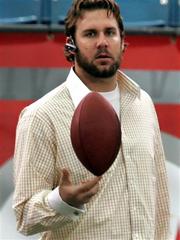
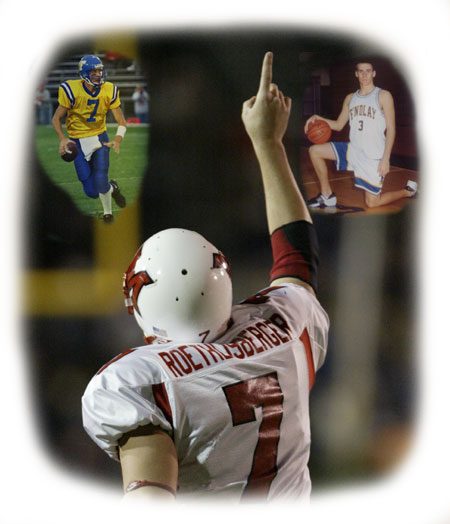
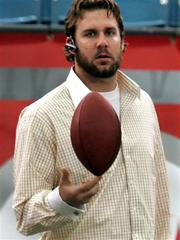
Examples of Excellence: Roethlisberger in Football


Findlay, Ohio - home to Six Disciplines Corporation -is getting lots of press these days, and for good reason.

Ben Roethlisberger, quarterback of the Pittsburgh Steelers, was born and raised in Findlay, Ohio.

This is a tribute to Ben Roethlisberger from the hometown he has made so proud.

Before Big Ben was a Super Bowl starting quarterback for the Pittsburgh Steelers, he was Findlay, Ohio's Ben Roethlisberger, a starting quarterback, point guard and shortstop for the Findlay High School Trojans.

BOTTOMLINE: From all of us in Findlay OH - Good Luck Big Ben, - Dreams Really Do Come True! (and....let's get "One For The Thumb!)

Wednesday, February 01, 2006

Time for Some Levity

OK folks....time for some levity....

If you haven't ever checked out the folks at Despair - wait till you see their podcasts!

For the better part of a decade, Despair, Inc. has been engaged in a fierce battle in the marketplace of ideas with the multi-billion dollar motivation industry. In 1998, Despair introduced the world to a darkly insightful line of motivational poster parodies known simply as Demotivators®. In April 2005, company co-founder Dr. E.L. Kersten unveiled his landmark management book, "The Art of Demotivation"- a work quickly praised by Financial Times Management Columnist Lucy Kellaway as "the most daring, funny and subversive management book ever written".

With the introduction of Despair Video podcasts, the company opens a new front in the war on motivation- while simultaneously offering a tantalizing glimpse at life inside the company itself.

Man, ya just gotta have some fun sometimes!

(Tip of the hat to our friend Lisa Haneberg at Management Craft)

Vision Monthly

Vision Monthly is a new magazine intended for anyone who is committed to professional development, continuous improvement, and lifelong learning.

Some of the top bloggers have contributed to this project - and it is a winner.

Their first issue -- which is outstanding -- can be downloaded here.

Download and distribute as many copies as you like. Please take a moment to provide a donation.

(Tip of the hat to Ethan Johnson at The Vision Thing)